 Retro Replay Retro Gaming History, Reviews & Emulation
Retro Replay Review
Gameplay
Forsaken World has an easy first-hour pull if you already enjoy traditional fantasy MMOs. You choose from humans, elves, dwarves, kindred, and stonemen, then work within class restrictions that make the selection feel more deliberate than a completely open roster. A dwarf marksman and a kindred vampire have a clearer identity than another interchangeable race-class combination, even if the early game does not let you express much beyond that initial pick.
That lack of control is the first major frustration. Basic skills come from trainers, and meaningful build decisions wait until level 20, when talent points begin feeding one of three talent trees for each class. Until then, character development feels prescribed. Once talents arrive, there is finally room to lean into a preferred direction, but the game asks you to be patient before it gives you that ownership.
Experience mostly comes from daily quests and the God’s Trial instance rather than simply defeating monsters, which makes the leveling loop feel scheduled and task-driven. Praying and certain drinks can also grant experience, an unusual touch that adds variety without changing the fundamental rhythm: log in, work through the routine, and watch the numbers rise. If you want every monster kill to feel rewarding on its own, this can become a grind quickly.
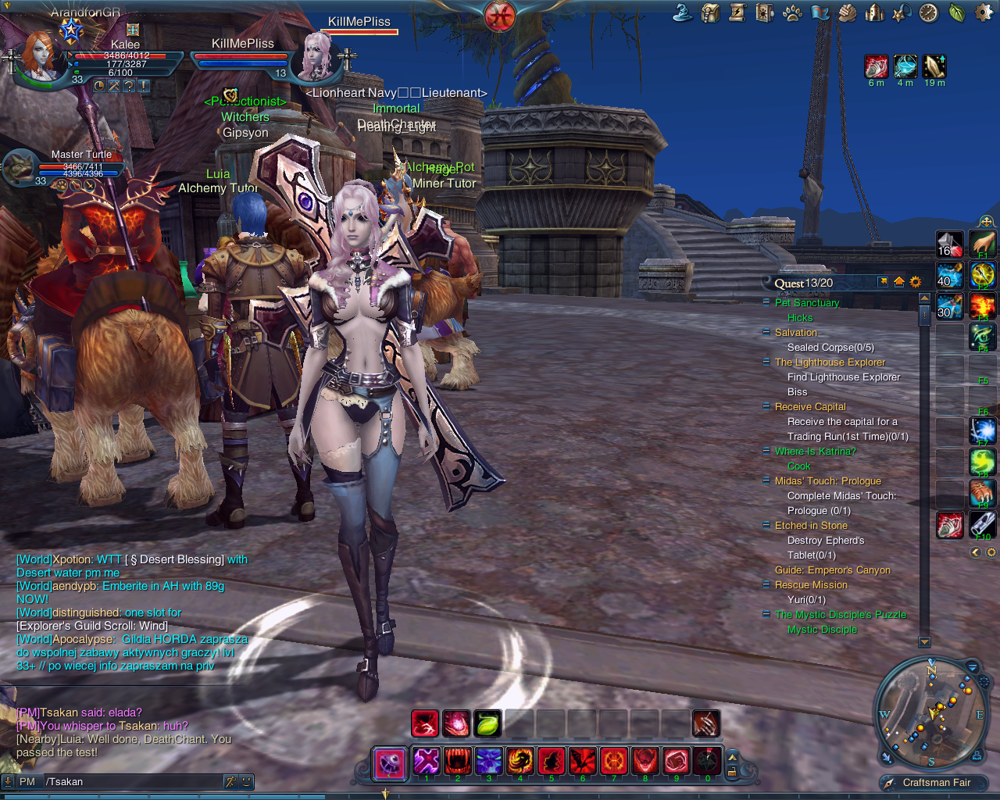
The deeper systems are where Forsaken World finds its footing. Pets can be hatched and improved by combining them, while tamers have extra opportunities to trap creature souls and turn them into pet stones. Gear progression is similarly involved: elite enemies drop gem shards, special merchants trade those shards for equipment, and refining a piece can matter more than its basic level or value. Fully refined gear also gains gem slots, so you are not merely replacing equipment—you are committing resources to it.
That structure creates satisfying long-term goals, but it also makes the economy feel demanding. Regular NPC merchants only sell the most basic starting equipment, crafting does not unlock until level 40, and rings, necklaces, and off-hand items must be crafted or bought from another player. Group instances, factions, guilds, mounts, and guild bases give you plenty of reasons to stay involved, yet Forsaken World is at its best when you enjoy managing several connected progression tracks rather than when you just want to quest at your own pace.
Graphics
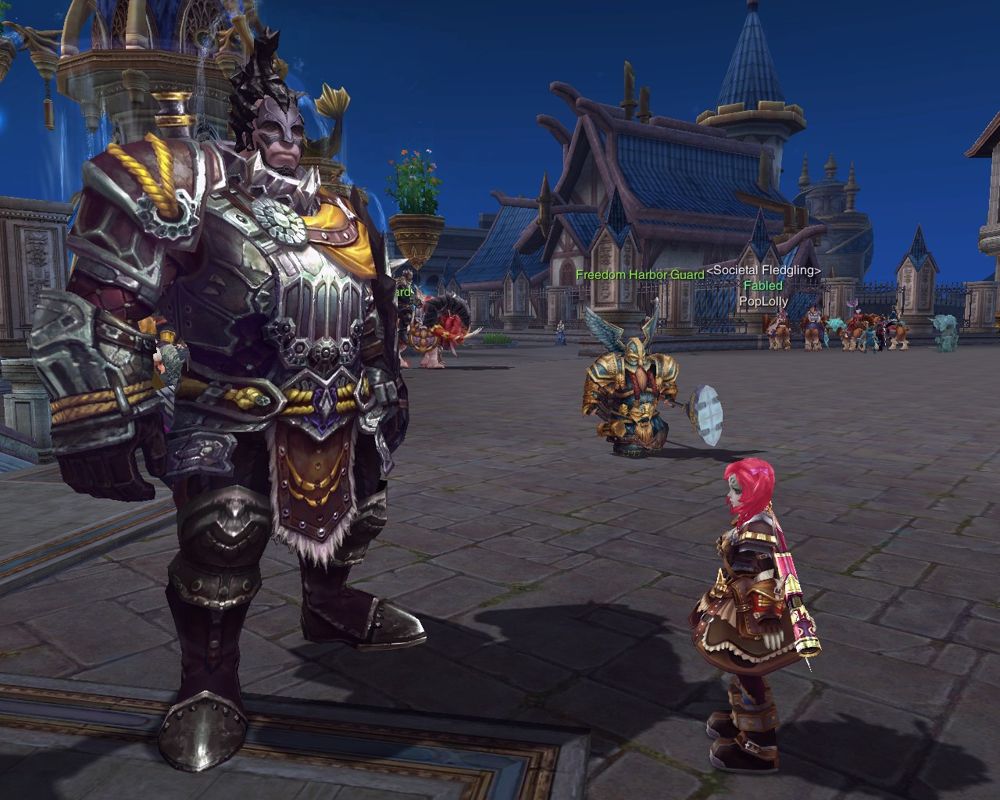
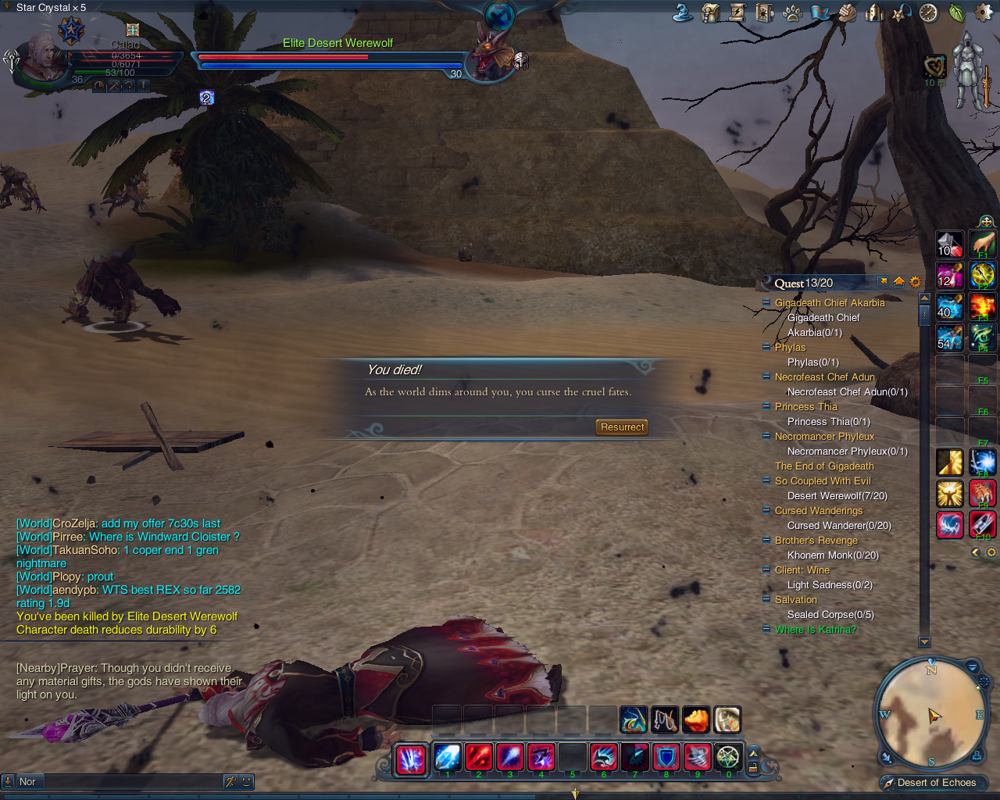
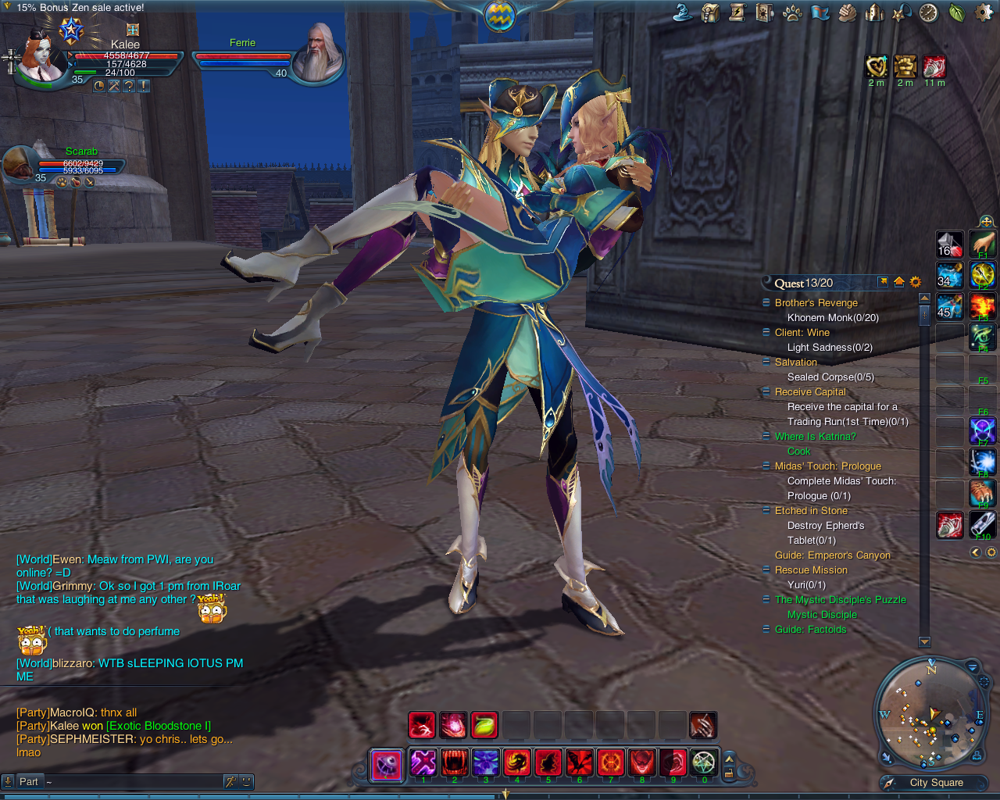
Forsaken World is viewed from a third-person perspective and builds its fantasy world around familiar playable peoples: humans, elves, dwarves, kindred, and the all-male stonemen. The distinct race and class pairings give your character choice more visible flavor, especially when a restricted class such as bard, vampire, marksman, or protector helps define who you are from the outset.
Story
The lore arrives with gods, divine offspring, ancient wars, and a world repeatedly threatened by the aftermath of those conflicts. Dyos creates and cultivates Eyrda with other gods; Nyos brings destruction; the descendants of both sides leave scars that stretch all the way to the present conflict. It is a lot of proper nouns to absorb at once, but the broad setup is clear enough: Eyrda has survived godly wars before, and another invasion is brewing.
Shylia’s history gives the setting its most interesting thread. As the demi-god who creates the first kindred through Corvus and later leads the races against Mylvada, she ties the playable world to the larger mythology instead of leaving the lore as distant background. Her disappearance after the battle, along with Mylvada’s retreat and Dysil’s rise, gives the world a suitably unfinished sense of danger.
Your personal path becomes more standardized at level 10, when every race is sent to Freedom Harbor. The separate starting areas offer an initial nod to racial identity—humans and dwarves share one, elves and stonemen another, and kindred begin alone—but the game ultimately prioritizes a common MMO campaign. That is practical for grouping, though it means the promise of five distinct origins does not carry very far.
Overall Experience
Forsaken World is a solid, busy MMO whose strongest moments come after you accept that it wants to be part of your routine. There are enough interlocking goals to keep a committed character occupied: talents, pets, instances, refining, gem slots, crafted accessories, reputations, and guild development. The payoff is not a dramatic reinvention of the genre; it is the steady pleasure of gradually improving a character and having another system to poke at tomorrow.
The free-to-play model deserves careful consideration. The item shop uses ZEN purchased with real money, and some shop items have major importance in a game where gear and pets are central to advancement. That does not erase the value of the ordinary progression loops, but it does put pressure on them. You should go in knowing that the gap between cosmetic purchases and meaningful convenience or power is not a trivial one here.
Give it a chance if you like older-school MMO structure, do not mind daily quest repetition, and enjoy turning materials and currency into incremental gains. Skip it if you need fast build freedom, self-contained leveling rewards, or a progression game that keeps real-money purchases far from its most important systems. Forsaken World has enough depth to reward persistence, but it asks for persistence early and often.


Reviews
There are no reviews yet.