 Retro Replay Retro Gaming History, Reviews & Emulation
Retro Replay Review
Gameplay
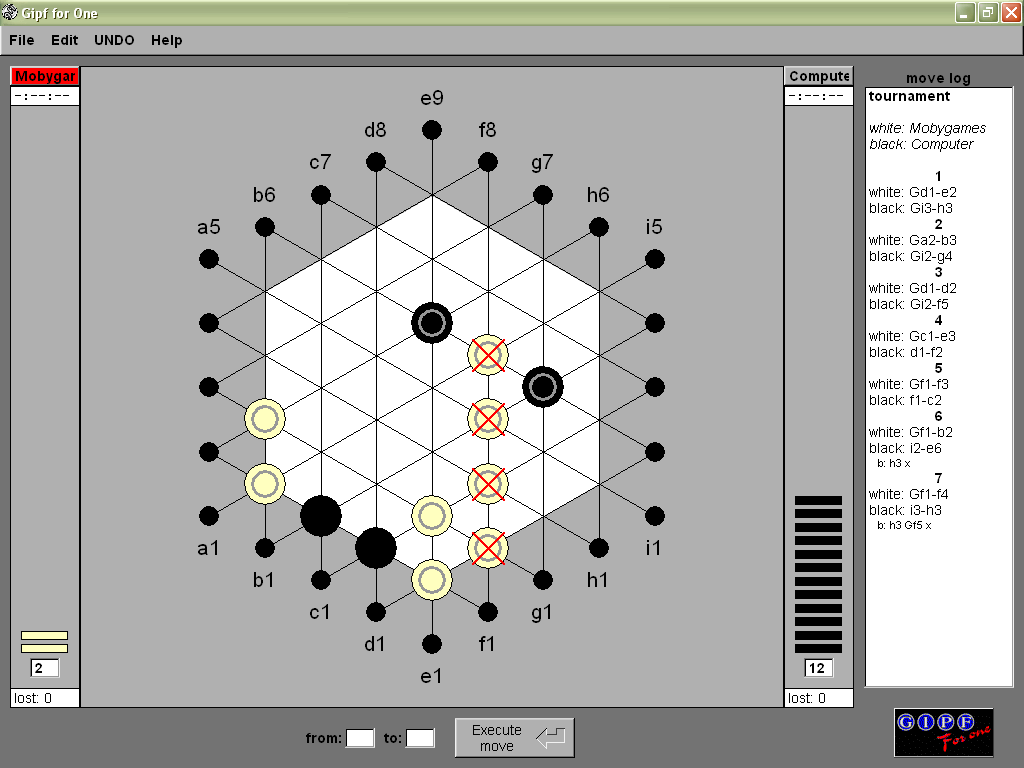
The first few turns of Gipf for One feel almost too simple. You choose a starting point around the hexagonal grid, add a black or white piece, and shove the entire line ahead. Then you notice that a push can strengthen a row, break another one, crowd the center, and hand your opponent an opportunity all at once. That small rule set creates a board that demands attention from move one.
Making a line of four removes adversary pieces from the board, but the clever wrinkle is that both sides keep reusing pieces. You are not merely protecting your own color or trying to capture in the usual board-game sense. A piece can become useful to either side, and a line that looks like your threat may offer your opponent the exact push they need. Once that starts clicking, the game becomes a tight contest of placement, timing, and restraint.
Frustration can set in if you treat each turn as a local puzzle. A move that wins a small exchange may leave a dangerous lane open from the edge, while an apparently passive push can rearrange the board in someone else’s favor. The loss condition—being unable to add another piece—gives the accumulating pressure real bite. Take a moment to trace where a newly pushed line will leave the next few entry points before committing.
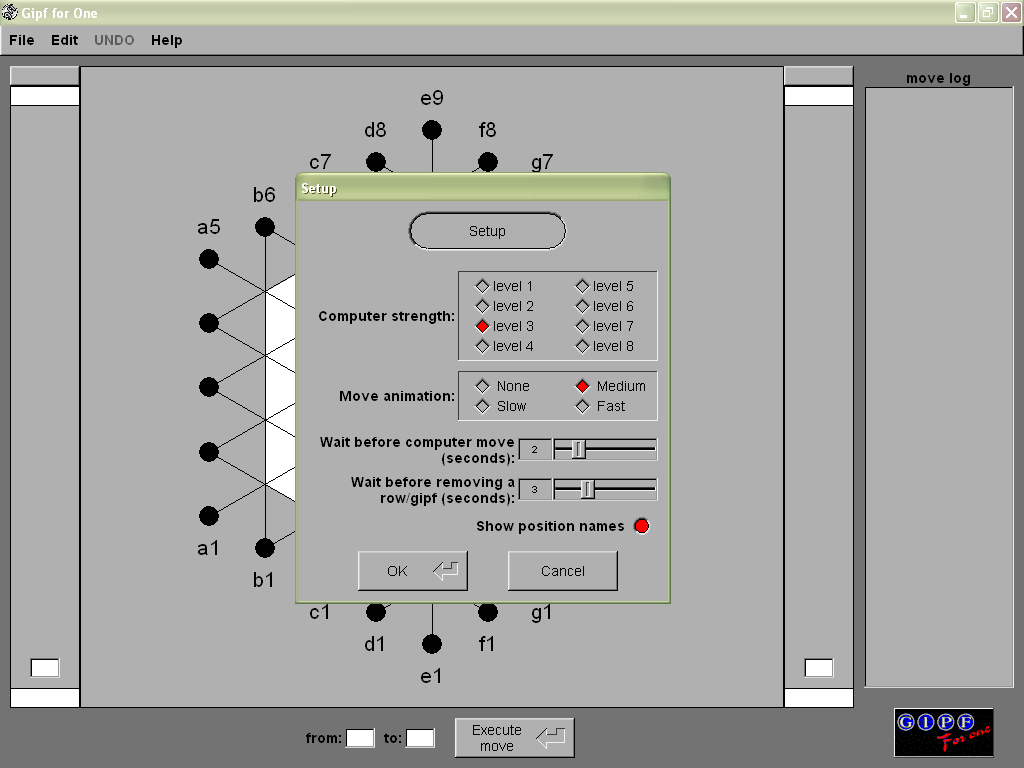
The three variations and optional timed mode are sensible ways to adjust the pace, while computer and human opponents cover both solo practice and proper head-to-head play. Timed games should suit you if you already understand the board and want the pressure turned up; newcomers will get more from playing without the clock and learning why a harmless-looking edge placement can matter several turns later.
Graphics
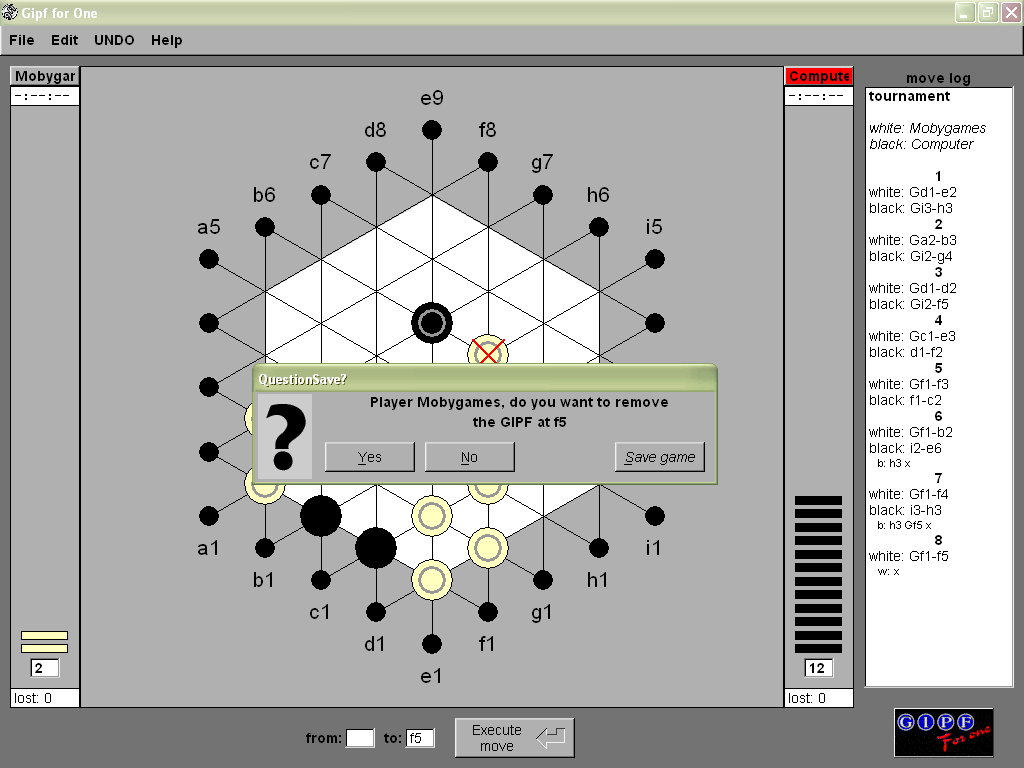
The view stays fixed on a top-down hexagonal board, with black and white pieces arranged across its grid and starting points around the edge. It is a functional look for an abstract game: you can concentrate on lines, pushes, and available entrances without visual clutter getting in the way.
Story
There is no character drama or campaign framing here. The story is the one you and your opponent create through the board: a line begins to form, a response shifts the balance, and a late push turns a safe position into a problem.
That bare approach fits the game. Rather than asking you to care about a fictional conflict, it asks you to care about consequences—especially the consequences of the piece you just moved and the board you have left behind.
If you need a narrative hook to carry a strategy game, this will feel austere. If you enjoy the quiet drama of an abstract duel, the changing geometry supplies enough tension on its own.
Overall Experience
Gipf for One is the kind of strategy game that earns respect through a single strong idea rather than a pile of distractions. Pushing whole lines from the board’s perimeter makes every placement feel physical and consequential, and the shared use of pieces keeps easy assumptions from surviving for long.
It is most rewarding when you accept that you will misread positions early on. A loss can feel abrupt when the board closes around you, but that sting usually points to a decision you can understand in retrospect. Learning to see the board as connected lanes instead of isolated rows is the central pleasure.
Give it a chance if you want a compact, cerebral board game for repeated matches against another person or the computer. Skip it only if you need story, spectacle, or lots of changing activities; this is a concentrated abstract contest, and its payoff comes from mastering the consequences hidden inside one simple push.


Reviews
There are no reviews yet.