 Retro Replay Retro Gaming History, Reviews & Emulation
Retro Replay Review
Gameplay
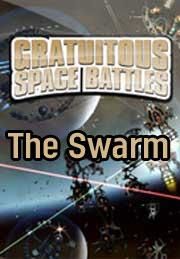
Gratuitous Space Battles: The Swarm understands that the joy of the series lies in designing a fleet, making hard compromises, and then watching those decisions collide in a spectacularly impersonal war. This expansion keeps the core formula intact: you are still arranging ships and components before battle rather than micromanaging them once the shooting starts. The result remains a strategy game about preparation, positioning, and building a fleet with a clear answer to the enemy’s likely tactics.
The Swarm adds ten ships across cruiser, frigate, and fighter classes, giving fleet designers more room to specialize. The new equipment is not merely decorative either. Disruptor beams, smart bombs, fighter fusion guns, micro-target boosters, and the frigate-focused nest crew module each encourage a different approach to ship construction. The nest module is especially appealing because it creates a useful space-versus-survivability decision: packing more crew into a smaller area can free a design for weapons or defenses, but it also sharpens the importance of how every part of the vessel fits together.
The additions are at their best when they complicate familiar habits. Smart bombs and fighter weaponry push players to think more carefully about small craft, while disruptor beams and targeting upgrades offer fresh ways to define a ship’s battlefield role. This is an expansion for players who enjoy tweaking loadouts, checking whether a change actually improved a fleet, and revising a plan after a humiliating defeat. It does not reinvent the original game’s deliberate, hands-off battle structure, but it gives that structure more interesting pieces to play with.
Graphics
The visual appeal comes from watching carefully assembled fleets perform at scale. The Swarm adds new ships and a new race to the game’s established science-fiction battlefield, broadening the collection of hulls that fill the screen once a match begins. The ships are not just menu entries; their class distinctions help make fleet composition readable, with fighters, frigates, and cruisers contributing to the sense that a battle is being fought by an actual layered force rather than a row of interchangeable units.
As in the base game, the spectacle is tied directly to the design process. A ship that seemed sensible in the builder becomes more memorable when it enters combat carrying the equipment selected for it. New weapons and components give battles a welcome sense of variety, particularly for returning players accustomed to the original arsenal. Seeing a strategy unfold—or collapse—remains one of the game’s strongest presentation hooks.
This is not a presentation built around cinematic storytelling or lavish environmental detail. Its visual language serves the tactical sandbox: fleets, formations, weapons, and destruction are the focus. That makes the expansion a good fit for players who prefer functionally clear science-fiction combat to a heavily scripted visual showpiece. The appeal is in observing the consequences of design choices, not in being dazzled by a new graphical direction.
Story
The Swarm takes a light-touch approach to narrative, using its new race as a fresh source of conflict rather than turning the expansion into a story-driven campaign. The emphasis remains squarely on the strategic fantasy of facing another faction with its own ships, equipment, and battlefield possibilities. That is appropriate for a game where the player’s own fleet design is the real protagonist.
The new race gives the expansion a stronger identity than a simple equipment pack. Its presence frames the added ships, bonuses, and scenarios as part of a coherent new opponent and playstyle, even though the game’s drama still emerges primarily from combat results. A narrowly won survival match or a fleet plan that falls apart under pressure can feel more consequential than any lengthy exposition would.
Players looking for character arcs, dialogue-heavy missions, or a major narrative campaign should not come here expecting that kind of science-fiction experience. The story is functional and atmospheric rather than elaborate. For the right audience, that restraint is a virtue: it leaves room for the player to create their own tales of doomed fighter screens, overloaded cruisers, and designs that finally click after several failed attempts.
Overall Experience
Gratuitous Space Battles: The Swarm is a focused expansion that knows exactly who it is for. It preserves every major mode and the familiar foundation of the original game, then expands the fleet-building toy box with new ships, equipment, bonuses, and scenarios. The two added encounters—a standard map and a survival-mode battle—provide useful places to test those additions, especially for players who enjoy refining a design under different kinds of pressure.
Its main limitation is also its honesty: this is not a stand-alone overhaul. It requires the original game and is most rewarding for players who already appreciate its unusual pre-battle strategy. Anyone who found the base game too detached because it limits direct control during combat will not be converted here. The Swarm offers more options within that framework, not an escape from it.
For existing fans, though, this is a worthwhile dose of new strategic material. The extra hulls and equipment create meaningful reasons to revisit fleet layouts, while the Swarm race helps the package feel more substantial than a handful of isolated parts. It is best approached as an expansion that deepens a distinctive tactical sandbox: build carefully, predict the enemy, press launch, and enjoy the brutal satisfaction of finding out whether your theory survives contact with the battlefield.


Reviews
There are no reviews yet.