 Retro Replay Retro Gaming History, Reviews & Emulation
Retro Replay Review
Gameplay
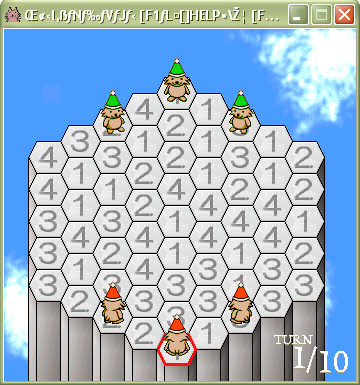
The first few turns of Inucla No Classical invite you to treat it like a tidy abstract board game: inspect the numbered hexes, move exactly as far as your current tile allows, and try to line up a capture by landing on an opponent’s space. Then every move removes the tile you just left. That one rule gives each decision a pleasingly sharp consequence. You are not merely relocating a piece; you are cutting away a route, shrinking the board, and potentially stranding something you will need later.
The numbered movement is where the puzzle starts to bite. A piece on a 4 must move four tiles away, so a seemingly open board can still leave you with awkward, forced-looking options. Good turns do double duty: they put pressure on an enemy piece while preserving useful landing spots for your own side. Bad turns can hand over a capture or make the board smaller in exactly the wrong place. Because the goal is to remove opposing pieces until one winning piece remains, every exchange matters more as the available ground disappears.
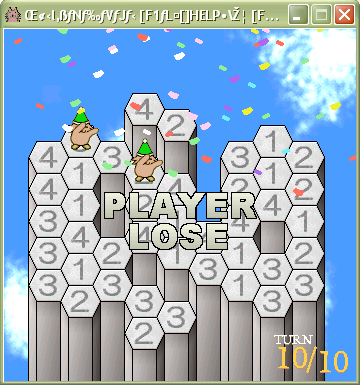
After ten turns, the outer tiles begin falling automatically, taking any pieces on them with them. That deadline prevents cautious play from dragging on and turns the middle of the match into a race for safer territory. It also means you should think about the edges from the beginning, not only when the board starts eating itself. The computer-controlled option gives the game solo value, but the cleanest version of its tension comes from facing another person who can see the trap you are building and still has to find a way through it.
Graphics
The isometric board gives the hexagonal tiles a clear tabletop shape, while the numbers printed on each tile keep movement distances in front of you. As tiles fall away, the board’s changing outline makes the central idea easy to read at a glance: there is simply less and less safe ground left.
Story
Inucla No Classical puts its drama on the board rather than in a written narrative. The story of a match is the changing geography: a useful route disappears, an opponent gets pushed toward the edge, and a piece that looked safe suddenly has nowhere worthwhile to go.
That abstract approach suits the rules. You do not need extra context to understand why a capture matters when every removed piece and fallen tile changes the balance immediately. The tension comes from seeing the position turn against you one exact-distance move at a time.
It also keeps the game focused. If you want characters, plot turns, or a larger campaign to carry you between matches, this will feel sparse. If you enjoy making your own little rivalry out of a close tactical duel, the board creates enough momentum on its own.
Overall Experience
This is a compact, thoughtful strategy game built around a strong central twist: movement destroys the place you came from. That makes even basic repositioning feel consequential, and the automatic collapse of outer tiles gives the match a welcome sense of escalation.
Its main frustration is also its strength. Exact-distance movement can leave you staring at choices that all seem to concede something important, especially once the board has been carved into narrow routes. If that sounds like a satisfying puzzle rather than an insult, you will likely enjoy learning how to leave yourself better options a turn or two ahead.
Give Inucla No Classical a chance if you like turn-based board games with short rules and demanding spatial decisions. It does not need a pile of systems to stay interesting; the vanishing hexes, numbered movement, and capture race create a tense little contest that rewards patience and punishes casual moves.


Reviews
There are no reviews yet.