 Retro Replay Retro Gaming History, Reviews & Emulation

Retro Replay Review
Gameplay
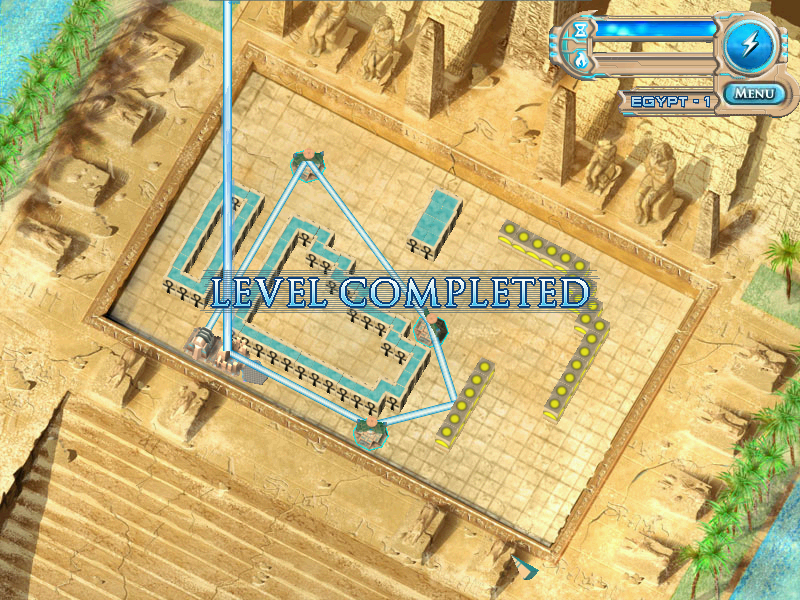
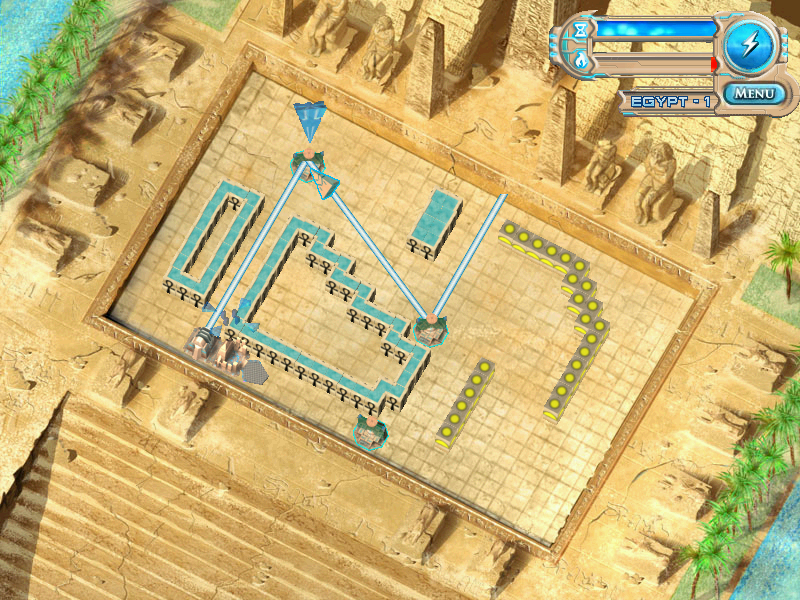
Lumen starts with an immediately understandable task—aim a laser from an emitter to a receptor—but it does not stay simple for long. You place and rotate mirrors, trace the likely path in your head, and try to route the beam around walls. That first successful chain of reflections is satisfying because it feels like you have physically straightened out a knot.
What makes the puzzle design more interesting is that a straight line is rarely enough. Reflective walls redirect your assumptions, crates can block access to the receptor, and switches, teleporters, and constantly rotating mirrors force you to account for timing as well as geometry. The better stages should make you pause before touching anything: you need a route, but you also need to know when that route can exist.
The time limit is the part most likely to divide you. It turns a calm-looking mirror puzzle into a real-time challenge, and the punishment for sending the beam back to the emitter is especially sharp: the laser overheats and destroys itself after several seconds. That creates genuine urgency, though it can make trial-and-error feel costly. If you enjoy working out a plan quickly and then executing it cleanly, the pressure adds welcome bite; if you want unlimited time to stare at every arrangement, it may wear thin.
Over 110 puzzles gives Lumen room to develop its ideas instead of exhausting them in an afternoon. The obstacle mix sounds varied enough to prevent every level from becoming the same mirror-placement exercise. Its core remains narrow, but that focus is a strength: you always know what you are trying to do, while the route to doing it keeps changing.
Graphics
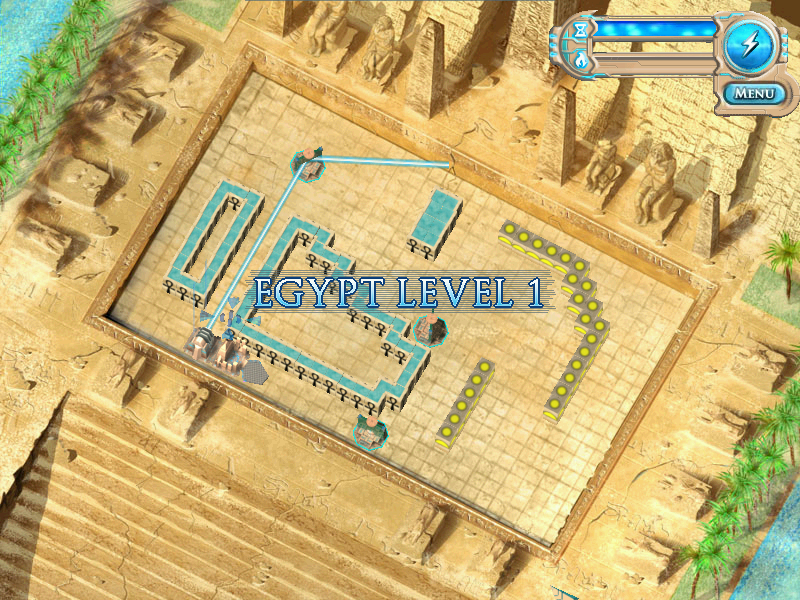
The game uses a top-down, isometric puzzle view built around emitters, receptors, mirrors, walls, crates, and the beam itself. That angle suits the job: you can follow where the laser is headed and judge how each rotated mirror changes its path without wrestling the camera.
Story
Lumen’s setting moves from ancient Egypt to Babylon and beyond, giving the long run of puzzles a sense of travel rather than leaving everything in one anonymous board set. It is a light framing device, not the reason to play.
You should not expect the locations to carry the game through character drama or major plot turns. The story is essentially the journey between themed puzzle spaces, with the laser-routing challenge firmly in the foreground.
That restraint works well enough here. A dense narrative could easily interrupt the clean, compact rhythm of solving one beam path and moving to the next. The changing locales add a little momentum without asking you to focus on anything other than the puzzle in front of you.
Overall Experience
Lumen is at its best when you spot a possible route, realize a wall or crate ruins it, then find the extra reflection or timed opening that makes the whole arrangement click. It takes a simple idea seriously and gets mileage from adding hazards that change how you think about space, sequence, and speed.
The trade-off is that the game asks for composure under a clock. Failed experiments can feel harsher than they would in a purely turn-based puzzler, particularly when the beam is heading back toward the emitter. Still, that risk keeps solutions from feeling routine; you are not only correct, you are correct in time.
Give it a chance if laser-routing puzzles, tight spatial planning, and a little real-time pressure sound satisfying rather than stressful. Lumen will not convert someone who dislikes time limits in puzzle games, but for anyone who enjoys turning a messy board into one elegant line of light, its large set of stages offers a worthwhile challenge.



Reviews
There are no reviews yet.