 Retro Replay Retro Gaming History, Reviews & Emulation

Retro Replay Review
Gameplay
There is no base waiting to replace a soldier after a careless advance. You work with the troops the mission gives you, move them into useful positions, and try to keep the next exchange from turning into a disaster. That makes a quiet approach worth considering. A squad tucked behind cover offers more possibilities than the same men strung out across open ground, especially when the next objective is still some distance away.
Cover and detailed damage calculations reward attention to the direction of an attack. You can also take direct control of a single unit rather than relying entirely on orders from above. That is a valuable change of scale: the wider plan still matters, but a difficult moment can become a specific soldier’s problem to solve. The combination carries over the appeal of the original Men of War.
Missions move through successive objectives, sometimes keeping the force small and sometimes opening into a larger confrontation. The change keeps the campaign from becoming one repeated assault, although it also demands constant attention. Looking after one useful unit can make it easy to overlook another. The pleasure is in arranging a workable approach, but the cost of a mistake can make experimentation feel punishing.
Cooperative play divides the available units between players, making coordination more important than simply adding another person to the same fight. A partner can take responsibility for part of the force while you watch another approach. Connection options need checking before planning a session: the publisher’s Steam page explains the alternatives following the GameSpy shutdown. That is worth reading before gathering everyone for an evening’s campaign.
Graphics
Palm trees, scrub, buildings, and patches of open ground break the maps into places a soldier might cross or shelter behind. From the elevated view, the countryside can look inviting until you start deciding how to move a vulnerable squad through it. Small groups of figures give the scenery an uncomfortable sense of scale.
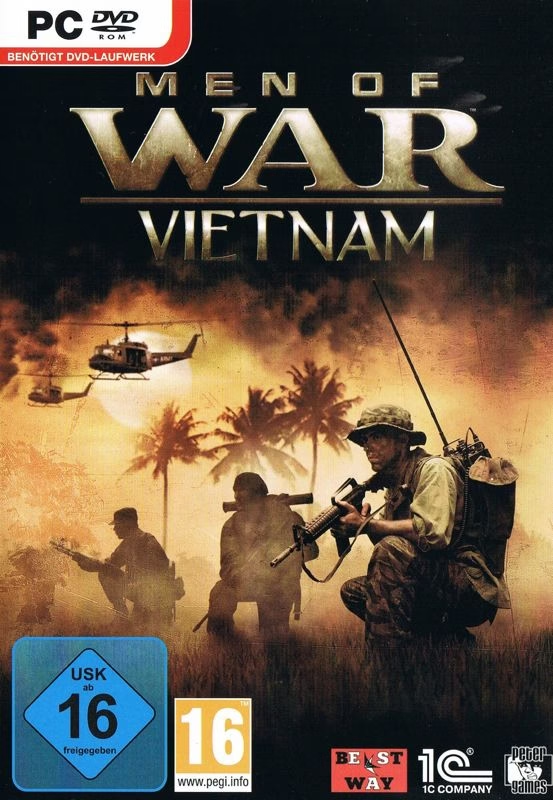
The change of setting is easy to recognize in the vegetation, uniforms, vehicles, and aircraft. Helicopters and jungle terrain give these battles a different appearance from the series’ European fighting. Buildings and cultivated ground also keep the maps from looking like one uninterrupted wall of trees.
The busy landscapes are less helpful when several small units need attention at once. Soldiers can be harder to pick out than the larger vehicles around them, particularly against vegetation. The detail suits the setting, but a crowded scene can demand a closer look than the current firefight comfortably allows.
Story
The American campaign follows a Special Forces team working behind enemy lines. Its missions give the squad practical jobs to survive rather than a comfortable sweep across a strategic map. Keeping those men available for the next objective makes their situation easier to care about than the briefing alone could manage.
The other campaign begins with two Soviet advisers and two North Vietnamese soldiers surviving an ambush. Their attempt to get back through hostile territory gives the game another starting point and a different reason to avoid unnecessary losses. The campaign is framed around those survivors rather than treating every battle as an American operation.
The two perspectives help vary the missions, but this remains a tactical war game rather than a comprehensive account of the conflict. The strongest drama comes from the force you are trying to preserve. A larger cast or a more elaborate cutscene would not necessarily make a risky crossing more compelling than knowing exactly who you might lose there.
Overall Experience
Men of War: Vietnam is most convincing when a modest force has to achieve something difficult with limited room for error. Terrain, direction, and individual control give an encounter several things to think about at once. A successful plan feels earned because the game allows small decisions to have large consequences.
It can also be tiring. The attention that makes individual soldiers valuable becomes a burden when the fight spreads out, and a failed approach may send you back to reconsider several earlier choices. Anyone arriving from the broader skirmish focus of Men of War: Assault Squad should pay particular attention to Vietnam’s campaign-led approach.
This is a good fit for a patient tactics player who enjoys controlling a limited force and reading the ground before advancing. It is harder to recommend as a relaxed introduction to strategy games. There is considerable satisfaction in getting a squad through a dangerous job, provided you enjoy the careful preparation and occasional hard lesson that come with it.


Reviews
There are no reviews yet.