 Retro Replay Retro Gaming History, Reviews & Emulation


Retro Replay Review
Gameplay
Warband is at its best when your ambitions outgrow the life of a wandering fighter. You travel an overhead map of Calradia, visiting towns and castles, tracking armies, taking quests, and deciding which factional struggle is worth your attention. Then the game zooms into real-time battles where you are not merely issuing orders from safety. You are in the crush yourself, whether you choose to ride with cavalry, trade blows on foot, or fight from range.
That two-level structure is still unusually effective. The map makes warfare feel like a campaign rather than a string of disconnected fights, while battles give every victory a physical edge. Up to 150 units can meet on the field, and the mix of troop morale, terrain, horses, and close-range chaos produces memorable reversals. Throwing weapons also remain useful after the first toss, which makes a loadout feel less disposable when fighting gets tight.
The game asks you to set your own pace, and that can be both liberating and frustrating. There is plenty to chase, from tournaments and equipment to companions, land, marriage, and eventually the chance to found a faction. But Warband does not constantly steer you toward a carefully paced adventure. You need to enjoy learning through setbacks, choosing your own priorities, and turning small gains into political power.
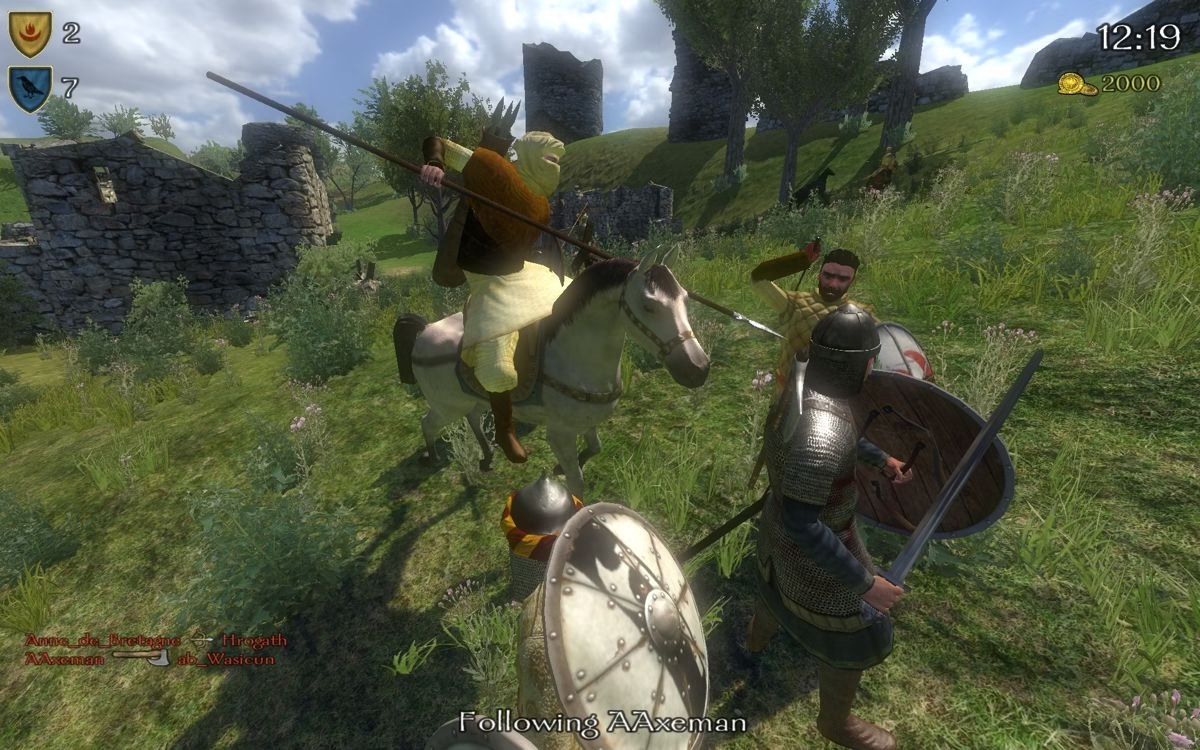
Multiplayer gives the combat a cleaner, more immediate outlet. Its class-based matches cover Deathmatch, Team Deathmatch, Capture the Flag, Conquest, Battle, and Siege, with infantry, archers, and cavalry starting with different gear. Earning money through kills to improve equipment adds a useful progression loop between deaths, though the real draw is still the unruly sight of mounted and foot soldiers colliding around an objective.
Graphics
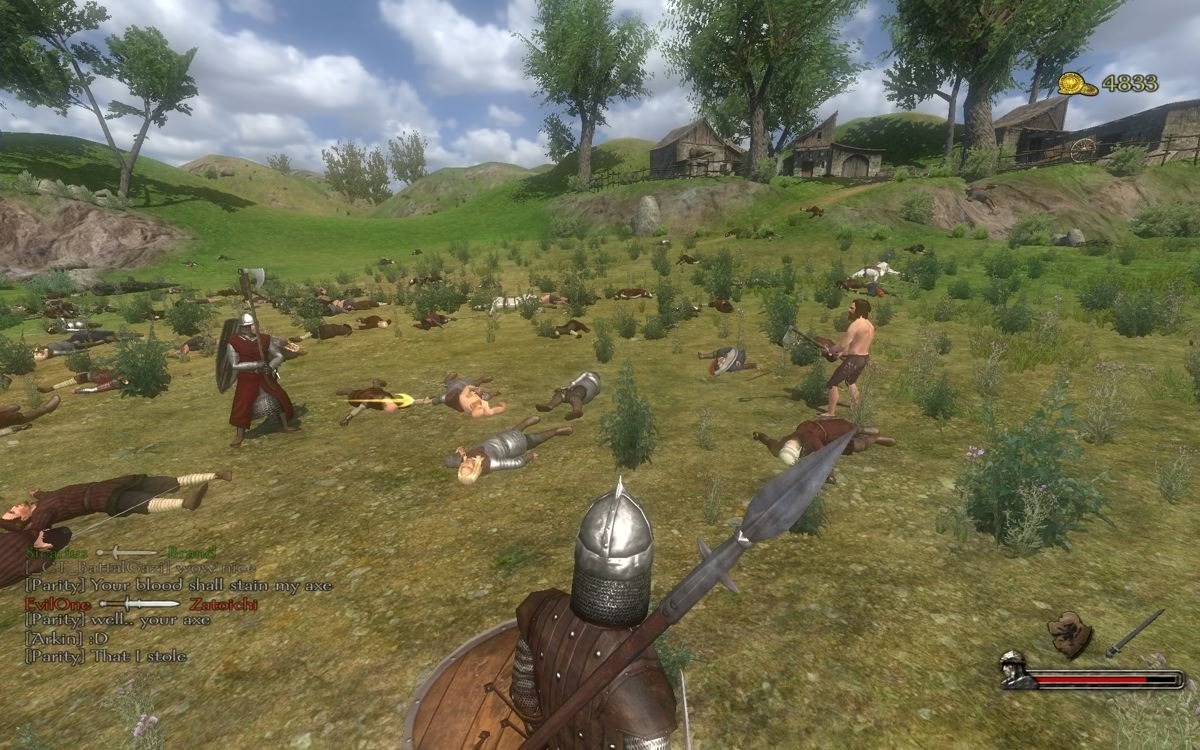
The battlefield view has a weathered, functional medieval look. Grassy hills, scrub, scattered trees, broken stone walls, and simple rural buildings give fights a convincing sense of place, while chainmail, helmets, shields, and horses make it easy to read the broad shape of a skirmish. The textures and character models look dated, especially up close, but the sunlit outdoor maps have a surprisingly pleasant natural color.
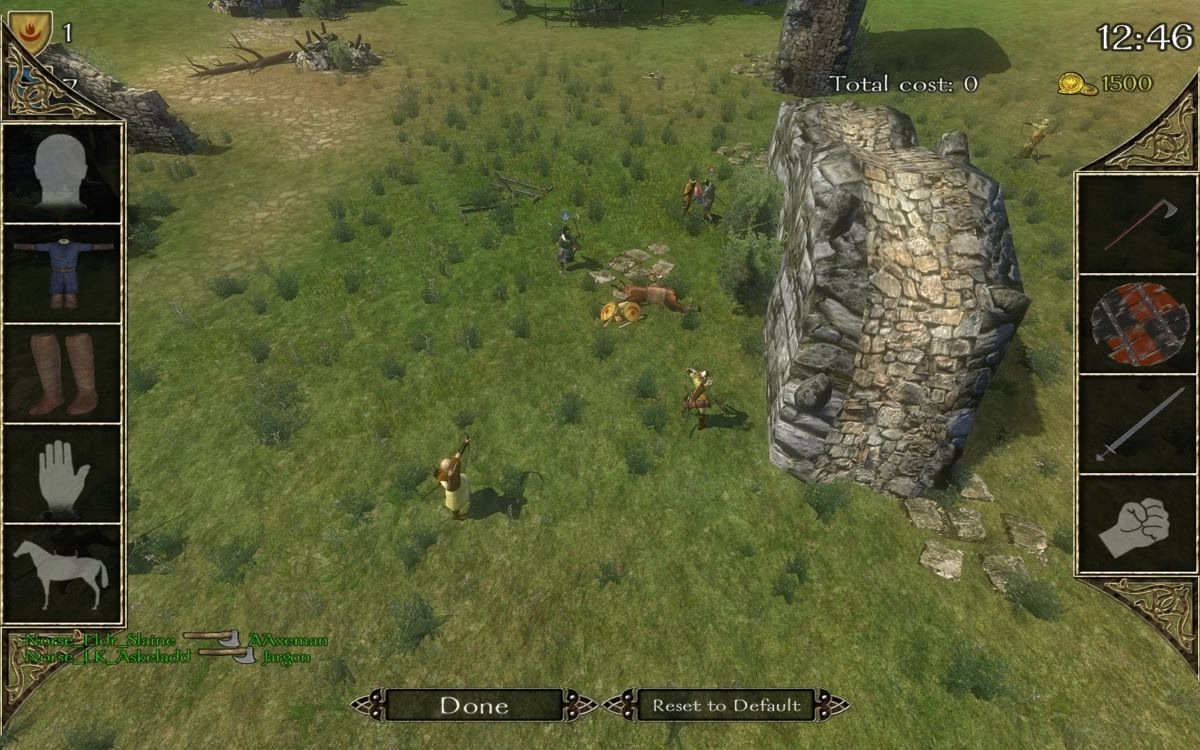
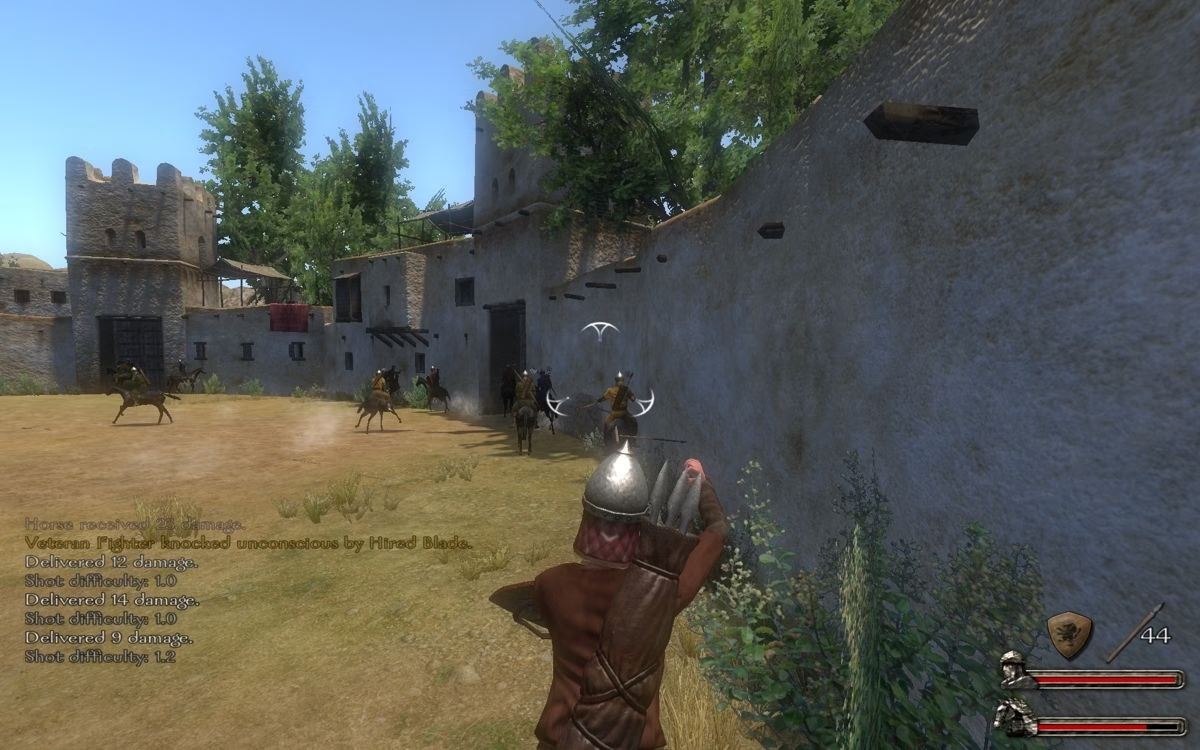
Towns are plainer and rougher, with boxy buildings, bare streets, and stiff-looking inhabitants. Still, the view from horseback through a dusky settlement and the sight of corpses spread across a green multiplayer field give Warband more atmosphere than polish. The elevated view gives the ruins and open ground a broader sense of scale.
Story
Warband does not offer a tightly authored central tale. Its story comes from your rise through a fractured land of competing kingdoms, and that means the important moments are usually the ones you create: backing a ruler, acquiring property, winning favor, or deciding that you would rather rule on your own.
That open approach suits the game’s military and political focus. The honor system gives your choices some character, rewarding virtuous conduct and penalizing unethical behavior, while relationships with lords can grow into a larger web of alliances and obligations. Marriage can add another diplomatic angle once you control a castle or town, rather than serving as a detached side activity.
The payoff is an emergent campaign story instead of a memorable scripted cast or series of dramatic plot turns. A companion elevated to vassal or a rival lord convinced to join your cause can feel significant because you worked toward it across many battles. If you need a strong written narrative to carry an RPG, this sparsity may leave you cold. If you like telling yourself the story of a hard-won ascent, it fits beautifully.
Overall Experience
Warband remains compelling because it understands the difference between being told you are important and earning that importance. A tournament win, a successful fight, or a new holding has weight because the game places it within a larger world map and leaves you responsible for what comes next. Few games combine personal combat and kingdom-level ambition with this much room to improvise.
Its age shows in the coarse models, uneven town environments, and the lack of handholding. The freedom can also become aimlessness when you want a clear next step or a briskly paced narrative. This is a game that asks for patience, especially early on, before the map, faction politics, and battles begin to form a satisfying whole.
Give Warband a chance if you want a medieval sandbox where you can fight in the line, manage your rise through the world, and potentially build a realm of your own. The standalone expansion improves the original formula with stronger graphics, new diplomatic possibilities, the Sarranid faction and desert region, and substantial multiplayer. It is not polished in the modern sense, but its battles and player-driven ambition remain worth the commitment.



Reviews
There are no reviews yet.