 Retro Replay Retro Gaming History, Reviews & Emulation
Retro Replay Review
Gameplay
The first stretch of Numen: Contest of Heroes earns goodwill by letting you discover what kind of fighter you want to be. You begin as a child on Leros and test the warrior, hunter, and mage approaches in action. Since your combat habits influence your eventual inclination, there is a welcome sense that your character is taking shape from what you actually enjoy using. If you immediately gravitate toward bows or magic, the game meets you there rather than treating that early choice as disposable tutorial business.
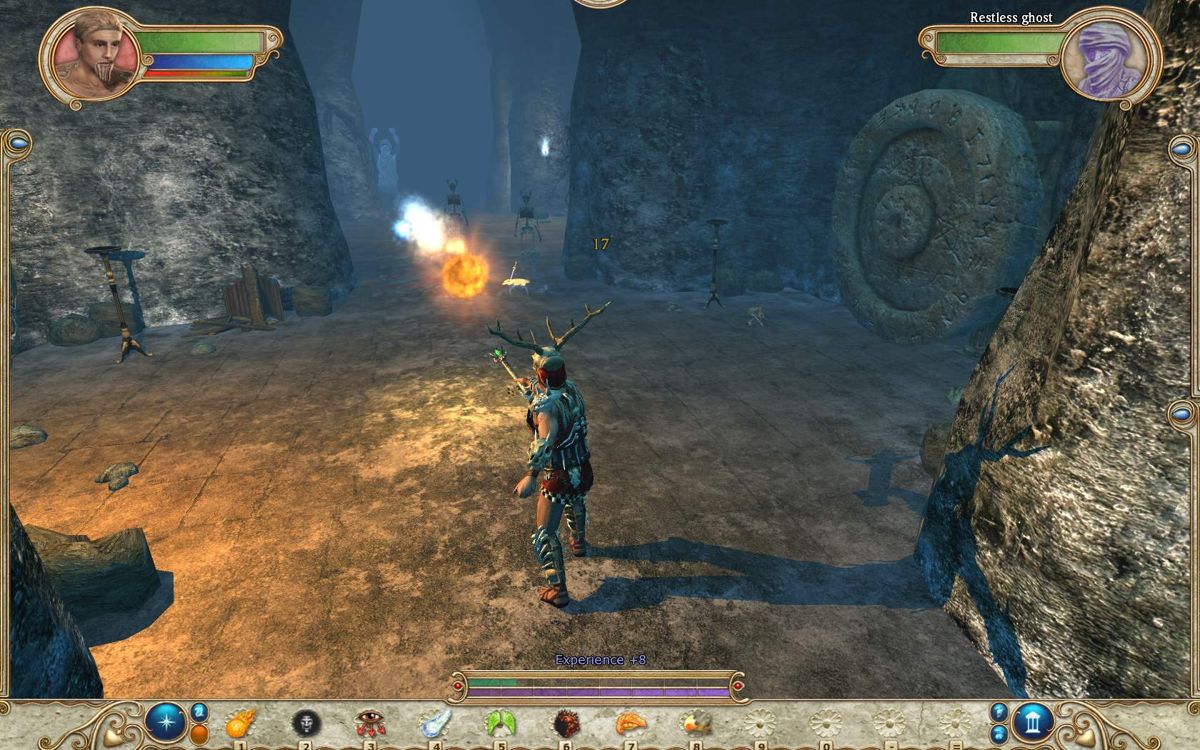
Once the adventure opens up, it settles into familiar point-and-click action RPG territory: roam the Aegean islands, talk to NPCs, take quests, kill creatures, collect gold and equipment, and decide whether a drop is worth wearing or selling. Special abilities come from priests, while ordinary weapons cover bows, swords, and wands. It is a straightforward loop, and that simplicity can be relaxing when you want a fantasy RPG that keeps you moving instead of burying you in systems.
There is some useful friction in the equipment economy. Gear degrades through combat and needs vendor repairs, so money has a practical purpose beyond buying upgrades. Leveling also avoids giving you total control: the six core attributes rise automatically around your class, but each level grants one point to place yourself. That is enough room to nudge a build in a preferred direction without making every level-up a long accounting session.
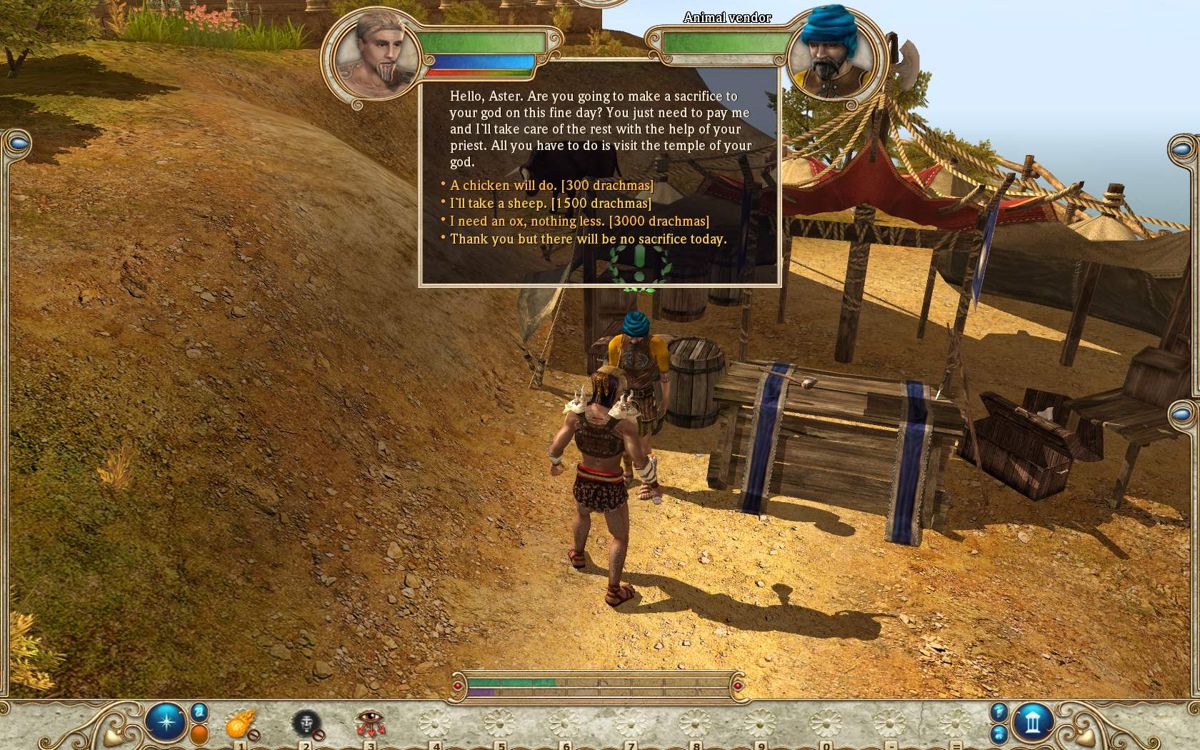
The god-favor system is the game’s strongest twist. Your deity expects attention, whether that means entering arena duels and tournaments or purchasing animals for sacrifice. Ignore a tournament and your god becomes angry; satisfy these demands and you build favor to spend on divine wishes. Arena combat is especially interesting because it strips away normal equipment and equalizes basic skills, asking you to compete without relying on your accumulated loot. It gives the game a welcome change of pace, though it may irritate you if you dislike being pushed toward side activities.
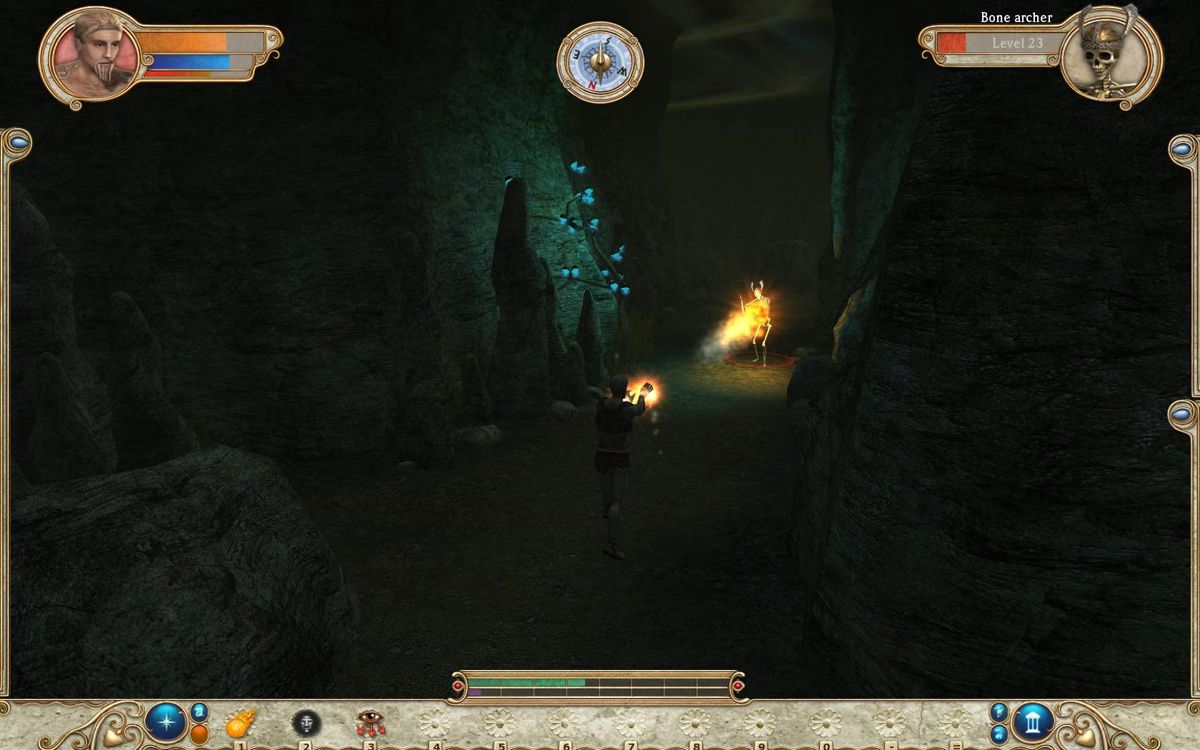
Frustration arrives after death. You return to the last resting place without losing progress, which is merciful, but many enemies respawn. A difficult run can therefore become a repeat trip through opponents you already cleared. Higher-level enemies award more experience, so there is a reason to take risks, but the respawning makes those setbacks feel more time-consuming than they need to be.
Graphics
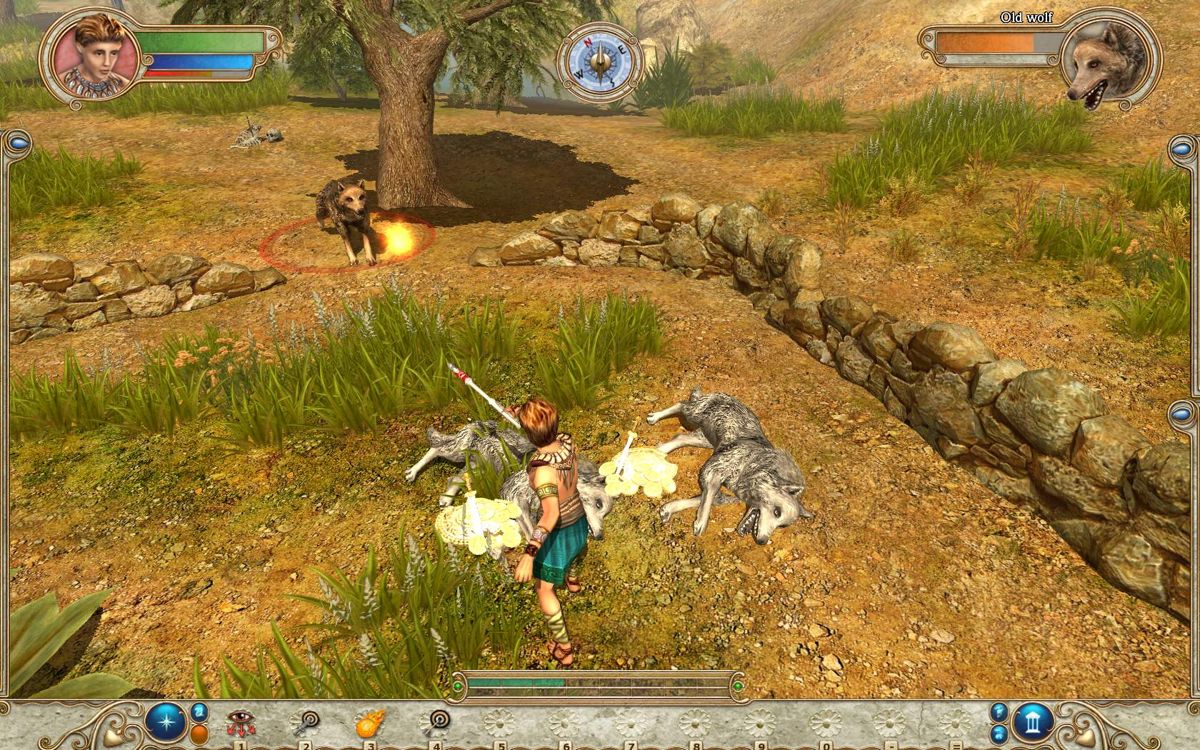
The game uses a behind-the-hero camera as you travel between Greek islands, fight creatures, and interact with townsfolk. That perspective keeps the focus close to your own character and gear rather than presenting the world from a distant tactical view.
Story
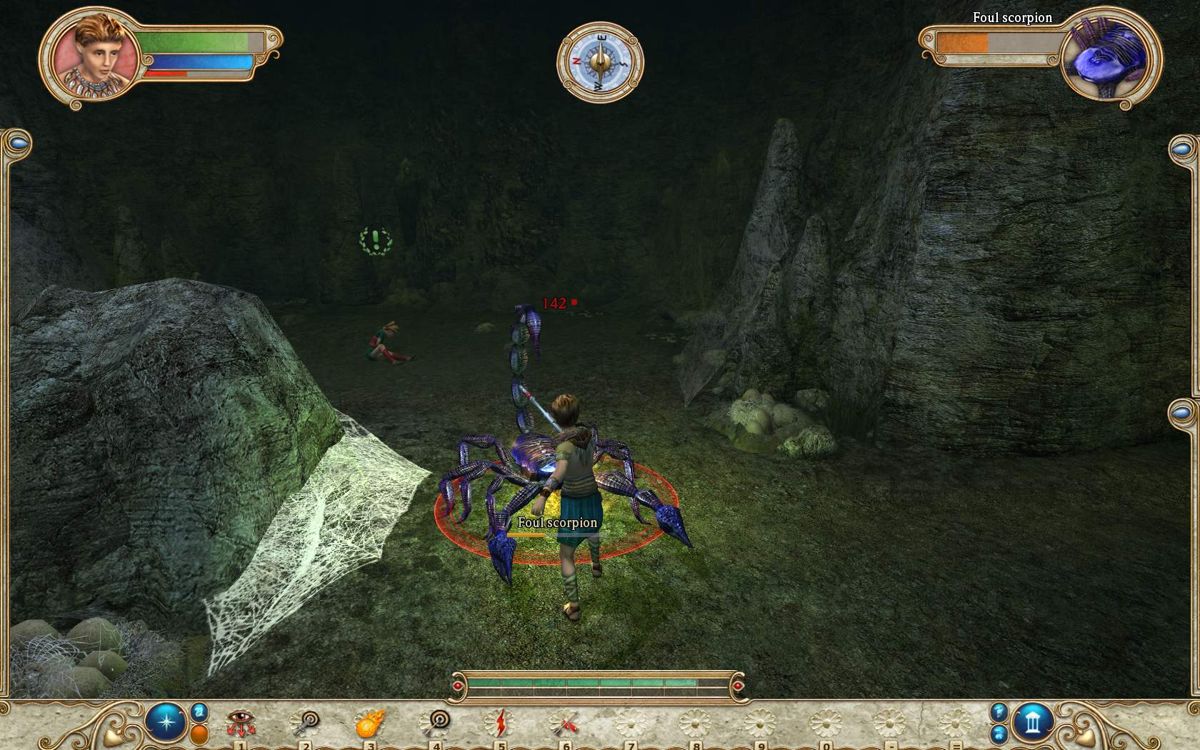
Numen has a stronger setup than its fairly standard loot-and-quest routine might suggest. Your hero grows up beside a sibling on Leros, then loses that sibling to a scorpion bite and carries them to Mount Parnassus for a funeral pyre. It is a direct, myth-shaped tragedy, and the divine intervention that follows gives the opening an emotional reason to matter beyond “a hero needs an adventure.”
At the pyre, a messenger offers the hero a chance to follow one of the gods. Years of training later, the task becomes recovering the Sickle of Kronos, an artifact coveted by every deity. Nine chosen heroes are after it too, each serving a different god. That competitive premise works nicely with the arena structure and the ongoing need to earn favor: you are not merely helping a god, but trying to prove you deserve to represent one.
The story is most appealing if you enjoy Greek mythology as a frame for an action RPG rather than expecting a heavily authored drama. The sibling loss, godly patronage, and race for the sickle supply clear motivation, while the class-aligned choice of deity helps your character path feel connected to the narrative. It is a good foundation, even if the moment-to-moment game is more concerned with combat, equipment, and errands.
Overall Experience
Numen: Contest of Heroes is easy to understand and intermittently easy to enjoy. Its central loop has the dependable rhythm action RPG fans know well, but the early class experimentation and the obligation to cultivate divine favor keep it from being completely interchangeable with every other creature-killing loot hunt. The arena’s equalized contests are a particularly smart counterweight to the normal pursuit of better equipment.
The trade-off is that the game asks for patience with its repetition. Repairs, sacrifices, recurring fights, and respawned enemies after death can make the road to the Sickle of Kronos feel longer than the premise deserves. If you want a relentlessly polished action RPG, this will likely test your patience. If you can enjoy a rougher fantasy adventure with a clear sense of progression and a few unusual obligations to your chosen god, there is enough here to justify the trip.
At a 6 out of 10, it lands as a decent, not essential, mythological action RPG. Give it a chance if experimenting into a warrior, hunter, or mage identity sounds more satisfying than locking in a build immediately, and if the idea of pleasing a god through arena competition and sacrifice adds flavor rather than sounding like homework. Everyone else may find the better ideas buried under too much routine combat cleanup.


Reviews
There are no reviews yet.