 Retro Replay Retro Gaming History, Reviews & Emulation
Retro Replay Review
Gameplay
The opening situation has a strong hook: your rescue ship is stranded far from home, and survival depends on making use of a battered, hostile corner of space. Parkan does not keep you in one lane. You can trade with the robot clans, steal shipments, establish colonies on free worlds, or take planets by force. That range makes the first few decisions matter, because you are not simply clearing missions; you are trying to create a foothold.
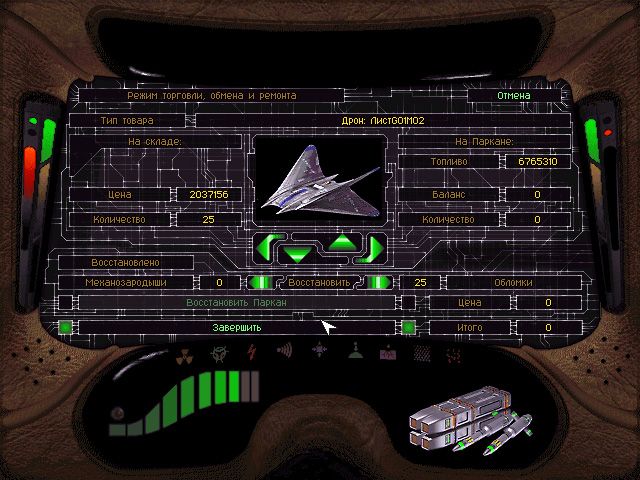
What starts to click is the connection between conquest and production. Planets have temperature, atmosphere, organic matter, and resource values, while factories can repair robot parts and manufacture rockets, drones, and ships. A captured or settled world is therefore more than a flag on the stellar map. It can become part of the machinery that keeps you alive. The game’s management side has more bite because its results feed directly back into the fight for space.
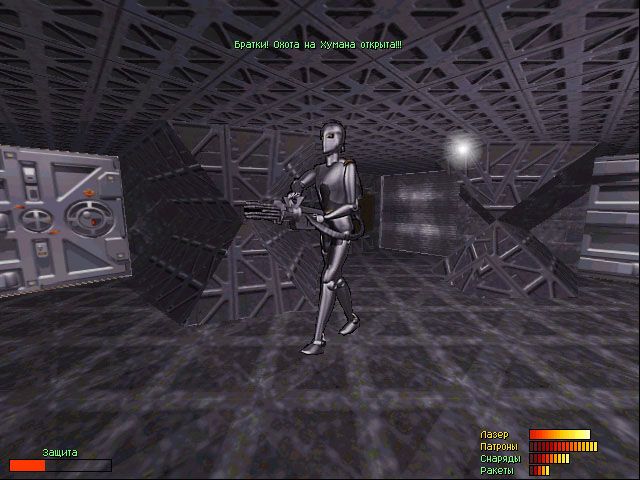
Combat can move you out of the strategic view and into first-person action inside 3D locations, including planets and starships. Docking is also more than a pause between battles: you can search a ship’s hull for items or pull information from its computer. These moments help Parkan feel like a rough-and-ready space adventure rather than a detached empire game, though the shifting priorities can be demanding. You need patience for deciding when to build, when to trade, and when to risk an attack on a defended world.
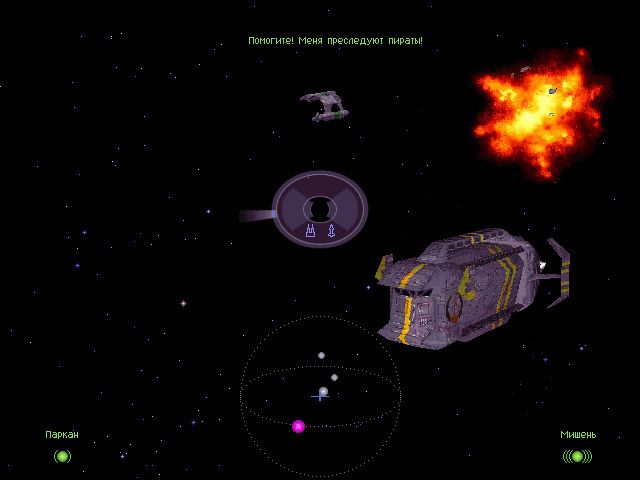
The seven factions give the galaxy useful friction. Their differing fighting capabilities, ships, and home constellations mean expansion is not just a matter of finding empty territory. Astron pirates add another threat, while the various robot clans can be commercial partners or enemies. Randomly generated stellar maps and planetary bases keep the larger campaign from settling into a fixed route, even if that also means you must be comfortable making plans with imperfect certainty.
Graphics
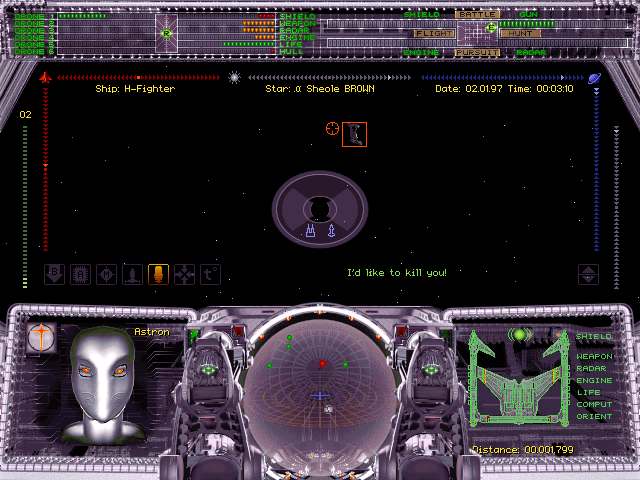
Parkan alternates between a stellar map and 3D first-person spaces where you can explore planets and starships during combat. The clearest visual flourish is in the faction craft: each race has ships shaped around the first letter of its name, such as the H-shaped Hammer cruiser. It is a wonderfully direct bit of sci-fi design that makes the rival clans easier to recognize.
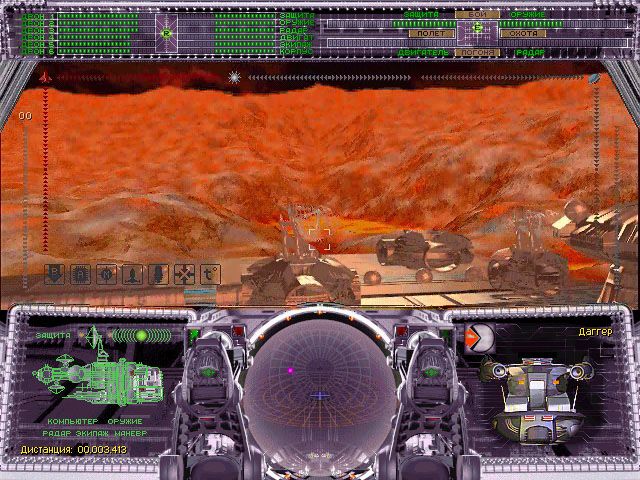
The randomly generated bases and planets put function ahead of carefully authored scenery. The handful of pre-designed bases are likely to stand out more strongly against the procedural locations, but the real visual pleasure comes from seeing a space-management game let you step into the places and ships you are contesting.
Story
The story begins with a straightforward rescue mission gone wrong. Parkan is sent to locate a lost research vessel, then an accident leaves it stranded in a remote sector. That reversal works because it immediately turns a mission of discovery into a question of endurance: how do you get home when the local powers are still fighting over fuel, weapons, and repair capacity?
Rather than pushing a heavily scripted tale, the premise leaves room for the player’s choices to shape the feel of the journey. Trading with a robot clan makes this a story of uneasy survival; raiding shipments makes it a story of desperation or opportunism; colonizing worlds turns it toward rebuilding power. The narrative strength lies in that flexibility, not in a tightly choreographed sequence of plot turns.
The war-ravaged planets give the setting a suitably harsh backdrop. These are worlds where robot factions continue to mine, manufacture, and repair amid old conflict, and your stranded vessel arrives as another force scrambling for leverage. Information recovered from docked ships gives the search for the lost vessel a practical investigative edge, even as the wider game encourages you to get distracted by the business of staying alive.
Overall Experience
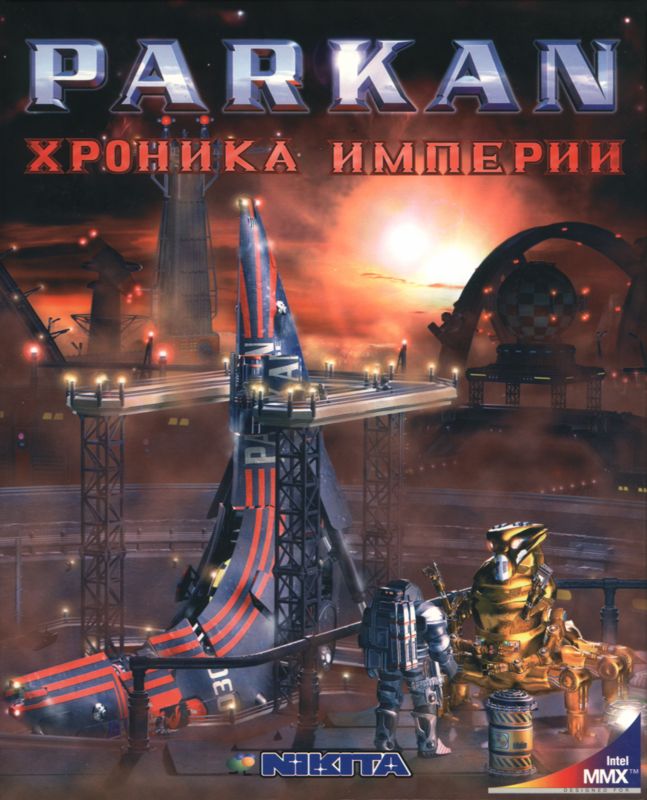
Parkan: The Imperial Chronicles is the kind of ambitious space game that can win you over through the sheer number of problems it lets you solve. You are not limited to shooting your way through a hostile sector, nor are you locked into spreadsheets and planet menus. The game keeps pulling between cockpit action, scavenging, trade, piracy, colonization, and industrial growth, and that uneasy combination is its most distinctive quality.
Frustration can set in if you want a clear, narrow path through the rescue mission. Random maps, competing factions, and several interlocking systems ask you to supply your own direction. But if you enjoy discovering a game’s logic and turning a stranded start into an expanding network of worlds and factories, that complexity becomes the payoff rather than the obstacle.
Give it a chance if the idea of a 1990s space sim with first-person excursions and a real strategic layer sounds more exciting than a polished, linear ride. Parkan has the rough, wide-open energy of a game willing to let you trade, build, investigate, or become a pirate when the situation demands it. That makes it memorable, even when its ambition asks more from you than a simpler space shooter would.


Reviews
There are no reviews yet.