 Retro Replay Retro Gaming History, Reviews & Emulation
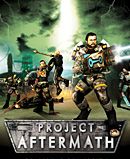
Retro Replay Review
Gameplay
Project Aftermath starts with an unusually refreshing decision for an RTS: it refuses to make you earn the right to have fun through resource gathering and base construction. You command four heroes and their squads from the outset, then head straight into hostile territory. That makes the first hour feel brisk and purposeful. Instead of staring at production queues, you are judging routes, pressure points, and which part of the enemy line needs attention first.
The game’s strongest idea is also its easiest to understand. Red physical, green biological, and blue energy damage correspond to armor in those same colors. You can see what a unit resists, change weapons on the fly, and answer the problem in front of you. It is a clean bit of battlefield language that makes squad management more than simply throwing everyone at the nearest target. When this starts clicking, you are reading enemy protection and adapting rather than relying on raw numbers alone.
Each of the four heroes has distinct abilities and RPG-like parameters, with a squad attached to each. That setup gives the campaign a more personal command feel than a conventional army-builder. Capturing enemy respawn zones is the central pressure, but missions also ask you to free prisoners, explore the map, and wipe out enemy forces. These side goals help the ten missions avoid feeling like identical assaults, although the focused campaign is better suited to a concentrated run than an endlessly replayable strategy sandbox.
Graphics
The angled, overhead battlefield view keeps squads and enemy groups in sight, while the red, green, and blue damage and armor coding is immediately useful in the middle of a fight. Story scenes use a graphic-novel style with voice acting, giving the campaign a distinct break from the tactical maps.
Story
You lead four heroes against the New Order, and the campaign frames that conflict through graphic-novel storytelling rather than leaving the missions to stand alone. The voice acting matters here: it gives the campaign a directed, authored feel instead of making it seem like a loose set of tactical scenarios.
The story’s real value is momentum. A ten-mission structure suits a resistance campaign built around pushing through enemy-held areas and taking their respawn zones. You are not settling into a long economic war; you are advancing through a sequence of operations with a clear opponent in front of you.
Do not come in expecting a huge open-ended sci-fi epic. Project Aftermath is more effective as a tightly bounded campaign where the narrative context keeps the next tactical objective from feeling arbitrary. The graphic-novel approach and voices should especially appeal if you like your strategy games to give missions a little character.
Overall Experience
Project Aftermath earns its 7.2 because it has a firm point of view. It trades the usual RTS economy for direct squad command, then backs that choice with a damage system that is both visible and tactically relevant. The result is a game that gets to the decisions quickly and usually lets you understand why a particular approach is working or failing.
Frustration can set in if you want the long-building rhythm of harvesting, constructing, and slowly assembling a massive force. That entire layer is absent by design. The hero-and-squad format also means you are working within a deliberately smaller scale, so the pleasure comes from managing the right response with the right squad rather than outproducing an opponent.
Give it a chance if you enjoy real-time tactics with a clear campaign spine and appreciate systems that explain themselves in the heat of battle. The payoff is a lean sci-fi strategy game that knows what it wants to cut, and is better for that focus more often than not.



Reviews
There are no reviews yet.