 Retro Replay Retro Gaming History, Reviews & Emulation


Retro Replay Review
Gameplay
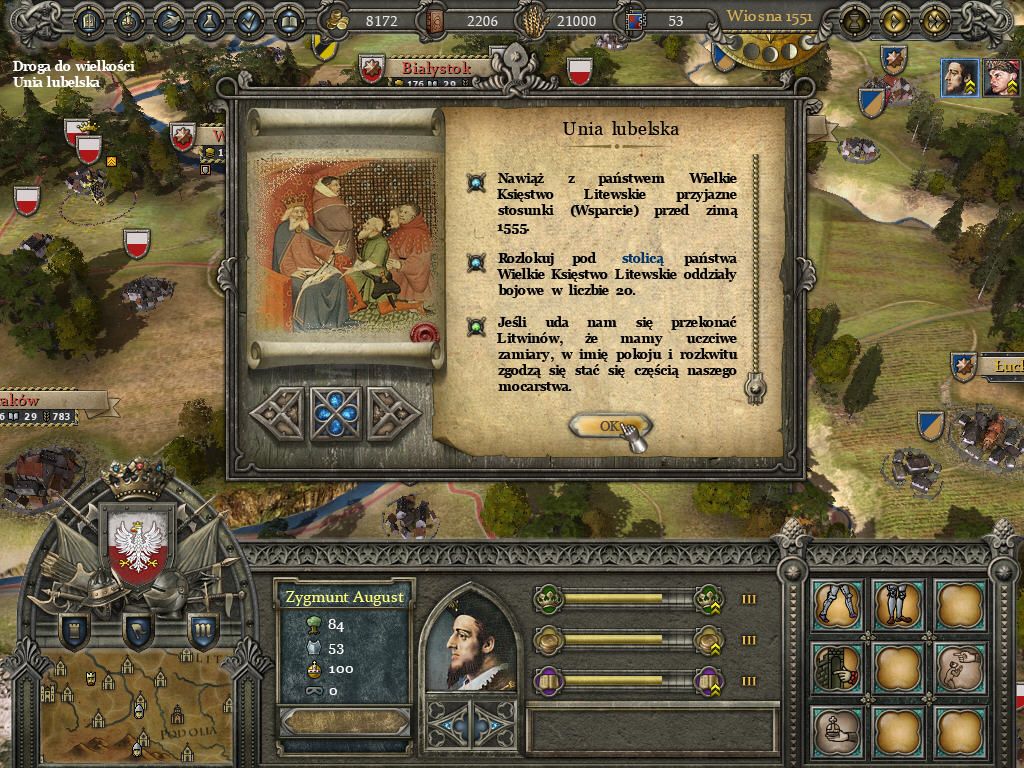
Reign: Conflict of Nations starts with an enticing strategic promise: pick a faction, look across a medieval map of Eastern Europe, and decide how you intend to grow. You can wage war, negotiate, invest in an economy, or use political and religious pressure, and the game is sensible enough to insist that no single route carries an empire by itself. That broad approach is the best reason to play it. Even before you have conquered much land, you are already choosing whether limited money belongs in military technology, diplomacy, or the groundwork that keeps your cities productive.
The real-time clock might sound intimidating for a game this concerned with planning, but the ability to pause at any moment is crucial. Use it often. It lets you absorb messages, react to shifting borders, and give your characters jobs without feeling pushed into careless decisions. Your on-map roster is limited to twelve characters, so monarchs, commanders, governors, priests, alchemists, and spies become meaningful commitments rather than an endless pile of units. A commander who can raise troops and construct barracks is useful in a very different way from a monarch exerting political influence, while specialists such as ambassadors, merchants, preachers, and assassins let you pursue narrower goals.
That system begins to click once you stop treating the map as a simple conquest game. Influence depends on where characters stand in relation to cities, and the economy needs attention alongside troop recruitment. Hiring workers and maintaining morale are not glamorous tasks, but they matter because an army without a functioning city behind it will not carry the campaign. Random disruptions—revolts, famine, disease, and sudden alliances—further punish a rigid plan. The resulting tension can be satisfying: you may have the military ambition to take a neighbor, yet lack the stability or resources to do it safely.
Combat is where the experience loses some of its drama. Battles resolve through an overview rather than a battlefield, with the computer handling the actual clash. You can still direct priorities, including focusing weak units, retreating, or fighting to the death, so there is more input than watching numbers tick down. Still, if you want tactical maneuvering and a visible payoff for your armies, these encounters will feel detached. Reign is stronger as a game of preparation and consequence than as a game of commanding a battle in the moment.
Graphics
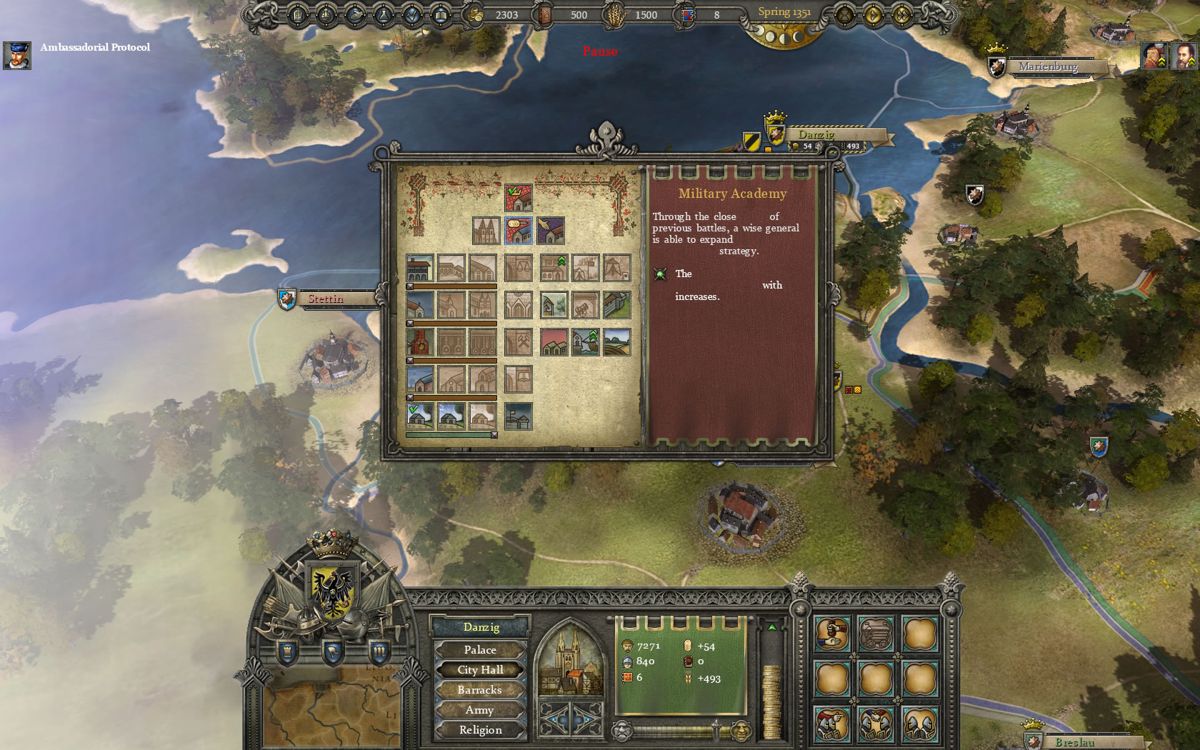
The entire game unfolds on a world map, where capitals and smaller settlements anchor your attention and conquest is marked by a city’s shield changing to your faction. It is a functional strategic view: you are watching territory, characters, and political control rather than close-up medieval action.
Battle screens are overview displays rather than visual clashes between troops. That makes the results easy enough to check, but it also reinforces the game’s dry, managerial feel when war should be the most exciting part of a campaign.
Story
There is no single authored tale driving Reign: Conflict of Nations; its story is the alternate history you make between 1350 and 1650. The main campaign supplies concrete objectives, usually centered on capturing a required number of states, while side quests and changing conditions give that expansion a little more texture. You are not following a cast through set-piece drama. You are trying to leave your faction stronger than you found it.
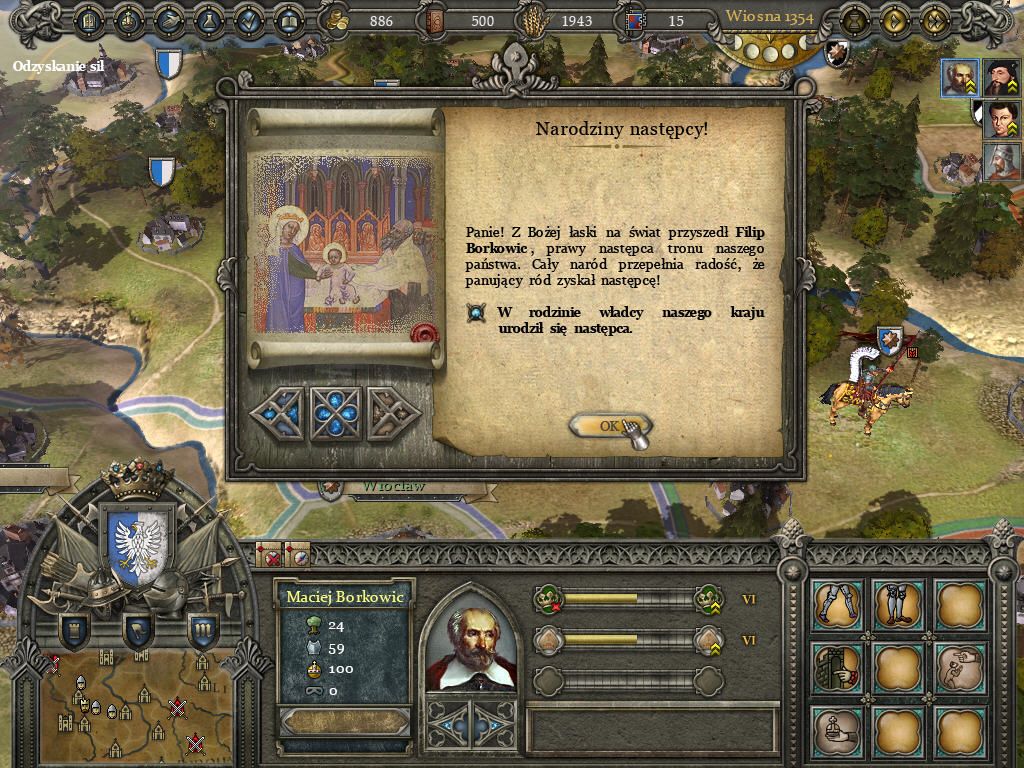
That open structure fits the subject matter well. A surprise alliance, a revolt in a vulnerable area, or a famine can turn what looked like a straightforward march across the map into an uncomfortable political problem. Religion can also become part of the plan through preachers, while ambassadors and merchants offer paths that are less direct than annexation. The story that emerges is often one of compromise: a ruler delaying a war to repair morale, a state buying safety through negotiation, or an opportunist striking when a neighbor is weakened.
The trade-off is a lack of personal drama. Because events arrive as changing conditions and messages on the map, their impact depends heavily on how invested you are in your own plan. If you enjoy writing the history in your head, the campaign framework is a useful springboard. If you need strong characters and scripted turning points to make a strategy campaign memorable, it may feel impersonal.
Overall Experience
Reign: Conflict of Nations is a decent, sometimes absorbing strategy game built around the unglamorous work of holding an empire together. Its best moments come from realizing that your next conquest has implications beyond the army at the border: your technology choices, city morale, political influence, specialists, and diplomacy all pull on the same limited pool of resources. The pause button and the variety of factions help make that large-scale map inviting rather than overwhelming.
Frustration sets in when the game asks you to care about a battle but refuses to show it as more than an abstract result. The campaign’s objectives and random events create pressure, yet the military payoff is comparatively muted. That does not ruin the design, because war is deliberately only one piece of the larger machine, but it makes the game a harder recommendation for anyone craving spectacle or hands-on tactical combat.
Give it a chance if you enjoy pausing a sprawling map, making difficult investments, and accepting that diplomacy, local stability, and economic management can matter as much as taking land. You will get the most from it by embracing its measured pace and treating every character placement and city decision as part of a larger political puzzle. For everyone else, its remote combat and administrative weight can make the march to empire feel more dutiful than triumphant.


Reviews
There are no reviews yet.