 Retro Replay Retro Gaming History, Reviews & Emulation
Retro Replay Review
Gameplay
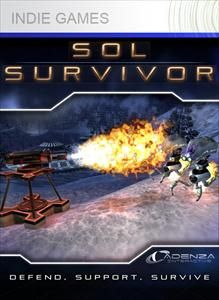
The first hour of Sol Survivor is driven by a simple kind of tower-defense anxiety: you watch a wave enter the colony, see your turrets start firing, and immediately wonder whether one bad gap will send enemies marching straight to the town center. Creeps consume souls when they get there, and losing every colonist ends the mission. That makes leaks feel costly without making the basic objective hard to understand.
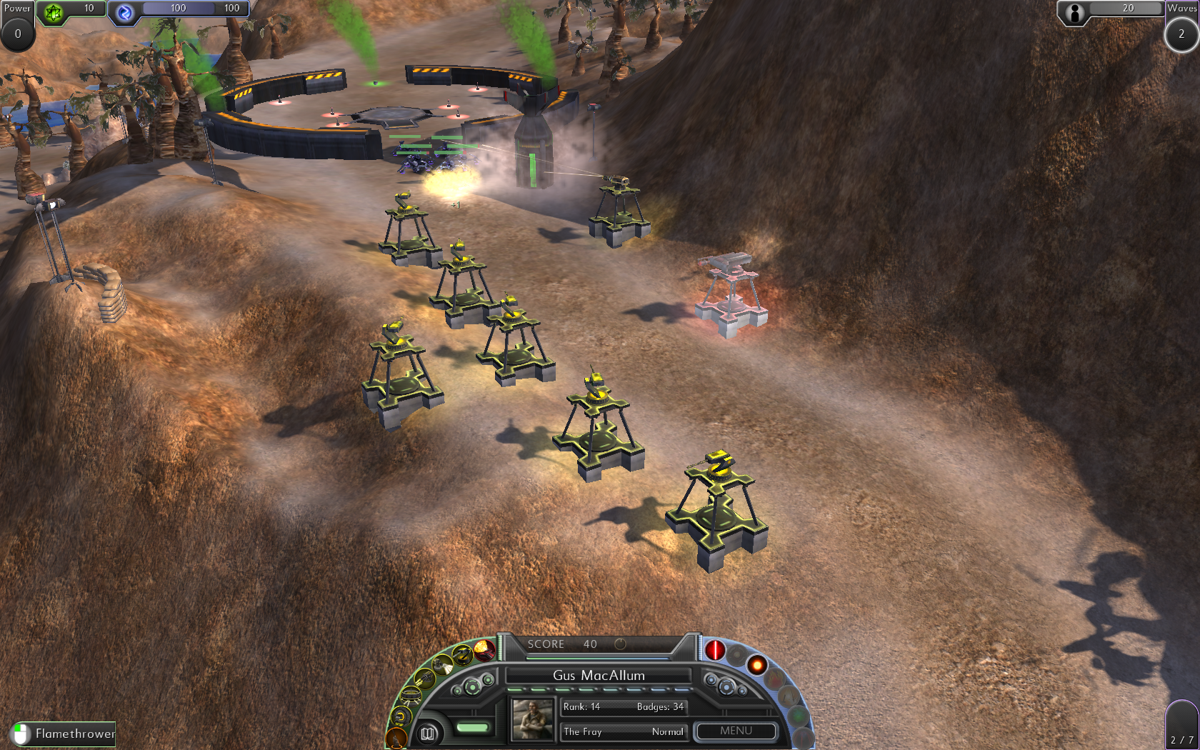
Building is satisfyingly direct. Mass comes from dead enemies, then goes back into new turrets or upgrades, with each tower offering its own range, firing rate, and damage. Enemy resistances and vulnerabilities stop you from treating every gun as interchangeable. The game starts clicking once you are looking at what a wave is vulnerable to and deciding whether to expand coverage, improve an existing turret up to level three, or hold resources for a more useful response.
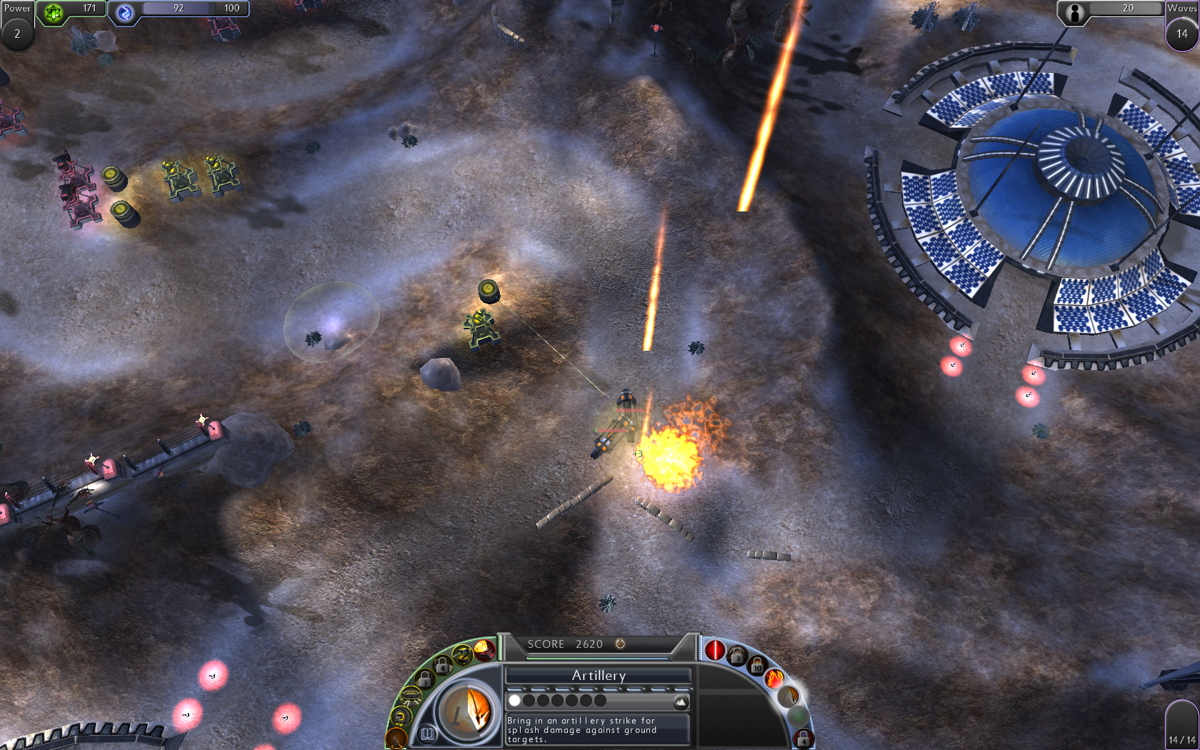
The catch is permanence. Turrets can go anywhere except the paths, but they cannot be moved; selling one only returns 75 percent of its cost. That makes poor placement frustrating in exactly the way tower defense veterans will recognize. Orbital support attacks are the safety valve. Power replenishes over time, so lasers, missiles, EMPs, and nukes are not something to fling around carelessly, but they can erase the last problem enemy that has broken through your line.
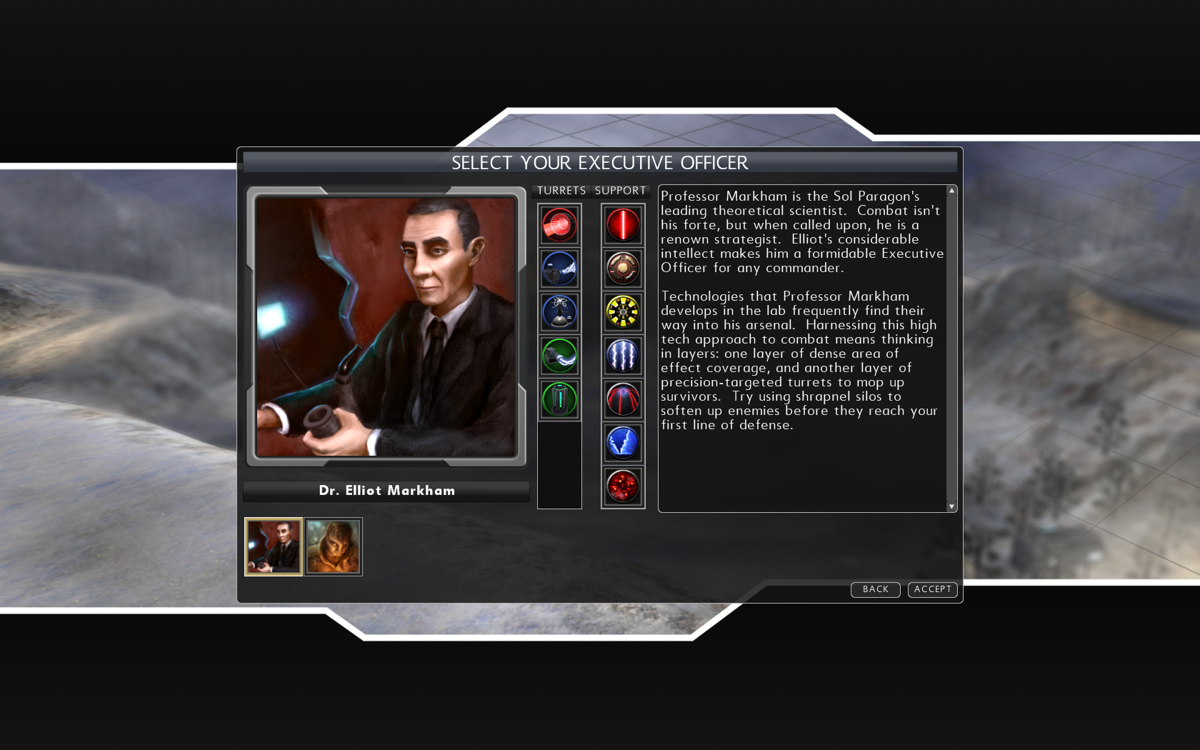
Commanders give the game welcome personality at the tactical level. A scientist leans into lasers and EMPs, while a more conventional commander brings mortars and machine guns. Your choice determines which turrets and support attacks you can use, so it is worth trying more than one rather than assuming there is a single universal build. The four campaigns provide a structured route through the colonies, while survival mode is there for the pleasure and punishment of waves that never stop getting tougher. Co-op and versus multiplayer, available over LAN and Internet, add reasons to revisit the defenses after the campaigns.
Graphics
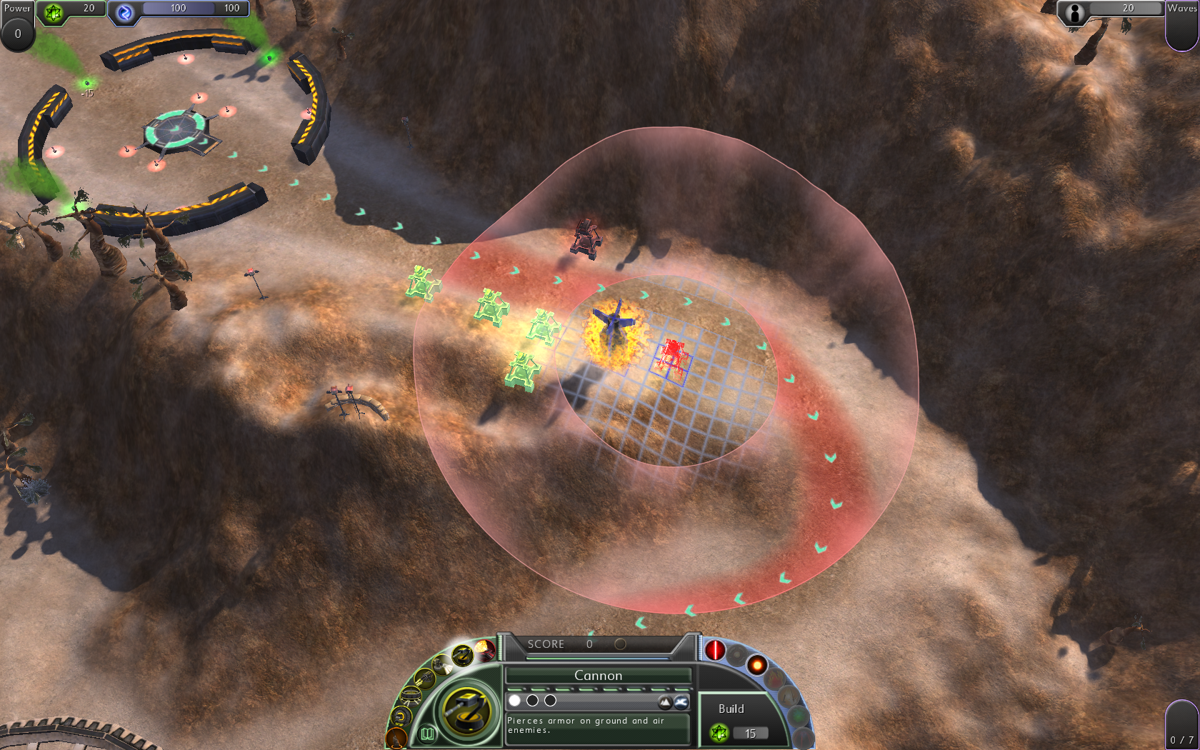
Sol Survivor uses a diagonal-down, free-camera view that suits its battlefield focus: you can survey the colony routes, place defenses around them, and follow invading waves toward the town center. The four campaigns have their own look and feel, helping the march across multiple colonies avoid becoming one long blur of identical maps.
Story
The story setup is spare but effective for the genre. The Ascendancy arrive by dropship, land on human colonies, and follow set paths toward the population they intend to consume. You are the commander trying to stop that invasion before the town center is emptied of souls.
That premise mainly serves the missions rather than demanding attention between them. The colony stakes give every escaped creep a concrete consequence, which is more useful here than a pile of lore would be. You are not defending an abstract health bar; you are watching an invasion reach civilians if your plan fails.
Each campaign has its own look and feel, so the conflict is not framed as one endlessly repeated battlefield. Still, the narrative strength is the immediate pressure of defending a colony under assault, not a deep character-driven campaign. Come for the tactical decisions, and let the sci-fi invasion backdrop do its job of making the losses matter.
Overall Experience
Sol Survivor is a good fit if you want tower defense with a little more decision-making than a single all-purpose tower path. Vulnerabilities, commander-specific arsenals, turret upgrades, and limited orbital intervention create enough moving parts to reward attention without burying the basic goal beneath systems.
Its harshest lesson is also its most memorable one: commit to a bad turret location and you cannot simply drag it somewhere better. You can sell it, take the reduced return, and rebuild, but that tax makes you respect the map and your early spending. Some will find that punitive; others will appreciate that the game asks for a plan instead of easy correction.
The payoff is a sturdy sci-fi defense game with campaigns for directed play, an endless survival challenge, and multiplayer options for competitive or cooperative sessions. It does not reinvent the genre, but it understands the pleasures that matter: a defense finally holding, a well-timed orbital strike rescuing a run, and the urge to try again with a different commander when the last wave exposes a flaw in your layout.


Reviews
There are no reviews yet.