 Retro Replay Retro Gaming History, Reviews & Emulation
Retro Replay Review
Gameplay
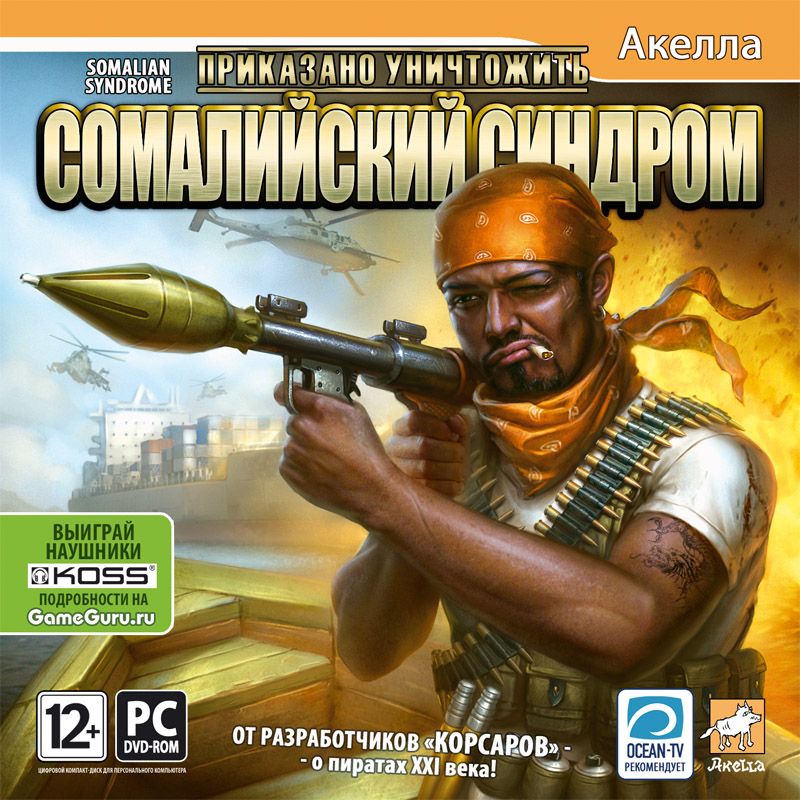
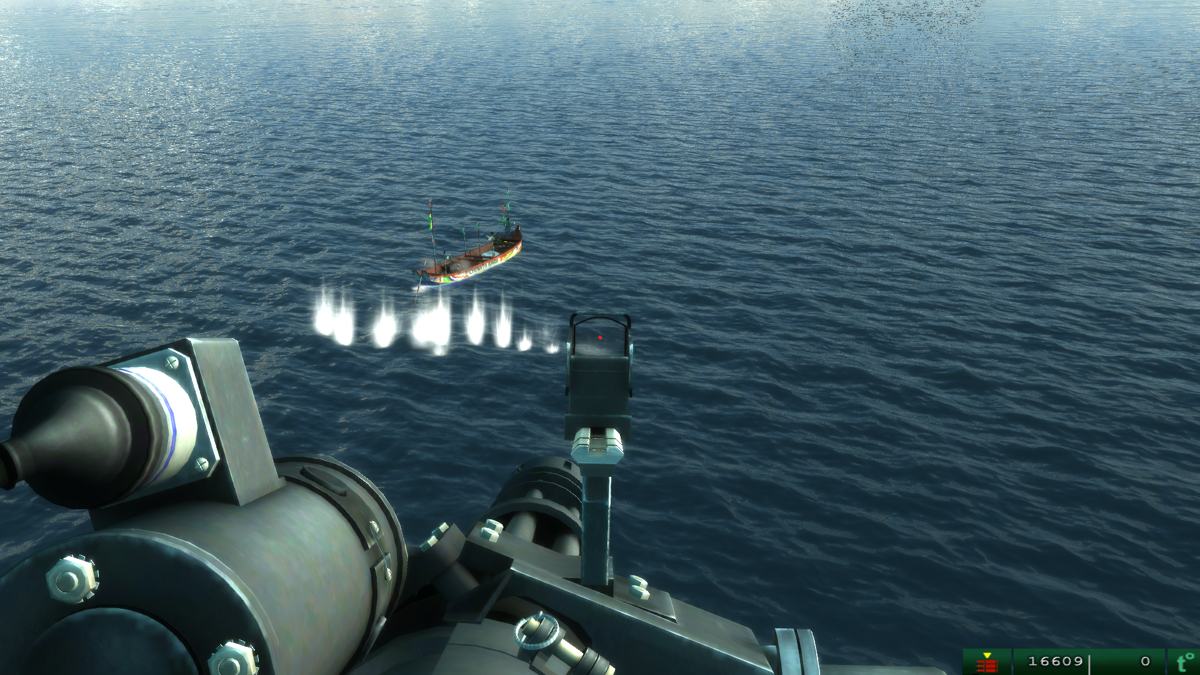
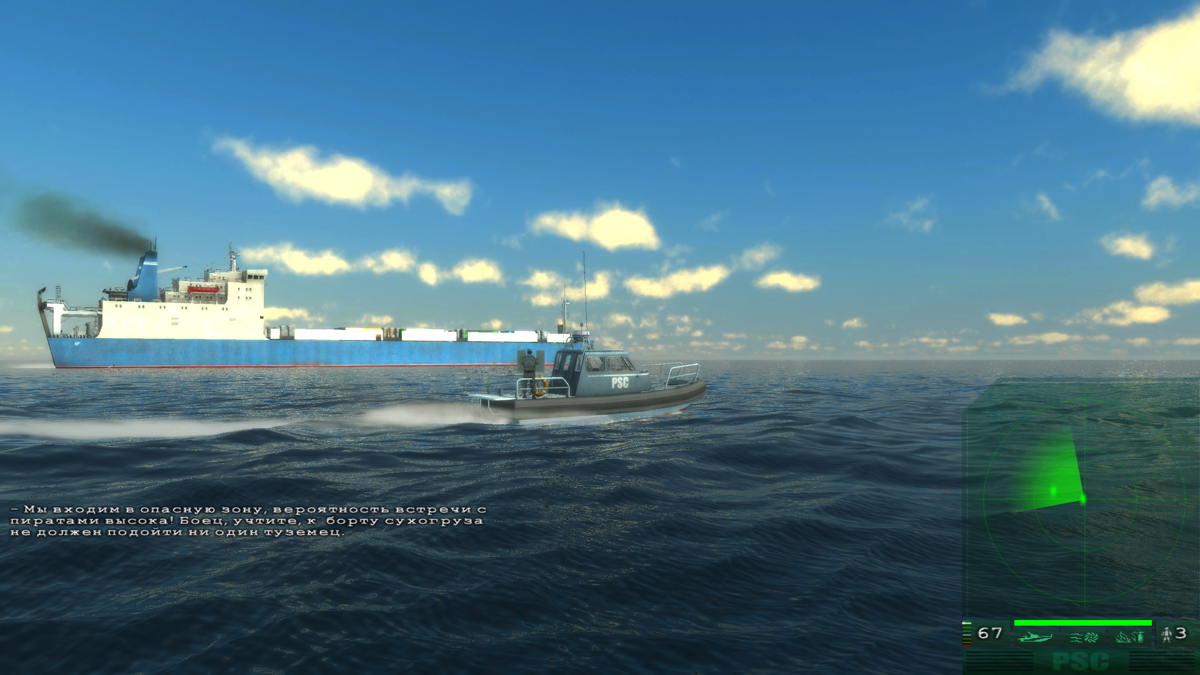
The opening proposition is refreshingly clear: commercial ships are under threat, and your private-security outfit answers with overwhelming firepower. Somalian Syndrome does not dress that up as a subtle operation. You take control of a helicopter armed with a Gatling GAU-17 or a 32-foot motorboat carrying .50-caliber Browning M2HB machine guns, Mk. 19 automatic grenade launchers, and a KPVT heavy machine gun, then head toward whatever endangers the client.
That weapon list gives the action a satisfyingly heavy, hardware-first flavor. A helicopter and an armed boat promise two very different ways to meet threats at sea, while the enemy roster reaches beyond pirate craft to include light airplanes. The missions are built around destruction rather than delicate objectives, so the central question is whether you enjoy the fantasy of armed escort work carried out at maximum volume.
The limitation is baked into that same simplicity. “Destroy everything representing the danger” is a strong arcade-minded brief, but it leaves little room for the human stakes that the premise invokes. If you come for an uncompromising run of vehicle combat missions, the focus is easy to understand. If you want naval action with more than a target-rich security scenario behind it, the repetition of that premise may start to wear thin.
Graphics
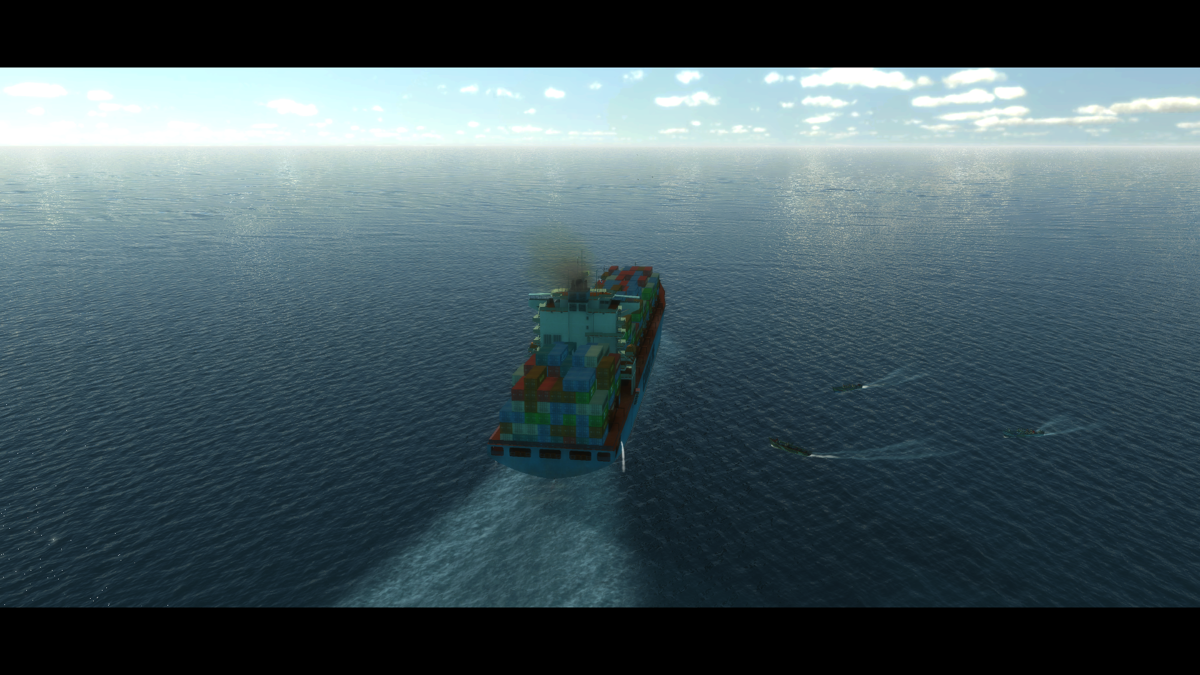
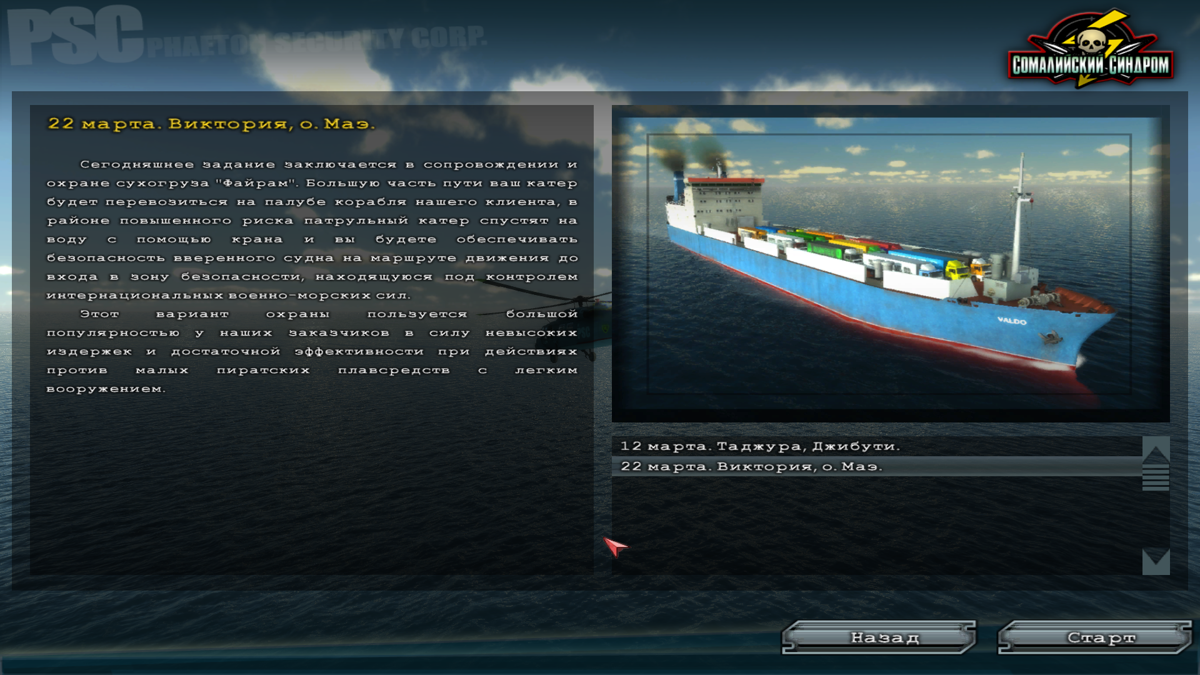
The visual hook comes from recognizable modern military hardware and commercial shipping rather than invented science-fiction machinery. Helicopters, fast motorboats, pirate vessels, and light airplanes give the missions a contemporary maritime-combat look, while the use of named ships such as Faina and Sirius Star adds a disquieting real-world edge.
Story
Somalian Syndrome begins from the real danger of piracy around Somalia: frightened shipping companies hire private guards, and you work for one of those groups. It is an immediately understandable setup, and it avoids spending time on a grand conspiracy or an elaborate fictional war.
There is also a serious tonal problem here. The game explicitly draws on real vessels and incidents, meaning its shooting missions sit close to events that involved actual victims. That can make the premise feel more immediate, but it can also feel crass when the answer to the crisis is framed so simply as extermination.
Anyone hoping for a thoughtful examination of piracy, shipping, or private security should not mistake the setup for one. The story functions chiefly as a reason to put armed aircraft and boats into combat. Taken on those terms, it is direct and serviceable; taken as drama, it is too blunt to escape the weight of its source material.
Overall Experience
Somalian Syndrome is easiest to recommend to the gamer who sees “helicopter and heavily armed security boat versus pirate craft and light aircraft” and immediately wants to try it. There is a specific, unusual niche here: contemporary anti-piracy combat with a mission-based structure and a concentration on mounted weapons.
What makes it memorable is not narrative sophistication but its unapologetically forceful fantasy of protecting shipping lanes. The first impression is all steel, engines, and oversized guns; the sustained appeal depends on how much you enjoy that straightforward objective loop. It is a narrower proposition than its real-world backdrop suggests.
The real-world framing ultimately keeps the experience from feeling like harmless disposable action. Some gamers will appreciate the recognizable vessels and grounded setting, while others will find the use of genuine piracy tragedies hard to shake. Give it a chance if the vehicle-combat premise is exactly your kind of thing, but do so for the action, not for a nuanced account of the conflict it borrows from.


Reviews
There are no reviews yet.