 Retro Replay Retro Gaming History, Reviews & Emulation
Retro Replay Review
Gameplay
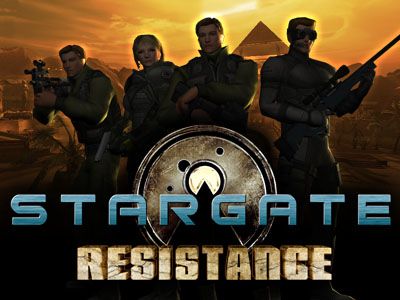
The immediate hook is simple and effective: you are not just wearing a Stargate label over a generic sidearm duel, but choosing between Stargate Command and the System Lords, then committing to one of three distinct class roles on that faction. Soldier, Scientist, and Commando sit opposite Jaffa, Ashrak, and Goa’uld, so the match begins with a bit more identity than a standard team shooter. That factional framing is exactly what fans want from an SG-1 multiplayer game.
Matches are built for small teams, with up to 16 combatants split evenly between the sides. Team Deathmatch offers the clearest route into the game, while Capture the Tech and Domination ask you to stop treating every opponent as the only priority. That objective focus is where the game has its best chance to click: classes, abilities, skills, and weapons matter more when your side has a reason to move together rather than simply chase eliminations.
There is also a real limit to how much variety the structure can sustain. Three worlds and three modes leave a compact rotation, and the lack of in-game voice chat is an awkward fit for team PvP that benefits from fast coordination. Text chat can cover basic calls, but it does not have the same immediacy when a capture point or tech objective suddenly demands attention. If you can gather a regular group, the teamwork has more room to breathe; solo play risks feeling thin faster.
Graphics
The game’s locations at least carry clear Stargate-facing labels: Earth/SGC, Piramess/Whiteout, and Amarna/Temple. That gives each match a recognizable place within the fiction instead of dropping the two factions into anonymous arenas. The contrast between an SGC setting, a whiteout world, and a temple environment is useful for keeping the small map selection from blurring together immediately.
Faction and class selection also helps readability at the broadest level. Stargate Command and the System Lords are clean opposing sides, and the named roles make it easier to understand the kind of character you have chosen before the action starts. In a shooter with six classes across two factions, that direct presentation matters.
More than anything, the visual identity serves the license. You are fighting an Earth-versus-Goa’uld war across places tied to that conflict, which gives objective matches a stronger mood than an interchangeable sci-fi backdrop would. The game benefits when you want that specific SG-1 flavor alongside the shooting.
Story
There is no elaborate narrative campaign pulling you from mission to mission. Instead, Stargate: Resistance turns its story into a multiplayer premise: the war between Earth’s Stargate Command and the Goa’uld System Lords is already underway, and every match is another skirmish for galactic supremacy. It is a functional setup, but not one that asks you to come for plot revelations.
That approach suits quick online sessions. Picking a faction gives your participation a basic dramatic stake, and the opposition is immediately legible: SGC occupies the heroic side while the System Lords are explicitly the villains. The game does not need a long introduction before it lets you take that side onto the field.
Fans hoping to deepen their familiarity with the factions and match goals can consult the Stargate: Resistance manual. For everyone else, the useful thing to know is that the fiction works as seasoning for competitive matches, not as the main reason to stay invested over time.
Overall Experience
Stargate: Resistance is a serviceable team shooter whose best quality is that it understands the basic fantasy it is adapting. Taking the SGC or System Lord side, selecting one of three roles, and contesting objectives gives the game a decent first-hour pull. It is easy to see why an SG-1 fan would want to give it a shot.
The trouble arrives once the novelty settles. Small-team PvP needs communication and repeatable variety to maintain momentum, and this package makes both difficult: text chat has to carry coordination, while three worlds and three modes create a limited loop. Rank advancement and achievements offer goals, but they cannot fully replace the social energy of a well-organized team or a broader rotation of fights.
At its best, this is a focused licensed multiplayer diversion for gamers who value faction flavor and objective-based competition over a huge feature set. At its worst, it feels like a promising Stargate battlefield squeezed into too small a space. Give it a chance if the SGC-versus-Goa’uld matchup is enough to get you invested; otherwise, its 6.2-level experience is likely to run out of surprises quickly.



Jade Handheld –
The multiplayer idea still has a lot of charm, even if the presentation clearly shows its age. I would love to see a modern version preserve the same fast, straightforward matches.