 Retro Replay Retro Gaming History, Reviews & Emulation

Retro Replay Review
Gameplay
The first question tells you exactly why this is more engaging than a standard 1980s quiz. Before the four answers appear, you have to decide whether to hit “I Know It!” for one high-stakes shot or “I’ll Guess It!” for three attempts with a shrinking payoff. It is a simple decision, but it puts confidence on the line. When you recognize the answer immediately, the bigger score is tempting; when you only have a hazy memory, playing it safe feels sensible rather than cowardly.
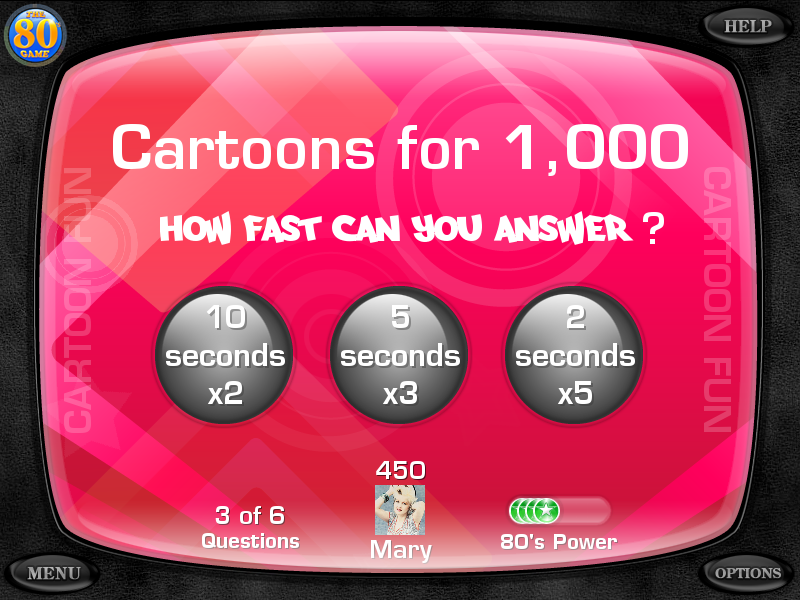
The difficulty selection adds another layer to that push-your-luck loop. Harder questions pay more, so you are not merely answering what comes up; you are deciding how aggressively to chase points. Correct answers also build Star Power, eventually raising your 80’s Power Level for larger rewards and longer runs in Free Play and Challenge. That progression gives the quiz a useful sense of momentum, especially once you stop treating every question as equally valuable.
There is a decent spread of ways to play around the same core rules. Free Play delivers ten random questions for a quick high-score run. Challenges are the meatier solo target, asking you to pursue 500,000 points and collect stars in each category. Episodes package a set of questions with a performance rank, while Versus alternates questions between two players and awards the win to the higher score. Versus should be the liveliest option in a room full of competitive nostalgia buffs, since the scoring gamble makes each turn more interesting than simply shouting answers first.
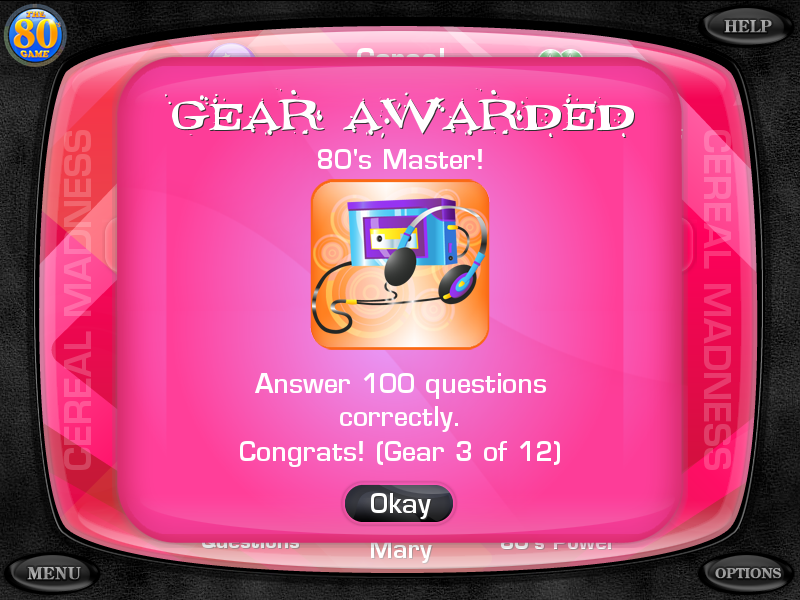
The year bonus is a nice final test after a correct response, but it can also expose the line between knowing an event and remembering precisely when it happened. That will delight serious 80s obsessives and occasionally frustrate anyone whose knowledge is broad but fuzzy. Achievements and unlockable 80s gear give long-term play a little extra structure, though the real reason to return is the pleasure of turning half-remembered cultural facts into a better score.

Graphics
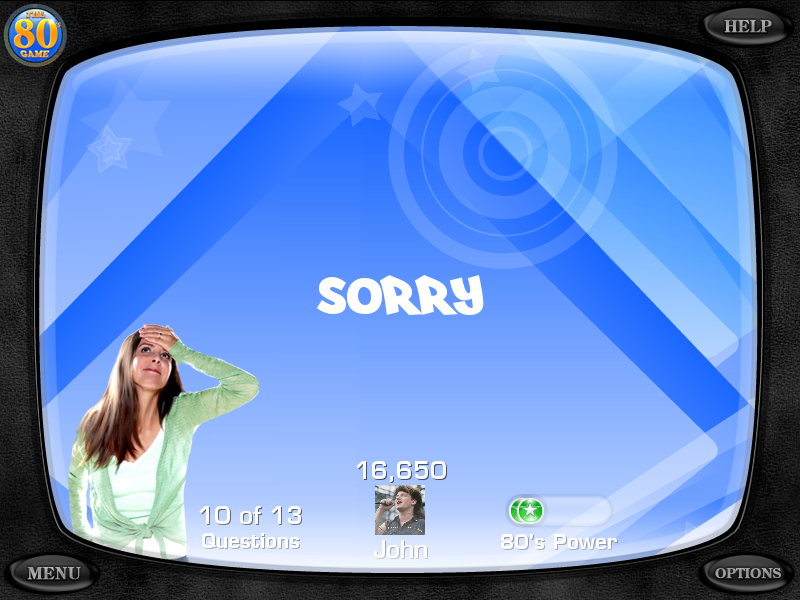
Questions lead into a four-answer layout, keeping the choice in front of you once you have made your “I Know It!” or “I’ll Guess It!” wager. The game’s focus is squarely on getting you from prompt to answer to score without slowing down the trivia rhythm.

Story
This is a game about shared memory rather than a plotted story. Its subject is the 1980s, and every question draws from the decade’s music, movies, television, sports, and stranger Wild Card material. The small narrative pleasure comes from seeing which parts of that cultural pile still live vividly in your head.
Episodes give that nostalgia a little shape by grouping questions into a set and ranking your performance at the end. That structure makes an episode feel more like a short test of your 80s credentials than another random round, even though the drama remains entirely in whether you can remember the answer under scoring pressure.
Martha Quinn’s name establishes the game’s decade-specific tone, while the questions themselves carry the experience. If the 80s means more to you than a few famous songs and movies, the subject matter can create plenty of personal mini-stories: the answer you knew instantly, the year you nearly had, and the obscure fact that sends you looking for another round.
Overall Experience
The 80’s Game With Martha Quinn understands that trivia needs more than correct answers to stay lively. Its best idea is making you declare your confidence before you see the options. That one choice creates tension, rewards expertise, and makes a wrong answer sting in a way that encourages “just one more” attempt.
You should give it a chance if 1980s pop culture is already a reliable conversation starter among your friends, or if you enjoy squeezing a higher score out of repeatable quiz categories. The blend of Free Play, category-focused Challenges, ranked Episodes, and alternating-turn Versus gives the same question-and-answer foundation enough different contexts to avoid feeling like a single disposable round.
Its limits are tied to its focus. A player who does not care about the decade will not find much reason to chase Star Power or gear unlocks, and somebody looking for a sprawling strategy game will find a much lighter score-attack experience. But for the right crowd, the escalating point values, difficulty choices, and confidence wagers turn a themed trivia game into a surprisingly competitive evening.


Reviews
There are no reviews yet.