 Retro Replay Retro Gaming History, Reviews & Emulation


Retro Replay Review
Gameplay
Retribution starts in comfortable territory if you know Dawn of War II: you direct a compact force in real time, heroes can swing fights with powerful abilities, and enemies feed the RPG loop with experience and equipment. That first hour has an immediate pull because every battle is asking you to make the most of a limited group rather than simply flood the map with troops. Finding gear and deciding who gets it between missions gives each squad a little ownership.
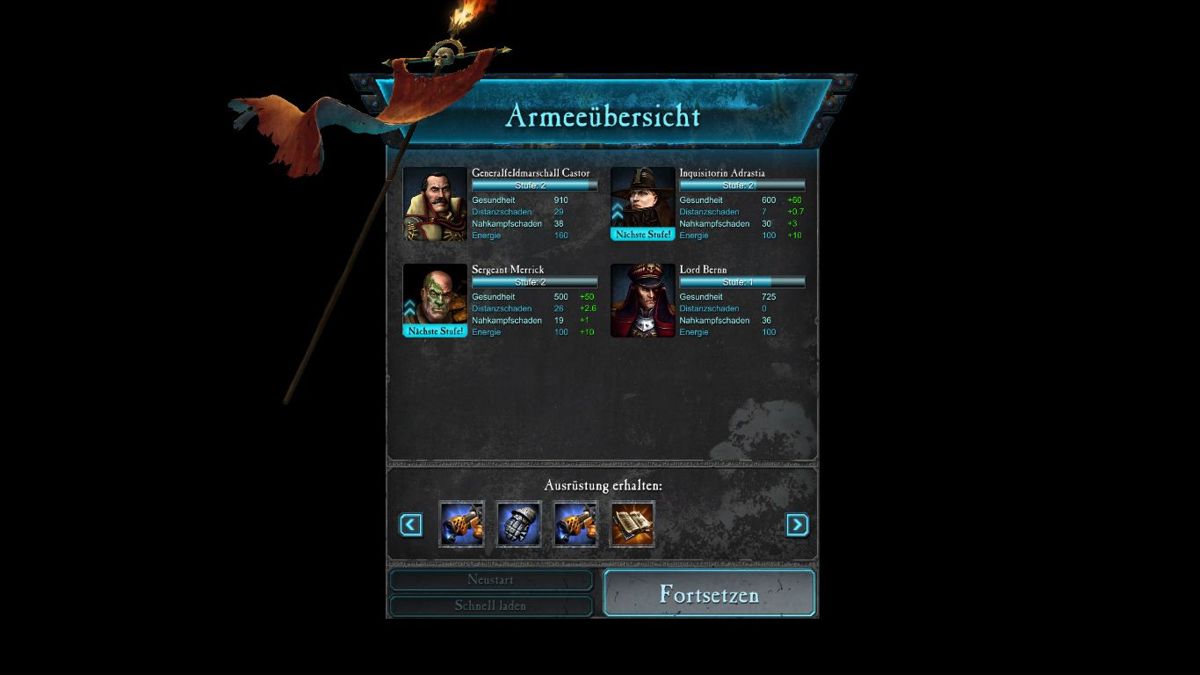
What changes the rhythm is the campaign’s willingness to loosen the old hero-first formula. Level-ups no longer mean nudging individual stats upward; you choose from special abilities, improve regular units, or save toward unlocking a powerful unit. That is a better set of decisions. You can sharpen a favourite hero, but you can also invest in the army around them, which makes advancement feel like a tactical choice rather than routine housekeeping.
The ability to take more regular units in place of heroes is the expansion’s most convincing improvement. Once that option opens up, battles can play more like traditional real-time tactics, and the added production and research systems give you another reason to care about holding buildings and searching the map for resources. It broadens the game without turning it into a full-scale base-building RTS.
There is a catch: the 16 missions remain fundamentally the same whichever faction you choose. Different armies change the route through a fight—an enemy boss for one side can be a playable hero for another—but repeated runs still revisit familiar ground. If you love learning how radically different factions approach the same problem, that structure is a strength. If you need entirely new missions to justify another campaign, repetition will set in quickly.
The Last Stand is a smart extra for a different mood. Three players each control a hero, survive waves across two areas, and earn levels and gear as they go. It strips away campaign logistics and leaves the immediate pleasure of coordinated survival. Bring friends if you can; its co-op premise is much more compelling when your team is actually communicating.

Graphics
Retribution tells much of its campaign through in-game dialogue and cutscenes, with a handful of rendered sequences mixed in. The diagonal-down battlefield view is built for watching several units move and fight at once, while the hero-focused structure keeps important characters at the center of the action rather than losing them in a huge army.

Story
The setup is wonderfully severe even by Warhammer 40,000 standards. Ten years after Chaos Rising, Aurelia is still being battered by Space Marines, Chaos Space Marines, Eldar, Orks, and Tyranids. The Imperial Guard enters with a “solution” that is less rescue operation than sector-wide extermination, immediately giving the conflict a grim stakes-first tone.
Choosing from six factions is more than a cosmetic campaign pick. The same overall mission framework gains a different angle depending on who you lead, and the fact that one faction’s boss can be another’s hero helps make the struggle feel like competing versions of the same war. It is an effective way to make familiar objectives carry different context.
Don’t come expecting six wholly separate adventures. Retribution’s story is a shared campaign viewed through different armies, delivered through dialogue, in-game cutscenes, and occasional rendered scenes. Its value lies in seeing how the faction you chose fits into Aurelia’s catastrophe, not in discovering a completely new plot every time.
Overall Experience
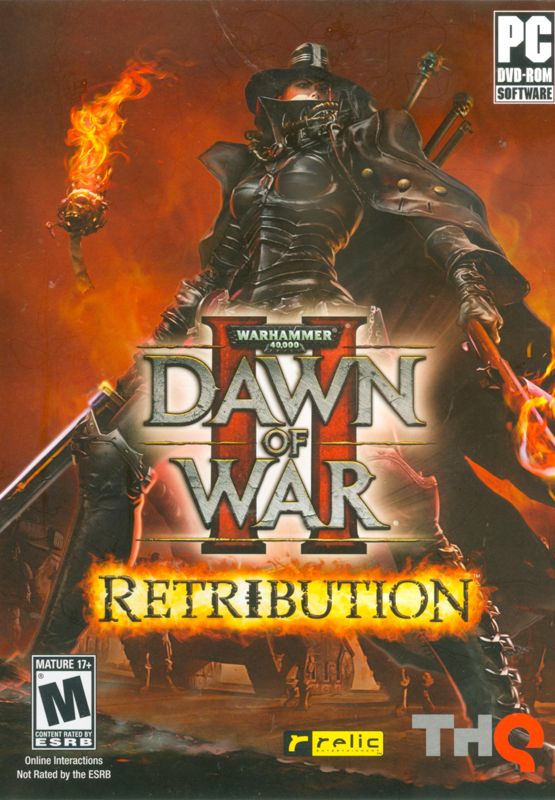
Retribution is a strong expansion because it does not merely add another faction to the pile. The Imperial Guard joins five existing sides, while the campaign changes its core decision-making: heroes remain potent, but ordinary troops, upgrades, production, research, and resource hunting can matter far more than before. The result feels broader and more replayable without abandoning the intimate squad combat that made Dawn of War II distinct.
Its biggest weakness is also the source of its replay value. Reusing the same missions across six campaigns is efficient, and faction-specific differences can make a revisit worthwhile, but there is no escaping the familiarity of the route. Your tolerance for that repetition will largely determine whether this is a good expansion or an essential one.
At its best, Retribution lets you experiment with a favourite faction, build heroes through meaningful choices, then decide whether to keep relying on them or field a more conventional force. That flexibility makes the payoff worth it for Dawn of War II fans and for strategy players who prefer tactical battles with RPG progression over giant-scale economy management. The Last Stand mode is a welcome bonus, but the campaign’s expanded tactical range is the real reason to play.


Reviews
There are no reviews yet.