 Retro Replay Retro Gaming History, Reviews & Emulation

Retro Replay Review
Gameplay
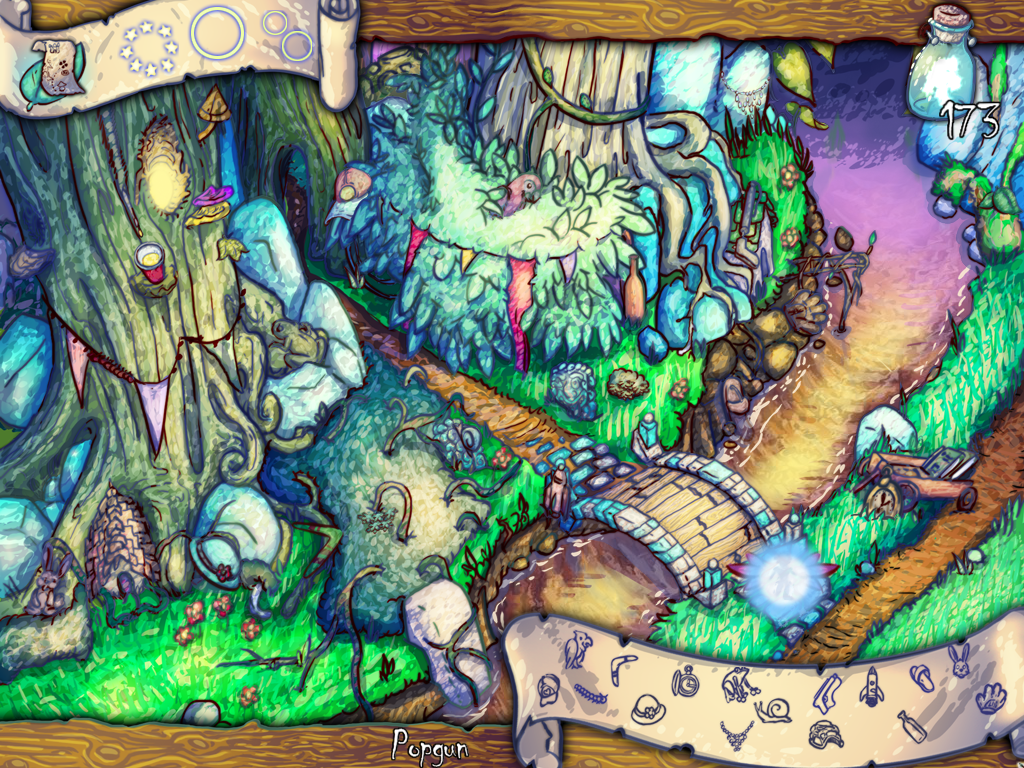
The first few minutes of Wispa Forest understand the quiet satisfaction at the heart of hidden-object games. You enter a colorful, cluttered forest location with a scroll of requested objects along the bottom, then start picking through the mess. Because Lyia is cleaning trash from the Wispas’ home rather than merely collecting arbitrary trinkets, the act of clearing a scene has a pleasing bit of context behind it.
The combo system gives the searching more energy than a slow, item-by-item checklist. Find several requested objects in sequence and you earn bonus mana, which encourages you to keep your eyes moving and capitalize when a few targets jump out at once. That is a smart nudge: instead of immediately using help, you are rewarded for taking another broad sweep of the image and trusting your own observation.
Hints are useful, but they ask you to make a real choice. Intuition costs three mana and circles the general area of an item; instinct costs five and identifies its exact spot; double vision costs eight and highlights two items at once. The escalating prices make the cheaper spell a sensible first resort, while the expensive options feel like emergency tools for the one object that has turned into a pixel hunt.
Tile-matching battles interrupt the searching on a separate grid. You swap adjacent tokens to form rows or columns of three or more, but ordinary matches are not enough: you need to clear matches over glowing spaces to damage the opponent. This wrinkle gives the battles a little direction, though it can also be frustrating when the board offers plenty of matches away from the squares you actually need. Mana-powered tile destruction and board shuffling can break a bad situation, but both take time to recharge, so burning mana on hints without thought can come back to bite you.
Graphics
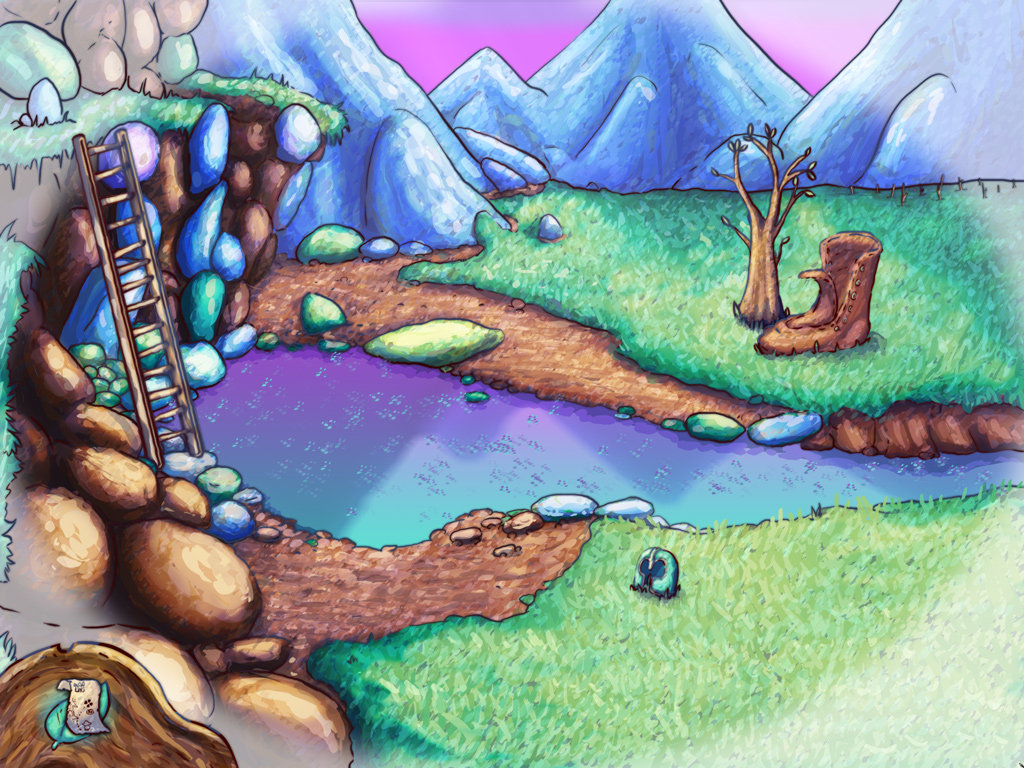
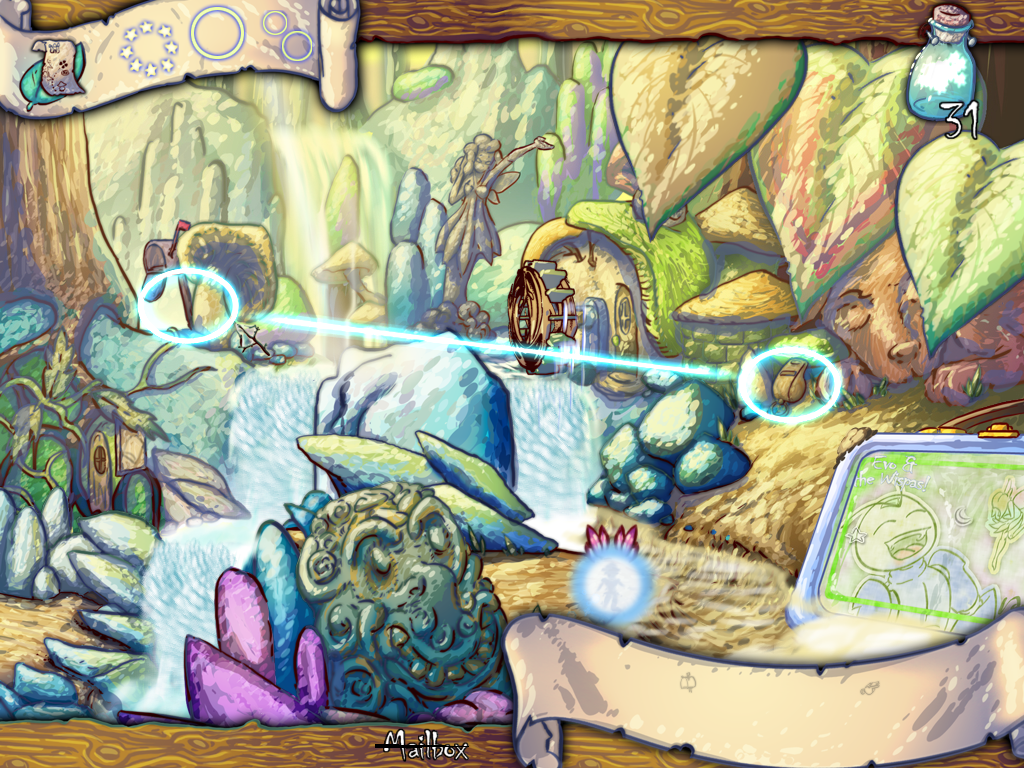
The watercolor-painting art style is the game’s strongest visual hook. Forest scenes are colorful and packed with discarded paraphernalia, making them inviting to inspect even when that same clutter is deliberately trying to hide the next requested object. The separate tile boards are more functional, built around a grid of tokens and clearly glowing target slots.
Story
The story is a light fantasy frame, but it fits the activity well. The Wispas are peaceful forest spirits whose sacred woodland has been defiled by rubbish, and Lyia leaves to clean it up and trace the disturbing force behind the damage. It gives the searches a clearer motivation than genre filler: every cluttered scene is part of restoring a home.
Do not come expecting a heavily plotted adventure. The premise is straightforward, focused on Lyia’s quest and the threat to the forest, and the real narrative movement comes from progressing through that clean-up mission. Still, it is a warmer excuse for hidden-object play than the genre’s usual disconnected scavenger hunts.
That environmental angle also makes the game’s mechanics feel more cohesive. Searching for listed items, earning mana through efficient finds, and facing opponents in puzzle battles all sit under the same broad good-spirits-versus-corruption setup. It is not a story that carries the whole game on its own, but it gives the puzzles a welcome sense of place.
Overall Experience
Wispa Forest is at its best when you settle into its search rhythm: scan the painted scene, spot a few targets in rapid succession, bank mana, and save the costly help for the genuinely stubborn finds. That flow is relaxed without being entirely mindless, and the combo reward adds just enough incentive to stay alert.
The match-three combat is the divisive part. Having to make matches on glowing squares is a decent tactical wrinkle, and the two spells prevent total helplessness, but these fights can feel more constrained than the freeform searching that surrounds them. If you already enjoy both hidden-object screens and tile grids, the change of pace should land better; if you only want a calm scavenger hunt, it may feel like an unnecessary detour.
Ultimately, this is an easy recommendation for genre regulars who want a gentler fantasy theme and a small layer of resource management around their hints. Newcomers can enjoy it too, provided they accept that careful mana use matters in both halves of the game. The payoff is not a grand adventure; it is a tidy, pleasant puzzle loop with a forest-cleaning premise that makes its cluttered scenes feel a little less disposable.


Reviews
There are no reviews yet.