 Retro Replay Retro Gaming History, Reviews & Emulation
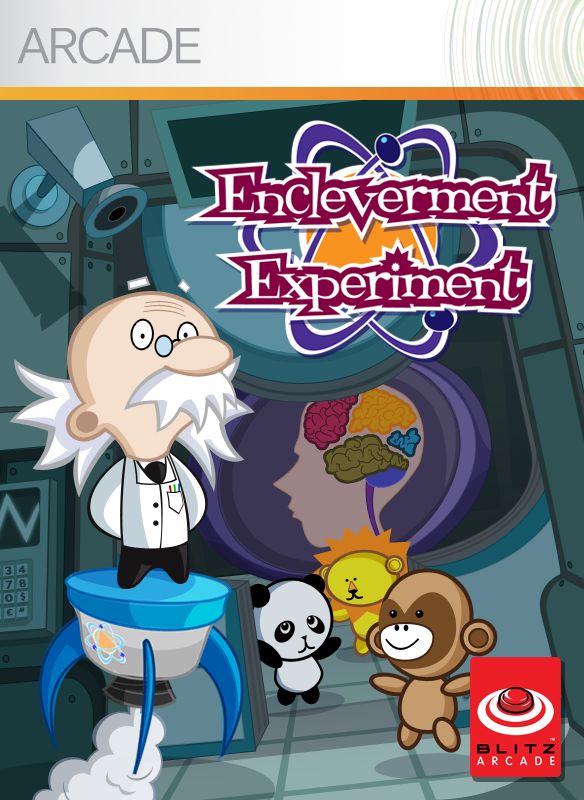
Retro Replay Review
Gameplay
The first few rounds are easy to understand: listen to the prompt, solve the problem, and beat your rival to the answer before the clock drains away. Encleverment Experiment works because it frames mental exercises as direct competition instead of asking you to dutifully complete a daily brain workout. A maths question can be followed by an anagram, then a memory or pattern-recognition test, so you are constantly switching gears. That creates a pleasantly frantic rhythm when the categories suit you.
There are 16 mini-games spread across maths, path finding, language, logic, memory, pattern recognition, and reaction skills. The breadth is important. You may tear through anagrams and stumble on path-finding, or find that speed rather than knowledge is your downfall. Since time matters for every answer, even familiar questions become tense once you are trying to protect a narrow lead. This is not deep strategy, but it does capture the little jolt of a good quiz show: you know the answer, if only your brain and hands will cooperate quickly enough.
The single-player ladder gives you computer opponents at different difficulty levels and fifteen characters to beat, which is enough structure to make improving feel purposeful. The usual five-question rounds are short enough for a quick session, and the final round’s ability to steal score from an opponent gives matches a welcome chance of reversal. That can be exciting when you are behind, though it also means a strong early performance is not always safe. If you dislike comeback mechanics, that sting will be familiar.
Custom games are one of the better reasons to stick around. Being able to draw from the activity list means you can build a session around the tests your group likes instead of waiting for a preferred category to appear. Up to four people can play locally or online, and this is where the game’s fast questions make the most sense. It is better as a competitive living-room quiz night than as a solitary, serious training program.
Graphics
The game is styled as a 1960s game show, with a witty British host guiding the contest. That framing gives the rapid-fire challenges a more playful personality than a bare sequence of drills, and the collectible mascots you buy with noodles sit on an in-game desk as a small visible reward for continued play.
Story
There is no conventional narrative to carry you from one event to the next. Instead, the game show premise acts as the through-line: you face computer-controlled competition, work through a roster of fifteen characters, and try to become the sharper contestant.
That is a sensible fit for this kind of game. A larger plot would only slow down what is fundamentally a series of short mental duels. The host’s British wit helps give the structure some flavor, though the real sense of progress comes from overcoming tougher opponents rather than uncovering a story.
The noodle rewards and desk mascots add a light collection loop between matches. They are not a substitute for a campaign, but they give your successful rounds a tangible payoff and make the game feel less disposable than a menu of disconnected exercises.
Overall Experience
Encleverment Experiment is at its best when you treat it as a competitive quiz game with brain-training ingredients, not the other way around. The varied tests, ticking clock, rivals, and score-stealing finale create more urgency than most mental-training software. When a category lands in your comfort zone, it is satisfying to answer on instinct; when it does not, the game can make you feel unexpectedly slow.
Its limits are equally clear. The core loop is always questions, speed, and another short round, so your enjoyment depends heavily on whether these kinds of mini-games keep your attention. The 16 activities and custom-game option help prevent the format from becoming stale too quickly, but they cannot turn a person who hates timed quizzes into a fan. Solo play has a useful progression path, yet the competitive spark is stronger against other people.
Give it a chance if you want a brisk, family-friendly contest that mixes wordplay, numbers, memory, and logic without demanding a long commitment. Four-player local and online support makes it an easy fit for a small group, while the single-player opponents provide enough targets for a few focused sessions. At 6.2, it is a decent diversion with a smart format, rather than an essential mental-training game.


Reviews
There are no reviews yet.