 Retro Replay Retro Gaming History, Reviews & Emulation
Retro Replay Review
Gameplay
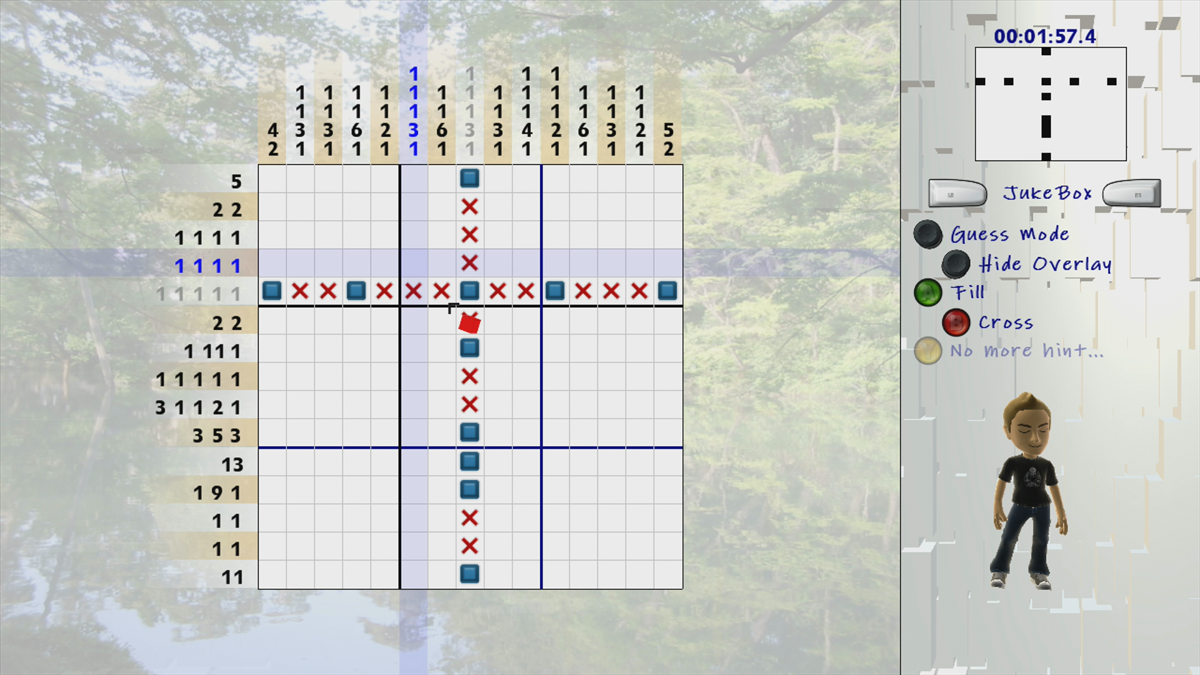
XCross understands why nonograms are hard to put down. A few numbers at the edge of a grid turn into a chain of small certainties: this run of squares has to go here, that gap rules out a square there, and suddenly a picture starts taking shape. The early 5×5 puzzles make for easy, low-pressure sessions, while the larger 25×25-and-beyond boards ask you to slow down and genuinely work through the clues.
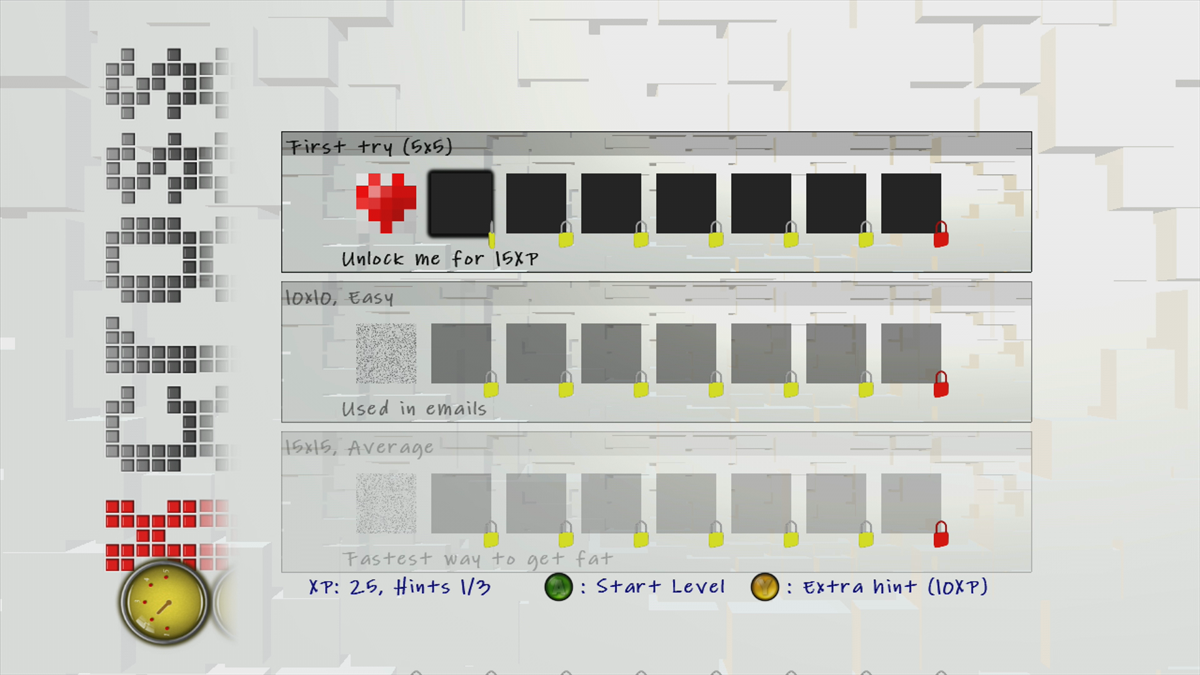
The XP unlock structure gives your completed grids a practical purpose, since clearing puzzles opens more to solve. That is a better fit for gamers who enjoy a sense of steady progression than for someone who wants every board available immediately. It also gives you a reason to finish sets rather than just cherry-picking the smallest puzzles whenever you have five minutes.
Each set ends with an experimental 3D puzzle solved in slices. That is the most interesting variation on the standard format, because it asks you to apply the same logic to a less familiar arrangement rather than merely offering another flat picture. The included tutorial should make the basic language of row and column clues approachable if this is your first nonogram.
There is also ArkX Lite, a basic Breakout-style bonus. It is a pleasant extra rather than a reason to buy in, but it breaks up a long puzzle session nicely. Between that, the in-game music selection, and over 100 boards, XCross has enough variety to avoid feeling like one small logic exercise stretched too thin.
Graphics
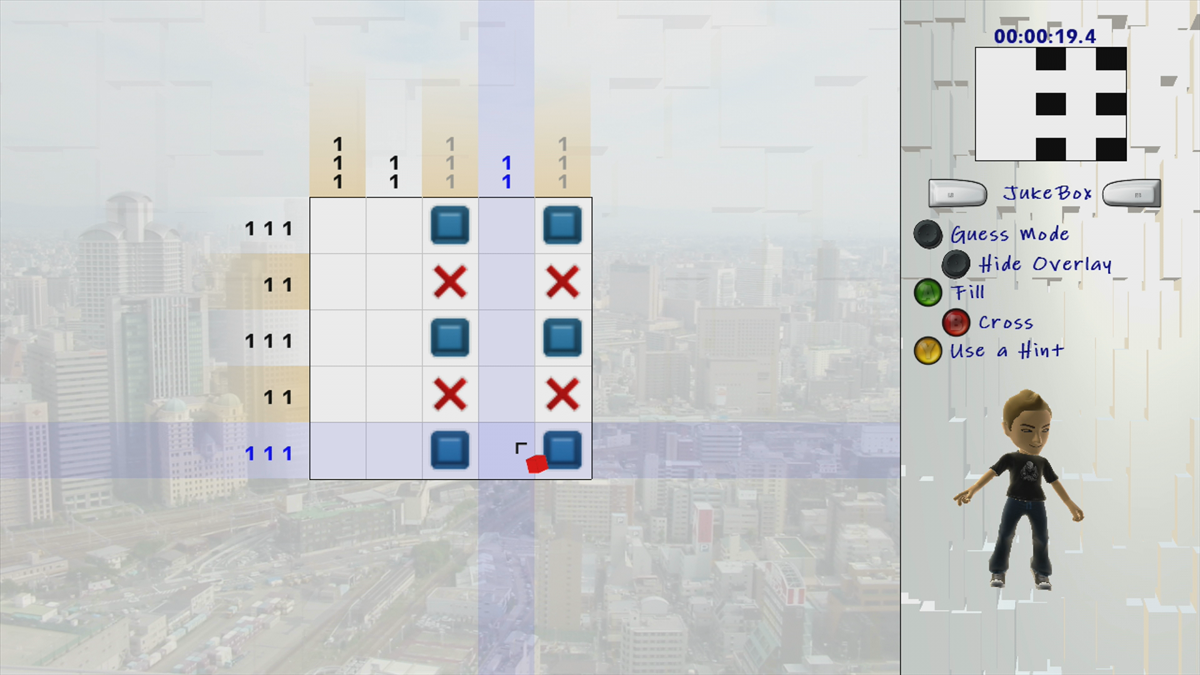
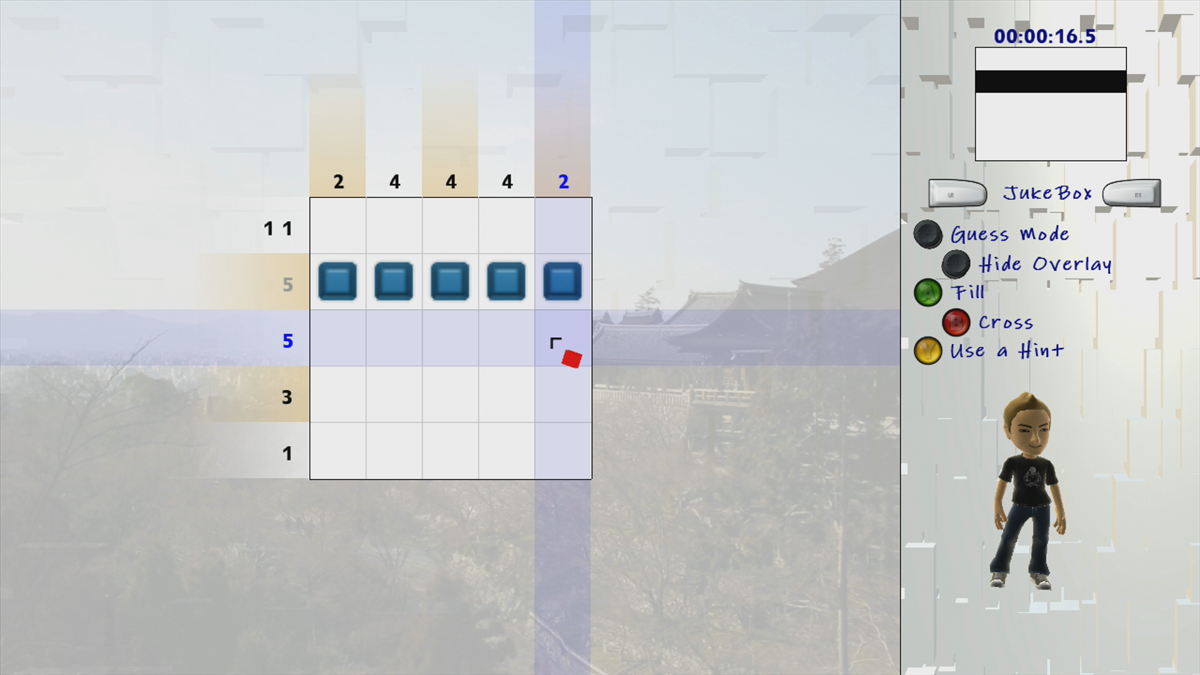
The view is built around square puzzle grids, with number clues running across the top and down the left. That plain layout suits the genre: your attention stays on the marks you have made and the picture emerging from them. The experimental 3D puzzles stand apart by being worked through in slices, giving the familiar grid format a different shape.
Story
XCross uses puzzle-set progression rather than a conventional story. The closest thing to a journey is moving from compact introductory grids to more demanding boards, earning XP, and opening the next batch of challenges.
That stripped-down approach fits a nonogram game. You are here for the private little triumph of proving a deduction correct and revealing an image, not for characters or plot to carry you between puzzles.
The set-ending experimental 3D boards provide a sense of escalation without changing the game into something else. They act as a small punctuation mark after working through standard puzzles, rewarding persistence with a different way to think about the grid.
Overall Experience
XCross is a straightforward, worthwhile nonogram collection that gets the important part right: solving a board feels methodical at first, then surprisingly absorbing once the clues begin to connect. It is easy to dip into for a small puzzle, but the larger grids can turn a short session into a longer bout of careful deduction.
Frustration will set in if you dislike puzzle games that make you earn later content or if you want constant changes to the basic formula. Most of the experience stays rooted in filling or rejecting squares from numerical clues. For fans of that loop, though, consistency is a strength rather than a limitation.
Give XCross a chance if you enjoy Picross-style logic and want a sizeable set of grids with a few diversions around the edges. The tutorial lowers the barrier, the size range leaves room to grow, and the experimental 3D finales add just enough novelty to make finishing a set feel worthwhile.


Reviews
There are no reviews yet.