 Retro Replay Retro Gaming History, Reviews & Emulation
Retro Replay Review
Gameplay
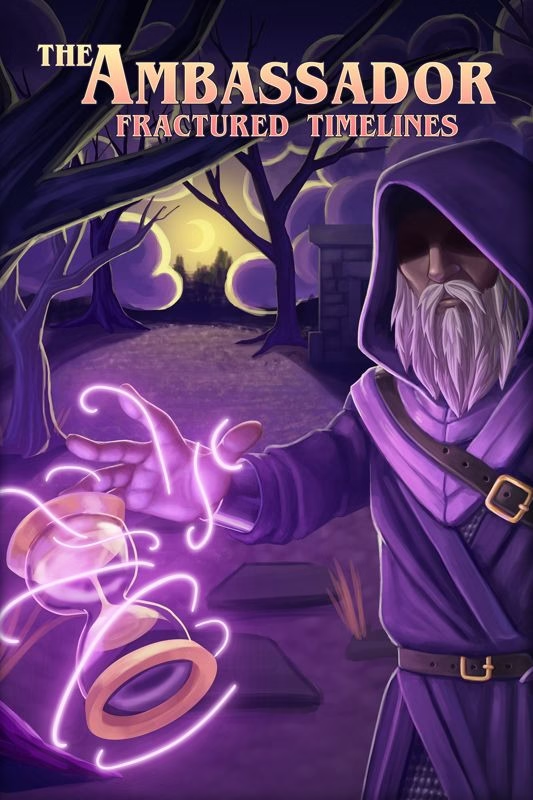
The Ambassador: Fractured Timelines earns attention quickly because freezing time is a strong answer to the usual twin-stick shooter chaos. You are not merely reacting to threats as they come at you. You can stop the action, consider where your thrown swords need to go, and give yourself a chance to regain control when a fight begins slipping away. It is an immediately appealing idea, and it promises a welcome bit of strategy in a genre that can otherwise become pure evasive scrambling.
The campaign is built around fast, strategic combat, with 55 levels spread across five environments and two timelines. That is enough room for the central power to carry the game beyond a single clever trick, while the armory of weapons, magic trinkets, and armor gives you reasons to keep experimenting. The best fit is a gamer who enjoys making small adjustments to a build and then proving those choices in difficult encounters, rather than someone who wants to coast through a fantasy adventure on the first try.
Difficulty is a real part of the package, not an afterthought. You can choose anything from an accessible setting to the explicitly punishing top end, which is a smart way to let more people enjoy the time-stopping idea without watering down the challenge for action veterans. Finish the campaign and Horde Mode is there to push that mastery further. If repeated pressure and high-stakes fights sound energizing rather than exhausting, this has a lot more to offer than its compact premise suggests.
Graphics
The 2D diagonal-down view frames Tamaris as a broad fantasy realm, moving through fortresses, tall mountains, dense forests, and the smoldering ruins of its fallen capital. That variety gives the journey a stronger sense of place than a single dungeon-bound backdrop would, and the scorched remains of Tamaris are the most striking image in the setting.
Story
You play Gregor, a newly recruited Ambassador of Time and member of the Eternal Fellowship. Before he has much time to settle into those new powers, the Fellowship’s capital is destroyed, leaving him among the few remaining fellows. It is a clean, effective setup for an action campaign: personal responsibility arrives at the same moment the world needs saving.
The goal is to find whoever caused the destruction and restore Tamaris, with the journey crossing two timelines. That gives the adventure a larger fantasy scope without distracting from the fact that this is fundamentally a combat-driven game. The story sounds most useful as momentum between fights, a reason to keep pressing deeper into a world that has already been broken apart.
Twenty hidden journals add history for anyone who wants more context about the realm. That is a good middle ground. You can follow Gregor’s central mission without needing to chase every scrap of lore, while dedicated explorers have a reason to look more closely at the world around them.
Overall Experience
This is the kind of game that lives or dies on whether its central combat idea stays satisfying, and stopping time is a particularly promising foundation. It adds a thought process to a fast shooter without abandoning the rush of direct control. When the pressure rises, the difference between simply flailing and deliberately placing attacks should be exactly where The Ambassador finds its groove.
Its broad difficulty range makes it easier to recommend than a one-note hard game. Start at a setting where you can learn the rhythm of time-stopping and sword throwing, then raise the pressure if you want that head-banging challenge the game openly advertises. Horde Mode also makes this a better choice for gamers who want a campaign to lead into a longer skill test rather than end cleanly at the credits.
The Ambassador: Fractured Timelines is worth a look if you want fantasy action with a tactical wrinkle and do not mind being pushed to improve. Its story is straightforward, but its world, collectable lore, build variety, and difficult extra mode give the adventure useful texture around the main hook. For the developer’s own overview of its time-freezing combat and campaign scope, read the publisher description for The Ambassador: Fractured Timelines.


Reviews
There are no reviews yet.