 Retro Replay Retro Gaming History, Reviews & Emulation


Retro Replay Review
Gameplay
The first hour drops you into Misthallery with a clear question—what is destroying the town?—but it refuses to let you simply follow the mystery at full speed. Every conversation, street, and apparent detour can lead to a touchscreen puzzle. That stop-start rhythm is either the reason you love Professor Layton or the reason you bounce off it. If you enjoy taking a minute to sketch out a logic problem or spot the trick in a riddle, the interruptions become part of the detective work rather than obstacles to it.
Last Specter sticks closely to the series formula: explore the town, speak with its residents, collect clues, and solve a succession of standalone brainteasers. The DS touchscreen is a natural fit for jotting answers and manipulating puzzle elements, and the game’s steady supply of problems gives a long investigation plenty of texture. Not every puzzle will land equally well for every brain; a clever answer can feel wonderfully satisfying, while a puzzle whose phrasing sends you in the wrong direction can stall the story’s momentum.
That is the trade-off you should know going in. This is not a mystery game where deduction alone carries you scene to scene; it is a puzzle collection woven into a mystery. The core loop starts to click once you accept that an odd request from a resident may matter as much as the looming specter. Weekly downloadable bonus puzzles also gave dedicated solvers more to chew on beyond the central case.
North American players also get London Life, an unusually meaty bonus RPG set in Little London. Here you create and dress a character, collect furniture and items, unlock access to parts of the city, and take on tasks for townspeople. It is a welcome counterweight to the main game’s brainteaser-focused structure, especially if you like the idea of lingering around Layton’s world instead of immediately closing the case.

Graphics
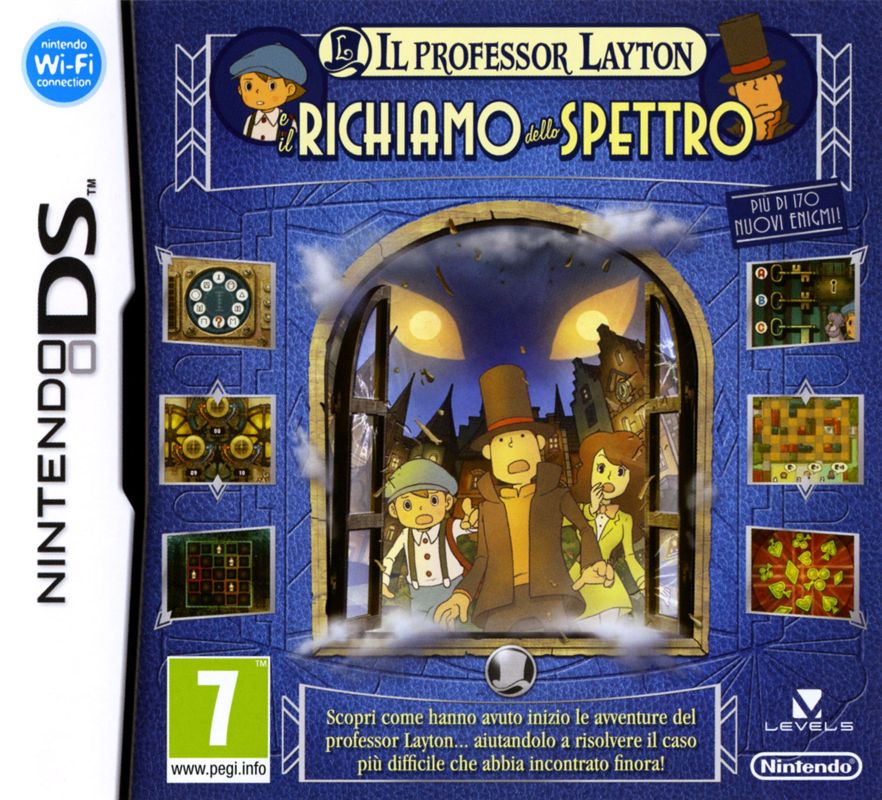
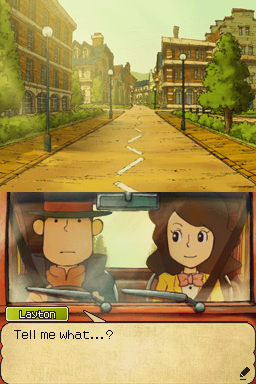
On Nintendo DS, Misthallery is built around its foggy mystery and the reported damage around town, while the stylus-friendly interface keeps puzzles front and center. The game also has a distinct advantage in its cast: Layton, Emmy, and young Luke give the investigation recognizable faces as the case unfolds.

Story
Last Specter earns attention quickly because its central image is so strong: a giant shape hidden by fog, blamed for wrecking homes in a town that already has an old specter legend. Clark Triton’s letter gives Layton a personal reason to investigate, and Misthallery’s folklore gives the case a pleasingly storybook edge. You want to know whether the monster is real, what the town is hiding, and why these attacks are happening now.
The prequel framing matters more than it initially seems. Set three years before the first game, this is the story of how Layton met Luke, with Emmy joining the professor as his new assistant. That makes the mystery more than another assignment: it has a built-in sense of origin for longtime fans, without requiring you to have played the earlier adventures first.
If you are coming from Professor Layton and the Curious Village, the younger Luke and earlier point in the timeline give this one extra charm. Newcomers can start here comfortably, though; the hook is simple and the central questions are immediate. For game-specific background beyond the mystery itself, see the Professor Layton and the Last Specter history and release information.
Overall Experience
Professor Layton and the Last Specter is a confident entry for gamers who want their mysteries served with frequent pauses for thought. Its best moments come when a strange bit of local folklore, a suspicious conversation, and a satisfying puzzle all point you toward the same larger question. The game asks you to enjoy the route, not merely rush toward the solution.
Frustration can set in if you are mainly here for the plot and hit a puzzle that refuses to yield. The investigation has to wait until you solve enough of its challenges, and no amount of interest in the fog-shrouded threat changes that. But if your instinct is to poke at a riddle until its answer snaps into place, the pacing feels deliberate rather than restrictive.
For series fans, the Layton-and-Luke origin story and the sizable London Life extra make this an easy recommendation. For newcomers, it is a strong place to test whether this particular blend of gentle mystery and brainteasing suits you. The payoff is worth it when you meet the game on its own terms: settle into Misthallery, take the puzzles seriously, and let the specter’s secret unfold one solved problem at a time.


Reviews
There are no reviews yet.