 Retro Replay Retro Gaming History, Reviews & Emulation
Bernd Schmidt created UAE, the Amiga emulator that began in 1995 and became the foundation for a large family of Amiga emulation projects. His starting point was an Amiga 500, the games and demos he enjoyed, and the wish to keep that software running as he moved toward PCs and Linux.

From Amiga programming to emulation
Schmidt told Retro Replay that programming had fascinated him since childhood. Before the Amiga he used a CPC, and he later built a CPC emulator using Z80 emulation code from Charlie Gibbs’s CP/M emulator. The result was slow, but it gave him experience with the problem he would take on more ambitiously in UAE.
The Fish disk collections introduced him to software he could study and change. He remembers finding these disks in a bookstore and exploring the tools and source code they contained. In a follow-up to our interview, he described that experience as a direct influence on making his own work open source.
UAE and the Amiga that could run on another computer
Some participants in a 1994 Usenet discussion doubted that PCs could emulate the Amiga’s custom hardware. Schmidt saw a software problem that a sufficiently fast CPU could solve. He recalls constructing a table of 68000 instruction encodings, writing the CPU emulation, and gradually bringing the Amiga’s display hardware into working order.
The early startup screen was recognizable but distorted. Later, a usable Workbench desktop made the project feel much less experimental. Speed remained a practical obstacle: an emulator that meticulously reproduced every hardware interaction could spend too much time doing work that a particular game did not need.
Music was a personal reason to persist. Schmidt wanted to keep hearing Amiga software such as Turrican correctly, rather than settle for players that did not quite reproduce its behavior. Copper timing, disk formats, and the demands of games and demos became recurring work.

Other programmers took UAE further
Schmidt’s project credits record contributions across CPU emulation, sound, graphics, operating-system ports, and debugging. UAE’s original source release used a custom license, he recalls; the GPL followed later during discussions about Cloanto packaging the emulator with licensed system software.
The project’s later branches sometimes pursued features he would not have chosen for his own A500-oriented use. He credits those different priorities as part of its success, even as maintaining and reconciling them made the project less attractive to him personally. He also experimented with JIT compilation before the more sustained work by Bernd Meyer.
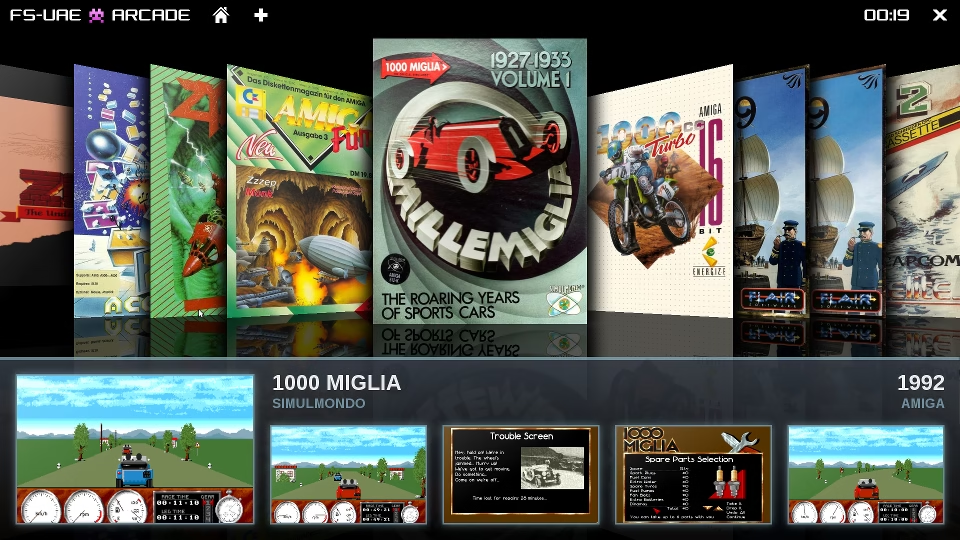
Richard Drummond’s E-UAE page credits Schmidt, Meyer, Toni Wilen, and other contributors. FS-UAE’s official site explicitly traces its emulation code through WinUAE to the original UAE authors.
In his own words
“The world feels poorer now that this kind of thing no longer exists.”
Bernd Schmidt, in his October 2026 written interview with Retro Replay, recalling computer magazines that supplied hardware-register information.
Schmidt says he has spent decades working on compilers. His Amiga remains on a shelf, and he occasionally uses UAE to listen to old music. Read the full Retro Replay interview and our history of UAE.
Bernd Schmidt in the History of Video Game Emulation
1995: UAE brings the Amiga to another computer. The early emulator, its startup screen, and the work needed to run real Amiga software.
1996: Amiga users debate UAE’s future. A contemporary discussion catches the excitement and unease surrounding a software Amiga.
Explore the UAE family
The original UAE repository preserves Schmidt’s code and credits. E-UAE and FS-UAE document later branches of the project.
Sources and further reading
- Bernd Schmidt’s written interview and follow-up answers to Retro Replay, October 2026.
- Schmidt’s UAE repository, including the README and contributor credits.
- “amiga emulator for PC?”, the 1994 Usenet debate supplied by Schmidt.
- “UAE, The Amiga of the Future.”, a July 1996 discussion of its place in the Amiga community.
- E-UAE and FS-UAE, project accounts of the UAE family.