 Retro Replay Retro Gaming History, Reviews & Emulation

Retro Replay Review
Gameplay
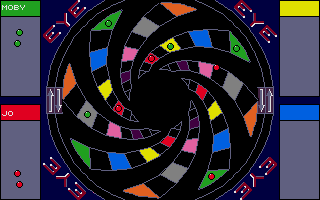
Your first few turns in Eye can feel deceptively straightforward. Each side owns a colour of stones and wants enough of them on the matching coloured squares. If that were all there was to it, this would be a conventional race for space. Then somebody rotates one of the spirals, the board’s square distribution shifts, and the route you had been carefully building suddenly needs a rethink.
That rotating-board idea is the whole reason to play. A move is not just moving a square; you can instead turn a spiral, changing the layout that every player has to navigate. It gives each turn a useful tension: take an immediate positional gain, or alter the board to make your next gain easier and an opponent’s plan worse. Because the number of moves available changes with the match situation, you cannot settle into one comfortable rhythm either.
Eye is strongest when you treat it as a game of short tactical forecasts rather than trying to solve the entire board at once. Watch where your stones will land after a rotation, but also check who benefits from the newly arranged colours. Frustration sets in when a clever-looking spiral turn opens exactly the opportunity an opponent needed. That is not always pleasant, but it is the kind of setback that makes a rematch tempting.
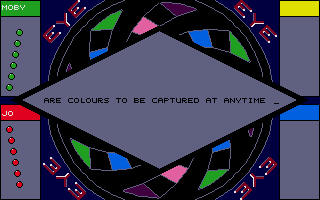
The option to use AI for any opponent makes the computer version practical for solo play, while two to four participants leave room for a more social, unpredictable contest. Rule modifications add welcome flexibility, especially if you already know the board-game original. The limited goal and turn structure may feel dry if you want constant action, yet puzzle-minded strategy fans can get real mileage from learning when not to touch the spirals.
Graphics
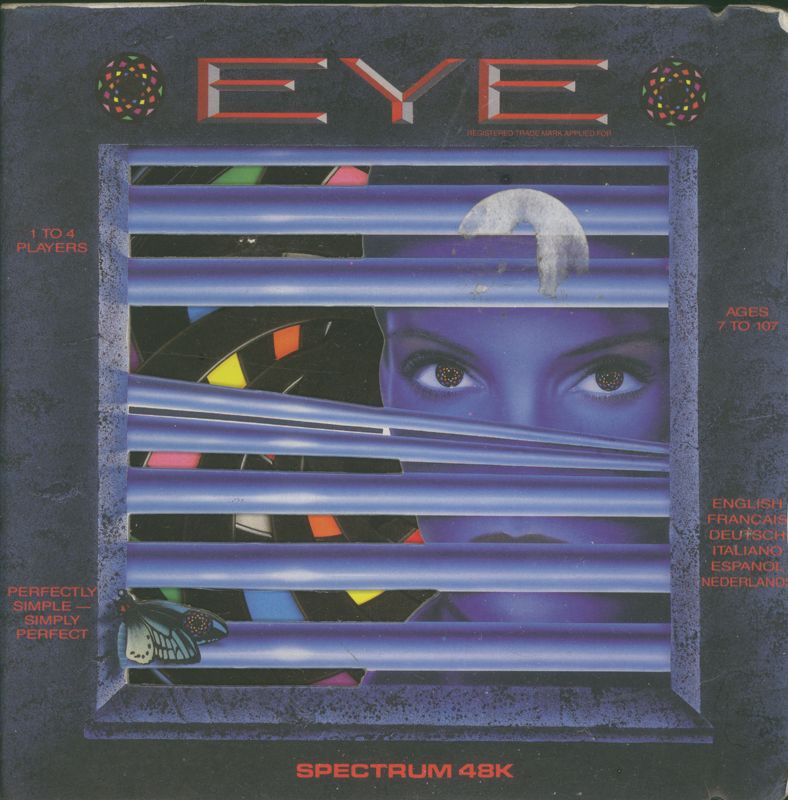
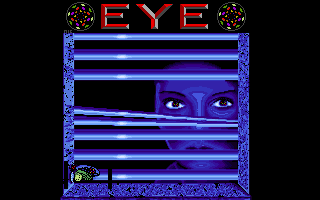
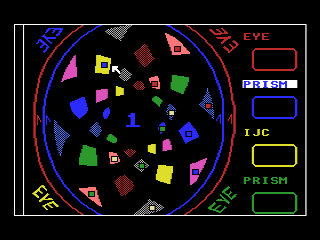
Eye is built around a coloured board of squares, sets of player stones, and the two spirals whose rotations change the board layout. That clear tabletop focus is appropriate: you need to see colour placement and piece positions quickly before committing a move or a rotation.
Story
There is no story campaign pulling you from match to match. Eye is an abstract board-game contest, and its stakes come entirely from the position in front of you.
That puts the burden on the board’s shifting geometry, where a safe-looking arrangement can become awkward after a spiral turn. Instead of characters or plot turns, you get small reversals of fortune: a stone reaches its colour, a route closes, or a rotation changes who has the initiative.
This spare approach suits the game. You are not asked to care about anything beyond outmaneuvering the other colours, which makes each match easy to pick up and equally easy to abandon if the core puzzle does not grab you.
Overall Experience
Eye earns its interest through one strong rule change: the board itself will not stay put. The goal is simple enough to understand quickly, but rotating either spiral makes every local decision potentially affect the wider contest. When you catch an opponent relying on a route and twist it away, the game delivers a satisfying little strategic jab.
It is also an uncompromisingly abstract experience. You need to enjoy examining coloured spaces, planning movement, and accepting that a changing move allowance can disrupt the plan you thought was secure. There is little here for anyone who needs theme, spectacle, or a narrative hook to stay invested.
Still, the flexibility to alter rules and fill empty seats with AI makes Eye easier to recommend than a board game that requires a full group at the table. Give it a chance if you like compact turn-based puzzles with a mean streak and do not mind losing a good position to one well-timed rotation. The payoff is a clever tactical board game, even if its narrow focus leaves it more admirable than essential.


Reviews
There are no reviews yet.