 Retro Replay Retro Gaming History, Reviews & Emulation
Retro Replay Review
Gameplay
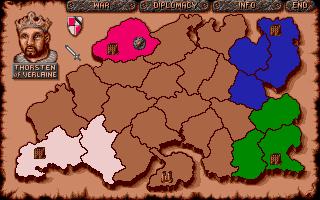
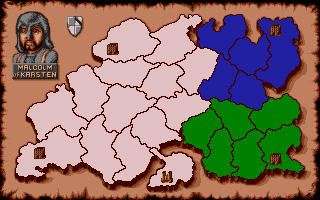
Feudal Lords starts with a wonderfully direct ambition: take Euthrania by bringing every province into your sphere of influence. You are one of four competing lords, human or AI controlled, and every turn asks the familiar but still satisfying strategy question: do you strengthen your own position, pressure a neighbour, or buy time before the kingdom turns on you?
The strongest part is that conquest is not limited to marching an army across a border. You build forces from different soldier types, but you also handle taxation, trade, and diplomacy. That mix gives your decisions some bite. Raising money may help your military plans, yet stability still needs attention; diplomacy can keep another lord away from you, but only temporarily. It is a game about maintaining enough control to make your next grab for power possible.
Its nastier options are also its most memorable. Instead of declaring open war, you can work behind the scenes to trigger an uprising or arrange the assassination of a hostile lord. That makes the race for provinces feel more political than a simple land rush. If you enjoy strategy games where a rival can be undermined rather than merely attacked, Feudal Lords has a worthwhile edge.
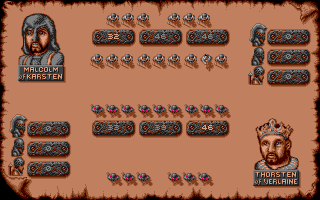
Frustration can set in if you want to command battles yourself. Sending an army into another province leaves the result to the computer, so war is a strategic commitment rather than a tactical contest. That can make a bad outcome feel remote, especially when you have invested heavily in an army. Go in expecting to make kingdom-level choices, not to micromanage a battlefield.
Graphics
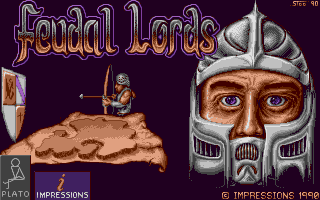
Feudal Lords is completely menu based. You spend your time reading and selecting actions through its management screens rather than watching battles play out, since combat results are calculated by the computer. The look is therefore functional and spare: it keeps attention on provinces, resources, diplomacy, and schemes instead of dramatic action.
Story
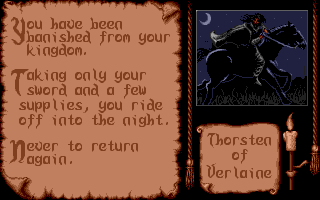
The story is a framework for rivalry rather than a developed medieval tale. Euthrania is a kingdom waiting to be claimed, and the four lords give the conflict its central shape: everyone is competing to pull the entire realm under their own influence.
What gives that premise some character is the way political violence sits beside ordinary rule. Taxing, trading, and maintaining stability are not glamorous, but they make your lordship feel vulnerable. An uprising or an assassination is not just another attack; it fits the idea that power can be lost through discontent and intrigue.
Do not come here for a sequence of authored twists or personalities to follow. The narrative payoff comes from the history you create through your choices: the neighbour you placate, the province you seize, or the rival you decide is too dangerous to leave alive.
Overall Experience
Feudal Lords earns its 6.3 because its core is more interesting than its austere interface first suggests. The first hour is about learning how its economic, diplomatic, and military pressures connect; once that starts clicking, every turn has the potential to become a calculated risk rather than routine administration.
The limited control over war holds it back. Because the computer calculates battles, the game asks you to trust its outcomes at the moment you might most want to intervene. That makes it less satisfying for anyone who wants tactical combat to be the reward for careful army building.
Still, the blend of conquest and dirty politics gives it a distinct hook. Give Feudal Lords a chance if you enjoy deliberate turn-based strategy, can appreciate a fully menu-driven format, and would rather win a kingdom through taxes, alliances, uprisings, and occasional murder than through battlefield theatrics alone.



Reviews
There are no reviews yet.