 Retro Replay Retro Replay gaming reviews, news, emulation, geek stuff and more!
Retro Replay Review
Gameplay
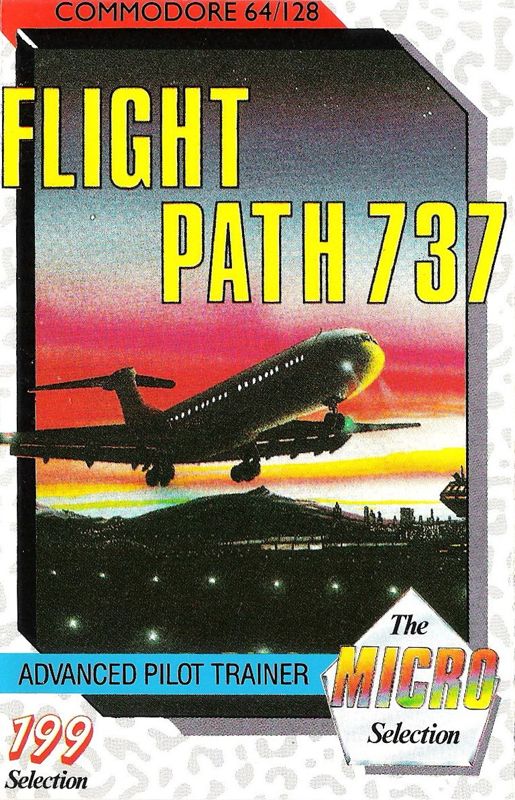
Flight Path 737 gets to its point quickly: you are flying a jet airliner out of an airport boxed in by mountains, and you need to bring it down safely at an airfield below. That sounds straightforward until you remember that a landing is not something you can casually retry in the middle of a run. You have fuel for one attempt, so every climb, descent, and approach asks you to pay attention.
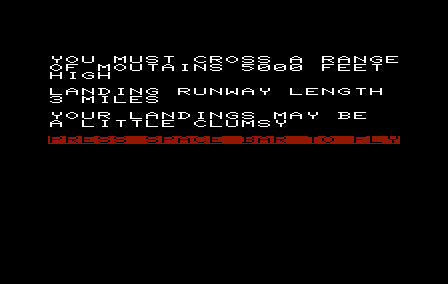
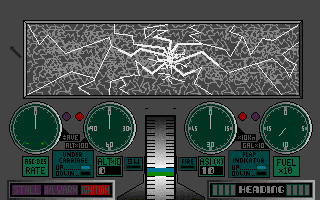
The first skill level is the right place to learn its rhythm. With 5,000-foot mountains and a three-mile runway, the basic challenge is judging your flight through the instruments instead of merely pointing the aircraft toward the destination. The upper landscape view lets you watch the terrain, while the lower panel gives you altitude, speed, and an artificial horizon. Once you stop treating those gauges as decoration, the game starts to click: you are managing a landing rather than hoping one happens.
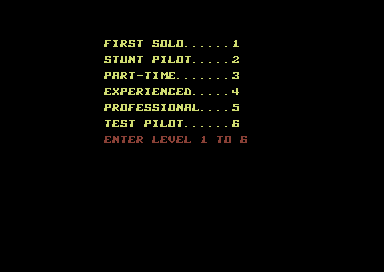
The higher levels make that core exercise increasingly severe. Mountains rise as high as 9,200 feet and the runway contracts to 1.5 miles, leaving much less room to recover from a poor approach. Engine fires arrive on level 2, smoother landings matter on level 3, and later levels add crosswinds and reverse thrust. That escalation is sensible, but it is also where frustration sets in. A game built around one chance per flight can make a late mistake feel expensive, especially when several demands converge near touchdown.
This is not a broad, breezy flight game. It is a compact test of instrument awareness and nerve. If you enjoy practicing a difficult procedure until the numbers and the view ahead begin to make sense, its strictness has a purpose. If you want frequent second chances or a more relaxed airliner fantasy, Flight Path 737 will feel more like homework than a holiday.
Graphics
The first-person screen is divided cleanly between a landscape view on top and the aircraft instrument panel below. The useful image is the one in front of you: mountains define the climb out, the valley frames the descent, and the runway is the small target you are trying to reach. The panel’s altitude, speed, and artificial-horizon readouts occupy the lower half, keeping the important flight information in sight throughout the approach.
Story
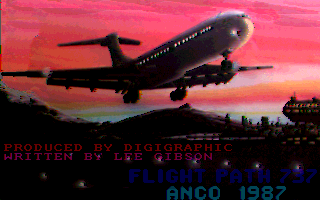
There is no character drama to carry Flight Path 737. Its story is the flight itself: take off from an airport surrounded by mountains, clear the terrain, and land at the airfield in the valley.
That thin setup suits the game because the stakes are immediate. You are not building toward a plot twist; you are trying to avoid turning a demanding approach into a failed landing. The single-landing fuel limit gives the scenario urgency without needing any extra narrative dressing.
The changing difficulty levels add a modest sense of progression. At first, you are simply learning to get the aircraft home. Later, fires, tougher landing requirements, crosswinds, and reverse thrust make the same route feel like a more serious examination of what you have learned.
Overall Experience
Flight Path 737 is most rewarding when you accept that it wants concentration, not casual spectacle. The pleasure comes from reading the panel, keeping the aircraft under control, and seeing a careful plan survive the mountains and the final approach. A successful landing feels earned precisely because the game gives you so little margin for improvisation.
Its limits are equally clear. The central task is narrow, and the fuel restriction means failure can be abrupt rather than entertaining. The later skill levels will appeal to anyone who wants crosswinds, shortened runways, and landing procedures to matter; everyone else may find the pressure outweighs the payoff.
Give it a chance if you have patience for old-school flight simulation and like learning from failed approaches. Start low, watch the instruments as closely as the terrain, and do not rush into the hardest settings. Flight Path 737 is a modest but honest pilot-training challenge, with enough escalating pressure to make each clean touchdown memorable.


Reviews
There are no reviews yet.