 Retro Replay Retro Gaming History, Reviews & Emulation
Retro Replay Review
Gameplay
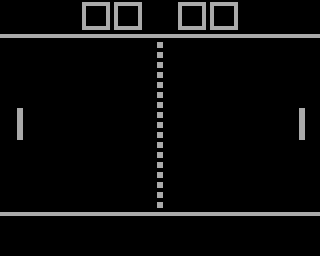
Kim Pong Il begins with the kind of rules you can absorb before the first ball crosses the court. Each of you controls a paddle with a joystick, returns the ball, and chases 15 points. That directness is refreshing: there are no extra modes or layers standing between you and the match.
The first few rallies are about getting comfortable with the timing. Then the competitive part starts to click. A clean return is not enough when your opponent is waiting for the obvious angle, so you begin trying to place the ball where they are least ready to meet it. A score target of 15 gives a match enough room for momentum to swing without making the basic format feel drawn out.
The catch is absolute: this is for two people only. Kim Pong Il cannot rescue a quiet evening by itself; it needs another person with a joystick and at least a little interest in winning a very straightforward Pong contest. Bring that, and its bare-bones design becomes a virtue rather than a shortcoming.
Graphics
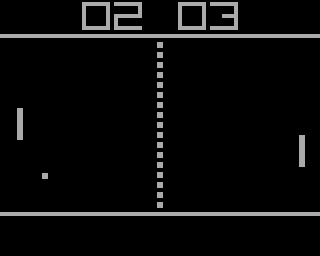
The action stays on a fixed Pong-style court, with the paddles and ball kept front and center. That simple layout suits a game where every tiny change in the ball’s path matters.
Story
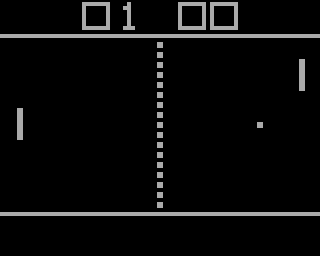
There is no narrative detour between rallies. Kim Pong Il treats the match itself as the whole event: one player scores, the other tries to answer, and the first to 15 takes it.
That makes the rivalry immediate rather than dramatic. The little stories come from the players at the joysticks—an early lead, a comeback, or the pressure of the last few points—not from written plot or characters.
For a game built on such a familiar arcade format, that is the right priority. You do not need an excuse to care about the result when the person beside you is trying to put the ball past your paddle.
Overall Experience
Kim Pong Il is a tiny, focused competitive game with no interest in pretending to be more complicated than it is. Its value lives or dies on local company. If you have a second player ready, it delivers quick, clear contests whose tension rises naturally as the score climbs.
Its narrow scope also means repetition arrives quickly if you are looking for variety. The same rules, same court, and same race to 15 are the entire package. That is not a flaw for a brief head-to-head break, but it does make this a game you return to for a few matches rather than a long session.
Give it a chance if you enjoy classic Pong and want an uncomplicated two-player duel on Amiga. Skip it if you need solo play, progression, or anything beyond the pleasure of outplaying a friend one return at a time.



Reviews
There are no reviews yet.