 Retro Replay Retro Gaming History, Reviews & Emulation

Retro Replay Review
Gameplay
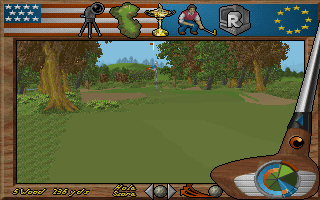
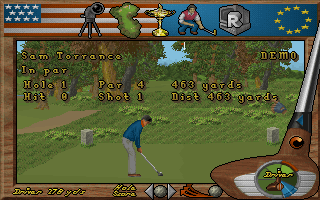
Your first few swings are likely to be spent deciding which control scheme feels less likely to betray you. The two-click method is the straightforward choice: select loft from a menu, then make two timed clicks to set power and drift. It is immediately understandable, which matters when you just want to get a ball moving and start learning the Belfry’s holes.
The stroke method is where Ryder Cup: Johnnie Walker becomes more interesting. After setting power, you click a miniature ball, and the point of impact determines the club’s contact and resulting drift. It asks you to think about the strike itself rather than merely hitting two timing windows. It can also be made tougher by having that ball move randomly, a mode that turns an already demanding shot into a proper concentration check.
That split gives you a sensible way in. Start with two-click controls if the game’s rhythm is unfamiliar, then graduate to the stroke option once you want more responsibility for misses and recovery shots. Being able to show or hide information about the current hole and wind is equally practical; use it while learning, rather than treating every shot as a blind guess.
The Ryder Cup structure supplies a clear reason to care about the round: Europe and the US bring teams of twelve athletes to the 1993 contest. Still, practice is not an afterthought here. Training on individual holes is the right place to work out your timing and get comfortable with the control method before committing to tournament pressure.

Graphics
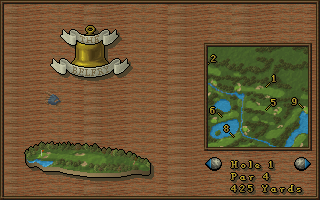
The game centres its golf around the Belfry course, with on-course information icons available when you need details such as the hole and wind. They are useful reference tools during a round, particularly while you are still building confidence in shot selection.
Story
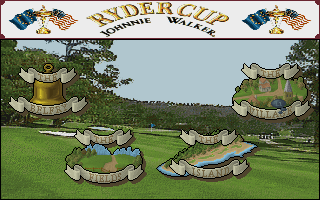
There is no invented clubhouse drama to carry Ryder Cup: Johnnie Walker. Its story is the sporting contest itself: a 1993 Ryder Cup match at the Belfry, Europe against the United States, and twelve athletes on each side.
That limited framing works because golf already creates its own small narratives. A safe shot, a risky correction, and a badly judged bit of drift can change how you feel about the next swing. The tournament context gives those moments more purpose than a loose exhibition round would.
Do not come here expecting character arcs or a detailed recreation of the event beyond its basic setup. Come for the clean competitive premise. It puts the emphasis where it belongs: learning the course, handling the wind information, and earning better shots.
Overall Experience
Ryder Cup: Johnnie Walker is a good fit if you like older golf games that make you earn consistency. Its strongest idea is not the license but the choice between accessible two-click shots and the more tactile stroke method. One lets you settle in quickly; the other can make every swing feel more personal and more dangerous.
Frustration will set in if you expect the controls to flatter you. Timing, drift, loft, and—in the stroke method—the exact point of contact all demand attention. Yet that is also why the game has staying power: a poor result has a legible cause, and practice on single holes gives you somewhere to improve without immediately facing the full tournament.
The payoff is worthwhile for a patient golfer who enjoys repeated attempts at a single course and a defined international matchup. At 7.3, it lands as a capable, focused Ryder Cup game with enough control nuance to rise above a routine round, even if its narrow concentration on the Belfry and the tournament format will not suit everyone.


Reviews
There are no reviews yet.