 Retro Replay Retro Gaming History, Reviews & Emulation
Retro Replay Review
Gameplay
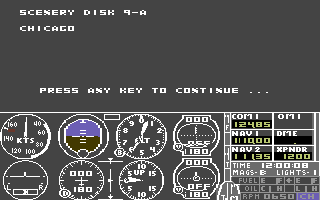
The first benefit of Scenery Disk 9 is simple: routes in the Chicago, St. Louis, and Cincinnati region have more reason to exist. Instead of treating the landscape as a generic stretch between takeoff and landing, you can use added airports, landmarks, and navigational aids to make a flight feel tied to a real destination. For a vintage sim, that extra context goes a long way.
This is not an add-on you buy for a new aircraft or a different flight model. Its value comes from making the simulators it supports—Flight Simulator II, Flight Assignment: Airline Transport Pilot, UFO, Jet, Thunderchopper, and Stealth Mission, along with Microsoft Flight Simulator 2.x—more useful in one substantial part of the United States. If you like plotting flights and following navigation references, it has a clear purpose.
What starts to click is the connection between the chart-derived data and your own route planning. The added navigational aids and airport coverage make it easier to turn a casual local hop into something with a destination and a navigational problem to solve. The catch is equally clear: if you rarely fly this corridor, even solidly made scenery has limited pull. This disk earns its place with repeat visits, not a quick novelty flight.
Graphics
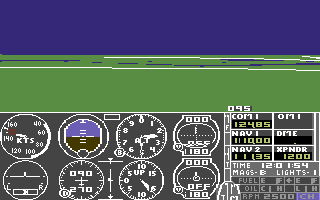
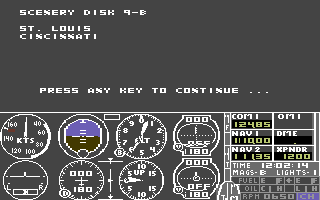
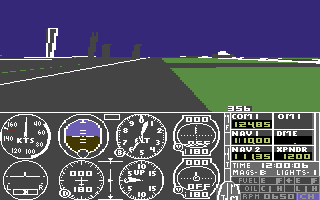
The scenery adds recognizable local detail through airports and landmarks across the Chicago, St. Louis, and Cincinnati areas. In the sparse visual language of these early flight sims, those reference points matter because they give you more to look for outside the cockpit and more confidence that you are flying somewhere specific.
Story
There is no authored story here. The closest thing to a narrative is the one you create by choosing a departure point, setting a destination, and working your way across the region with the available navigation aids.
That suits the material. A flight from one added airport to another can have its own beginning, middle, and end without the disk forcing missions or characters between you and the aircraft. You bring the purpose, whether that is a short familiarization run or a longer regional trip.
For gamers who need scripted drama, this will naturally feel dry. For sim fans, the payoff is more personal: a broader, better-defined patch of the map in which your flights can become memories rather than anonymous practice runs.
Overall Experience
Scenery Disk 9 is a focused, useful expansion for the right kind of flight-sim enthusiast. Its Chicago, St. Louis, and Cincinnati coverage is valuable because it improves the texture of flying, not because it transforms the underlying software. The experience lives or dies on whether you want to spend time in this region.
The NOAA sectional-chart and airport-directory roots give the disk a welcome sense of purpose. Rather than tossing in arbitrary points of interest, it concentrates on the airport, landmark, and navigation detail that helps a pilot orient themselves and plan a route. That is a thoughtful fit for the serious side of these simulators.
Recommended for committed owners of the supported subLOGIC simulators or Microsoft Flight Simulator 2.x who want more meaningful Midwestern and Ohio Valley flying. Everyone else can safely pass: this is specialized software, but it does exactly the specialized job it sets out to do, and the payoff is worth it when its region matches your hangar habits.


Reviews
There are no reviews yet.