 Retro Replay Retro Replay gaming reviews, news, emulation, geek stuff and more!
Retro Replay Review
Gameplay
Tanglewood’s strongest idea is that its five mobiles are not just extra lives or cosmetic character swaps. Each has different abilities and attributes, so progress comes from working out which machine belongs in which part of T’ng-y-wd. One may be able to repair, another can get through terrain that blocks its companions, and the instant switching turns the whole planet into a puzzle spread across several bodies. When you find an item, the immediate question is not simply where it goes, but which mobile can carry the next part of the plan forward.
The energy system is where that promising structure becomes properly stressful. Using a mobile drains it, and recharging means spending time with another one. Meanwhile, the ten-day deadline keeps advancing even while a mobile is sitting unused. You cannot casually leave everyone wherever they happened to finish a task; parking a vulnerable unit in a safe spot is part of basic survival. It is a smart source of pressure because it makes a bad route or a careless separation feel costly, not merely inefficient.
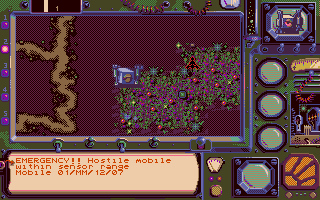
Direct control and enemy defenses add action to the logistical side. At first, only one mobile can protect itself, leaving the others reliant on caution until they locate crystals and learn to use them. That creates a compelling early vulnerability: you are not commanding an untouchable squad from above, but personally steering machines that can get caught in trouble. The downside is clear, too. A game already asking you to track five positions, energy, access restrictions, items, and time can become frustrating when a risky crossing or poorly planned stop puts a needed mobile out of commission.
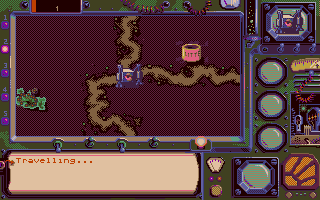
The free-roaming world is a good fit for this design because discovery and routing are tied together. Underground mine sections give the search a change of terrain, while the broader planet invites you to piece together its useful paths. Tanglewood rewards patience and note-taking more than reflexive aggression. Give it a chance if you like being made to organize a complicated expedition; skip it if you want action that lets you focus on one character and push forward without constant contingency planning.
Graphics
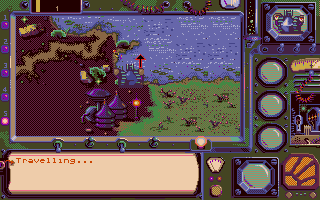
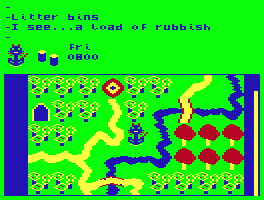
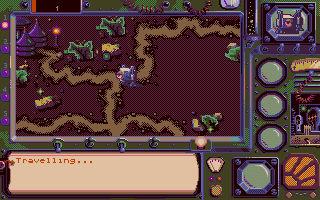
Tanglewood uses a top-down, 2D scrolling view for its roaming and underground mine areas. The day-night rhythm is also visible enough to serve as a constant reminder that the court deadline is slipping away, turning the passage of time into something you watch rather than just a number tucked away in a menu.
Story
The setup is wonderfully direct: Uncle Arthur’s mining operation on T’ng-y-wd has become successful enough for another company to challenge his ownership, and the court hearing is only ten days away. Your task is to recover the documents that prove the planet is his. It is a practical, almost bureaucratic objective, but that is exactly why the deadline has bite. You are not saving the universe; you are racing to keep a claim from being taken away.
The rival company’s defenses turn the legal dispute into an on-the-ground obstacle course. That gives the search a sense of opposition without distracting from its core purpose: find the evidence, use the right tools, and get it done before time expires. The story stays tightly connected to what you are doing, rather than feeling like a separate excuse between challenges.
There is also a nice oddness to the premise. A mining claim, alien documents, five specialized mobiles, and subterranean routes make for a science-fiction adventure that feels more like a pressured recovery job than a conventional heroic quest. It is enough context to make exploration matter, even if the real drama comes from whether your plan holds together.
Overall Experience
Tanglewood is interesting because it refuses to let its separate ideas sit in isolation. The time limit affects recharging; recharging affects where you leave each mobile; different movement abilities affect which routes are safe; defenses make the weaker units more nerve-racking to move. When you are planning well, that interconnectedness makes every successful trip feel earned.
Its rough edge is that all of those demands arrive at once. The game can punish loose organization, and the pressure of an always-moving deadline means experimentation carries a price. That will feel satisfyingly exacting if you enjoy games that expect you to learn their systems and live with their consequences. It can feel like busywork if you mainly want to explore at your own pace.
At 6.6, Tanglewood lands as a solid but specialized adventure. Its multi-mobile puzzle design remains the reason to play: it asks you to manage a team as a connected system rather than merely swap between useful abilities on demand. For a patient gamer willing to map routes, protect vulnerable units, and accept a little friction in exchange for unusual strategic tension, it is worth investigating.



Reviews
There are no reviews yet.