 Retro Replay Retro Gaming History, Reviews & Emulation
Retro Replay Review
Gameplay
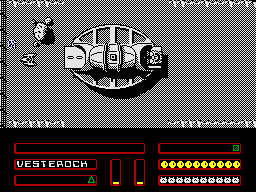
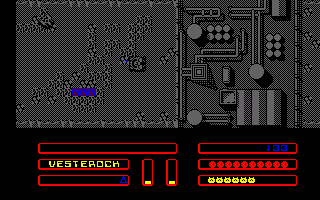
The first few minutes make Agent Orange easy to understand. You fly a ship over a horizontally scrolling, top-down planet surface, shoot alien fighters, then hold the fire button to release Agent Orange onto the invasive weed. That distinction between a tap for weapons and a hold for the mission-critical payload gives the controls a small but welcome bit of tension: firing recklessly is not the same thing as finishing the job.
The most interesting decision comes from the seeds left behind by destroyed fighters. You want to collect them, but hoarding too many causes a crash. That turns enemy kills into a liability as well as a reward, forcing you to watch your collection instead of treating every pickup as automatically beneficial. It is a decent arcade idea, especially when enemy pressure makes it hard to calmly line up a pass over the weed.
Still, the basic loop does not grow much beyond shoot, collect, manage the dangerous seed load, and plant the chemical. Moving the view left and right gives you room to maneuver, but it also means you are repeatedly working through the same immediate priorities. The game can feel harsh when a productive run is spoiled by carrying one risk too many, and that frustration will depend on whether you enjoy mastering strict arcade rules or resent being punished for engaging with drops.
Give it a chance if you want a compact Commodore 64, ZX Spectrum, or Amstrad CPC shooter with an unusual pickup penalty. Go in expecting a demanding little diversion, not a deep campaign: its best moments come when you are juggling fighters, seeds, and the need to plant Agent Orange without losing control of the run.

Graphics
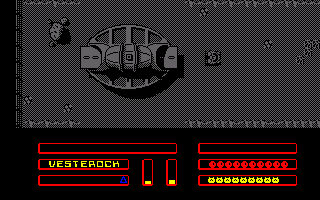
Agent Orange uses a horizontally scrolling, top-down view of each planet, with the ship, alien fighters, collectible seeds, and spreading killer weed sharing the play area. The camera angle suits the task well enough: you can follow your ship’s movement across the surface and spot the threats competing for your attention.
Story
The premise is blunt, appropriately so for an arcade shooter. An alien life form has planted a strange weed across eight planets, and the weed drains each world of life. Your ship carries the means to destroy it, making every landing part of a straightforward clean-up operation under attack.
There is a clear objective behind the shooting, which helps distinguish the game from a pure survival exercise. You are not simply clearing waves for their own sake; you are trying to get the chemical onto the killer weed while alien fighters intervene. That gives the action a practical urgency even if the narrative remains skeletal.
Do not come looking for character drama or a developing sci-fi mystery. Agent Orange uses its invasion-and-contamination setup as a reason to send you from planet to planet, then leaves the drama to the flight itself. For this kind of 1980s arcade game, that is enough context, but it never becomes much more than a serviceable mission briefing.
Overall Experience
Agent Orange has one genuinely worthwhile twist: enemies leave seeds behind, yet collecting too many destroys you. That single rule adds a welcome note of caution to familiar shoot-’em-up action and makes the choice to engage enemies more interesting than it first appears.
Its weaknesses are just as plain. The action is narrow, the objective repeats, and the seed limit can make the game feel more punishing than exhilarating. Once you understand the core loop, much of the challenge comes from enduring and refining that same loop rather than discovering new layers.
At 5.3, it lands in fair territory. There is a modestly clever arcade concept here, and fans of strict 8-bit shooters may enjoy learning how aggressively they can collect before disaster strikes. Most gamers will find it more memorable as an odd design idea than as an essential shooter, but it is not without a few tense, satisfying runs.


Reviews
There are no reviews yet.