 Retro Replay Retro Gaming History, Reviews & Emulation
Retro Replay Review
Gameplay
The first turns ask you to think like a commander rather than a tactician looking for a quick knockout. At division level, the decisions are about where an entire front can move, hold, or crack. The hex map and turn-based structure give that planning room to breathe, while fog of war prevents every move from becoming a solved puzzle. You have intelligence reports to inform your judgment, but you still need to live with uncertainty.
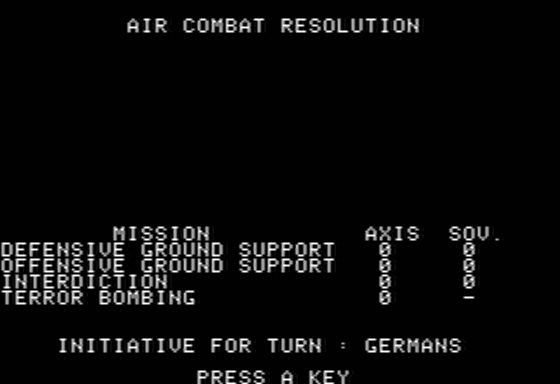
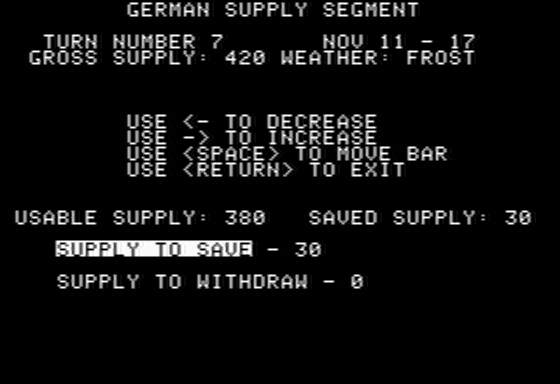
What starts to click is how many parts of the operation affect one another. Variable weather and ground conditions can make secondary roads impassable with mud, turning a route that looked sensible into a problem. Entrenchments reward a defensive line that is prepared rather than merely occupied. Railway transport matters because armies at this scale need to get where they are needed, not simply win the next fight. Air power adds another resource to weigh instead of a button that erases difficult choices.
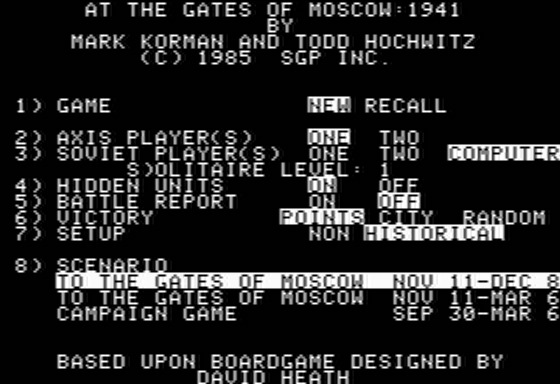
The two scenarios are a sensible way in, especially if the full campaign sounds intimidating. The September 1941 to March 1942 campaign is where the game’s operational scope has room to develop, and being able to command either the Germans or Soviets makes it more than a one-sided historical exercise. Soviet partisans and militia further give that side particular tools to work with. If you already own the concurrent board game, the computer version can also be used alongside it, which is a neat option for a rules-minded wargamer.
Frustration will set in if you want immediate clarity or fast, constant action. Mud, hidden units, and imperfect intelligence mean a plan can stall for reasons that are entirely in keeping with the campaign. That is the point, and it is rewarding when you enjoy managing a difficult front. It is less rewarding if you mainly want dramatic battle-by-battle tactics.
Graphics
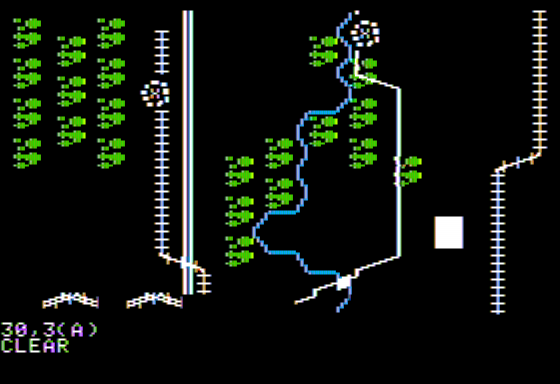
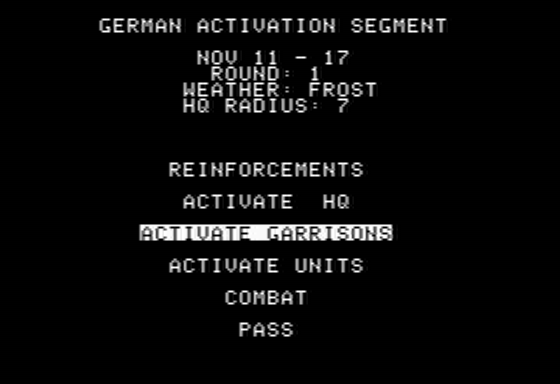
The view is a functional top-down hex map offered at close-up and strategic scales. The close view is for working with the immediate front, while the strategic scale lets you take in the wider operation without losing the map beneath a pile of decisions. This is a board-wargame-style battlefield first and foremost, built for following units and routes rather than characterful close-ups.
Story
There is no need for a fictional plot when the campaign itself supplies the drama. You are playing through Operation Typhoon, Germany’s attempt to capture Moscow, with the game covering the period from 1 September 1941 to 6 March 1942. The story emerges from the pressure on the front: advance, delay, regroup, and defend under worsening conditions.
Choosing a side changes the emotional direction of the same historical struggle. The German player faces the burden of making an offensive work across a large map, while the Soviet player has to make defense, entrenchment, rail movement, militia, and partisans count. Neither role sounds easy, which is exactly why the premise has staying power.
The full campaign is the strongest vehicle for that narrative because it allows consequences to accumulate across months rather than resolving everything inside a single scenario. For background on the game’s release and history, the At the Gates of Moscow 1941 history is useful context.
Overall Experience
At the Gates of Moscow 1941 is for the gamer who likes to stare at a map, identify the weak road, and worry about what is hidden beyond the next hex. Its best quality is that logistics, weather, terrain, information, and time all pull against simple aggression. You are not just moving pieces toward Moscow; you are trying to keep an entire operation viable.
The payoff is real if you enjoy patient historical simulations. Switching between the German and Soviet sides, or starting with one of the two scenarios, gives you practical ways to learn the system before committing to the campaign. The board-game connection is another bonus for anyone who enjoys moving between computer and tabletop wargaming.
Give it a chance if division-level World War II command sounds more enticing than flashy combat. Its age and deliberate pace will not win over everyone, but the operational problems it puts in front of you are substantial, specific, and worth wrestling with.


Reviews
There are no reviews yet.