 Retro Replay Retro Gaming History, Reviews & Emulation
Retro Replay Review
Gameplay
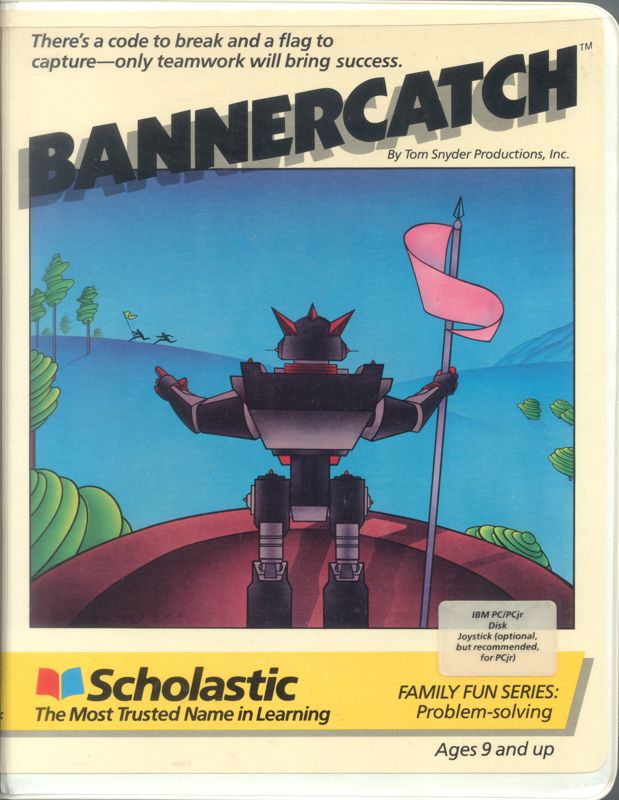
The first few minutes of Bannercatch put you in a surprisingly tense little contest. You and a second human teammate enter a capture-the-flag struggle against Max and his robots, but neither of you can simply charge toward the prize. You need to get into Max’s zone, find and take a flag, and bring it safely home before he takes yours. That back-and-forth creates a nice reason to talk through what each of you is doing instead of treating the other person as an extra body on the field.
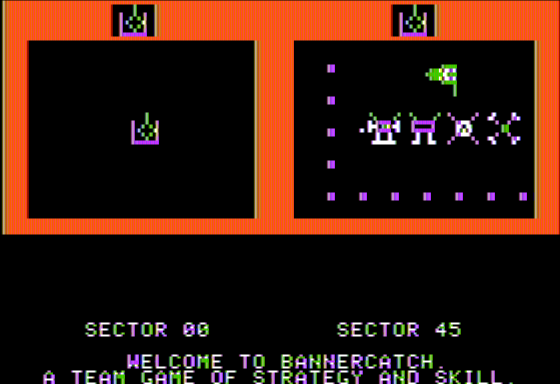
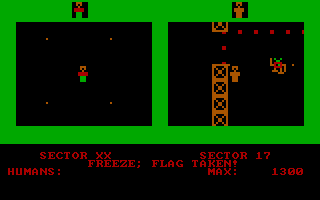
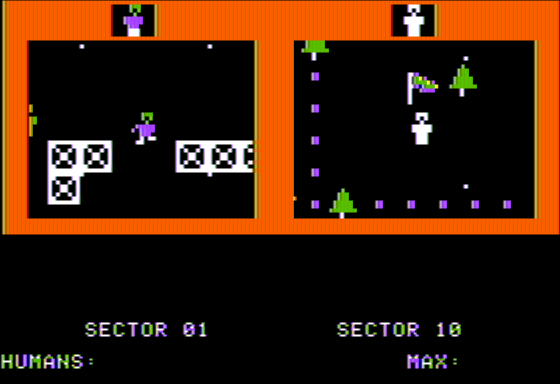
Its cleverest idea is making information part of the contest. Each person sees only a small slice of the playfield at once, while the maps reveal the whole area. Freezing the action to inspect those maps is not glamorous, but it gives the game a welcome breather and turns a frantic chase into a brief planning session. You can also stand on robot sensors and try to communicate with Max while disguised as one of his robots. That is where the binary work enters: translate the numbers correctly, and Max may reveal where a flag is.
That binary challenge is the dividing line. If you enjoy the thought of earning a tactical clue by decoding information under pressure, Bannercatch has a hook few educational games can match. If binary feels like homework, the interruption may become the source of your frustration. Still, it is meaningfully tied to the objective rather than detached quiz material. Five difficulty levels help the game meet you somewhere between a gentle introduction and a sterner contest, while the demonstration mode is useful for getting your bearings before asking someone else to join in.
Scoring gives you several ways to feel useful: capture flags, tag a robot carrying your flag, and win the match. The strongest sessions will come from treating these as team responsibilities. One person can press into hostile ground while the other stays alert for a stolen flag, then both can regroup when the map or a clue changes the plan. Bannercatch is at its best when that division of attention turns into a quick, slightly panicked conversation across the keyboard.

Graphics
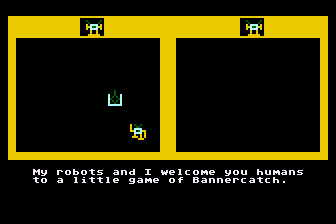
The view shows only a small portion of the playfield at a time, making the separate maps an important part of how you orient yourself. Max’s face is gradually uncovered as you capture his flags, giving the win condition a simple visual payoff beyond the score.
Story
Bannercatch is not built around a plotted adventure. Its story is a light competitive frame: Max and his robot team have flags in their territory, and you are trying to uncover his whole face by stealing them before he can take yours.
That thin setup is enough because Max’s role feeds directly into the game’s best interaction. He talks to his robots in binary, so impersonating one to extract a clue gives him more personality than a generic computer opponent would have. You are not decoding numbers for a textbook prompt; you are trying to fool the other side.
Do not come expecting character development or a dramatic finale. The small reveal of Max’s face is the reward, and it works chiefly as a playful way to mark your progress through repeated flag captures.
Overall Experience
Bannercatch is an unusually purposeful educational game. It understands that the lesson has to matter to the competition, and its binary translation does. The co-op flag chase gives the logic work stakes, while limited visibility and map checks make communication matter even when neither teammate is decoding anything.
Its age is apparent in the directness of the design: one central contest, one educational skill woven into it, and no excess padding. That can make it brisk and memorable with the right partner, but it also leaves little room to hide if the binary exercises do not click for you. The fun rises or falls on whether you enjoy collaborating under a shared objective rather than merely racing another person.
Give it a chance if you want an early educational game that asks you to cooperate, think spatially, and use math logic as a real tactical tool. Its game-specific history is also outlined in this Bannercatch overview. For a two-player session, the payoff is genuine: you are not just answering questions correctly, but using what you know to outmaneuver Max.


Reviews
There are no reviews yet.