 Retro Replay Retro Gaming History, Reviews & Emulation

Retro Replay Review
Gameplay
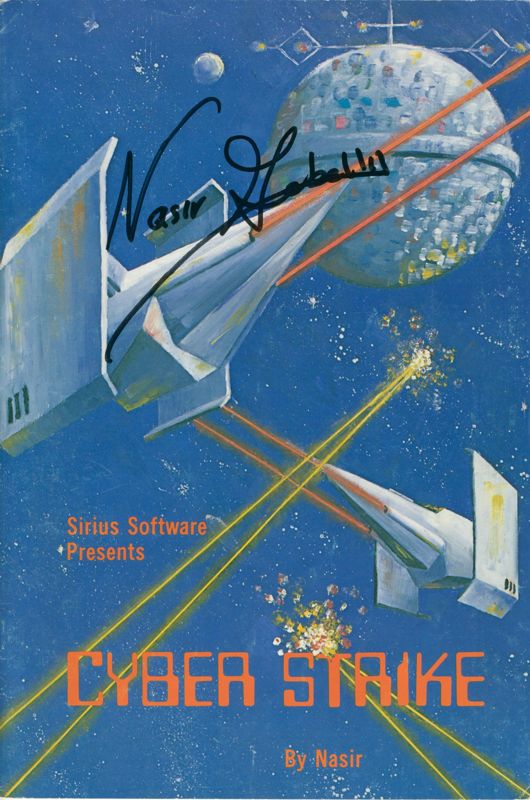
Cyber Strike wastes little time getting you into its central job. You remotely pilot the Gamma Glider IV through hyperspace to bases under clone attack, where Gar’s robot fighter drones need to be removed. That immediate clarity works in its favor: you know who has given the order, what is under threat, and what you are expected to do.
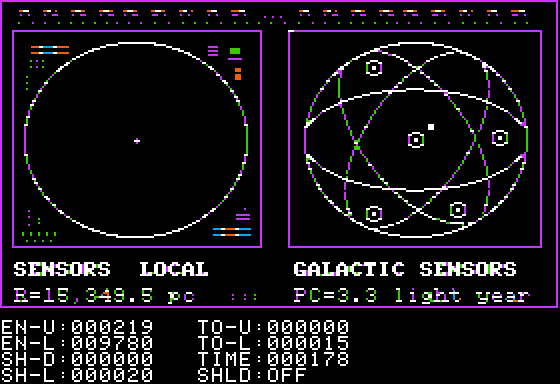
The combat structure is deliberately compact. You can destroy up to four enemies at each base, using antimatter torpedoes to attack and meteor shields to stay alive, before resupplying and moving on. That creates a straightforward rhythm of engagement, survival, and replenishment. There is enough tension in having separate offensive and defensive resources to make the assignment feel more purposeful than simply firing at targets.
What starts to click is the discipline of treating each base as a contained problem rather than rushing blindly ahead. The limitation is that the same loop carries the whole game. If you want constantly changing objectives or a long campaign of discoveries, Cyber Strike will feel thin. If a tight sequence of space skirmishes sounds appealing, its directness can be refreshing.

Graphics
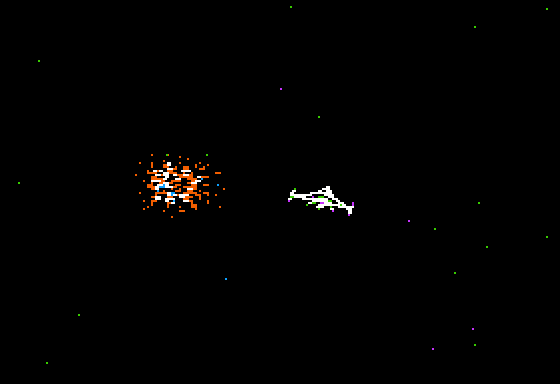
Cyber Strike keeps its sights on the essentials: a remote combat drone, hostile robot fighter drones, and the threatened bases named in the briefing. As an Apple II space shooter from 1980, it is built around getting you from one hostile encounter to the next rather than lingering on elaborate scenery.

Story
The story is a brisk military sci-fi setup, not a deep space opera. Major General Nasir briefs you on an attack against Keppler, Galileo, Copernicus, and Newton; Gar is identified as the notorious leader behind it; and you are dispatched to stop his drone fleet. It gives the shooting a clear reason without slowing down for much ceremony.
Gar works more as a looming name than a developed rival. Likewise, the clone attack is a useful hook for the mission rather than a mystery the game dwells on. That is perfectly suited to the game’s concise action-first design, though it leaves little here for anyone hoping for character drama or twists.
Still, the named bases and remote-drone framing add a little personality to what could otherwise have been an anonymous space battle. You are not merely clearing screens; you are answering a specific emergency across a small set of locations. The premise does its job, then gets out of the way.
Overall Experience
Cyber Strike is a focused early shooter whose best quality is its clean mission logic. Travel to a base, confront the enemy drones, protect yourself with shields, spend torpedoes carefully, resupply, and continue. It is easy to understand why that loop could pull you in for a session: every trip has a defined target and a clear endpoint.
The tradeoff is repetition. Four bases and a cap of four enemies per base give the game a disciplined shape, but they also make its range feel narrow. Frustration can set in if you need a game to keep introducing fresh ideas; Cyber Strike asks you to enjoy refining the same basic assignment instead.
For an Apple II action game from 1980, that stripped-down confidence has charm. The payoff is modest but real: a compact sci-fi combat challenge with just enough mission framing and resource pressure to keep its battles from feeling entirely disposable. Try it if you enjoy foundational space shooters and value a crisp objective over a sprawling adventure.



Reviews
There are no reviews yet.