 Retro Replay Retro Gaming History, Reviews & Emulation
Retro Replay Review
Gameplay
Pac-Man begins as a wonderfully direct chase. You guide a yellow circle through one fixed maze, eat every dot, and try not to collide with four ghosts. That simplicity is not a limitation. It gives every turn weight, especially when a corridor that looked safe a second ago becomes a trap with ghosts closing in from both directions.
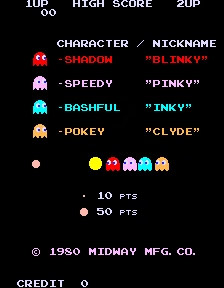
What starts to click is that the ghosts are not interchangeable enemies. Blinky bears down on you, Pinky tries to cut you off, Inky can become awkwardly unpredictable, and Clyde changes his mind often enough to catch you when you assume he will keep chasing. Learning their habits turns the game from panicked cornering into route planning, but it never becomes fully comfortable. You can understand the patterns and still get punished for one rushed turn.
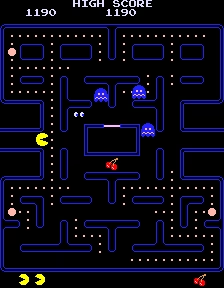
The four Power Pellets are the heart of the score game. They briefly flip the pressure, letting you hunt blue ghosts for escalating rewards, and the temptation to chase all four can pull you into spectacularly bad decisions. The side tunnels are equally important: they buy breathing room because ghosts slow down inside them. Pac-Man feels best when you are using both tools deliberately instead of treating them as emergency buttons.
Difficulty rises without changing the maze, which is both the game’s strength and its source of frustration. Familiarity lets you build confidence, then faster ghost movement and shorter vulnerable periods tear that confidence apart. Eventually the ghosts stop turning blue altogether, removing your easiest counterattack. There is no final victory lap, only the next board and the famous corrupted 256th screen waiting far beyond a normal session.
Graphics
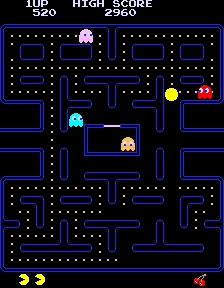
The original arcade screen is spare but instantly legible: a black field, crisp blue maze walls, tidy rows of pale dots, and bright little character sprites that pop hard against the darkness. Pac-Man’s yellow body and the red, pink, cyan, and orange ghosts make danger easy to read at a glance, while the blue frightened ghosts clearly announce that the chase has reversed.
It is charming rather than detailed. The maze barely changes, but the tiny fruit bonus items and the ghosts’ returning eyes add just enough character to keep the screen from feeling sterile.
Story
There is barely a conventional story here, and Pac-Man is better for it. You do not need a reason to clear a maze beyond the immediate pressure of being chased. The game communicates its conflict in seconds: eat, run, turn the tables when you can.
Still, the ghosts have more personality than many fully scripted enemies. Their nicknames and different pursuit habits give each one a recognizable role, so a close call feels like it came from a particular rival rather than a faceless obstacle.
The brief comedic intermissions add a welcome bit of mischief between rounds. They do not deepen a plot, but they give the chase a playful tone and make Pac-Man and the ghosts feel like performers locked in an ongoing cartoon rivalry.
Overall Experience
Pac-Man endures because it makes a tiny set of actions feel endlessly debatable. Should you clear the nearby dots before escaping? Is a Power Pellet better saved for a tight corner? Can you risk chasing one more blue ghost? The maze is always the same, yet your relationship with it changes as your nerves, knowledge, and greed change.
You may bounce off it if you need frequent new locations, a campaign, or a relaxed sense of progress. This is an arcade game that expects you to repeat the same arena until your decisions become cleaner. Its increasing cruelty can feel abrupt, particularly once the blue-ghost safety net fades.
Stick with it, though, and the payoff is unusually pure. Pac-Man turns memorization into instinct and panic into a disciplined rhythm, then finds a new way to make you panic anyway. It remains an essential arcade score chaser, best enjoyed in short bursts that somehow become much longer sessions.


Reviews
There are no reviews yet.