 Retro Replay Retro Gaming History, Reviews & Emulation
Retro Replay Review
Gameplay
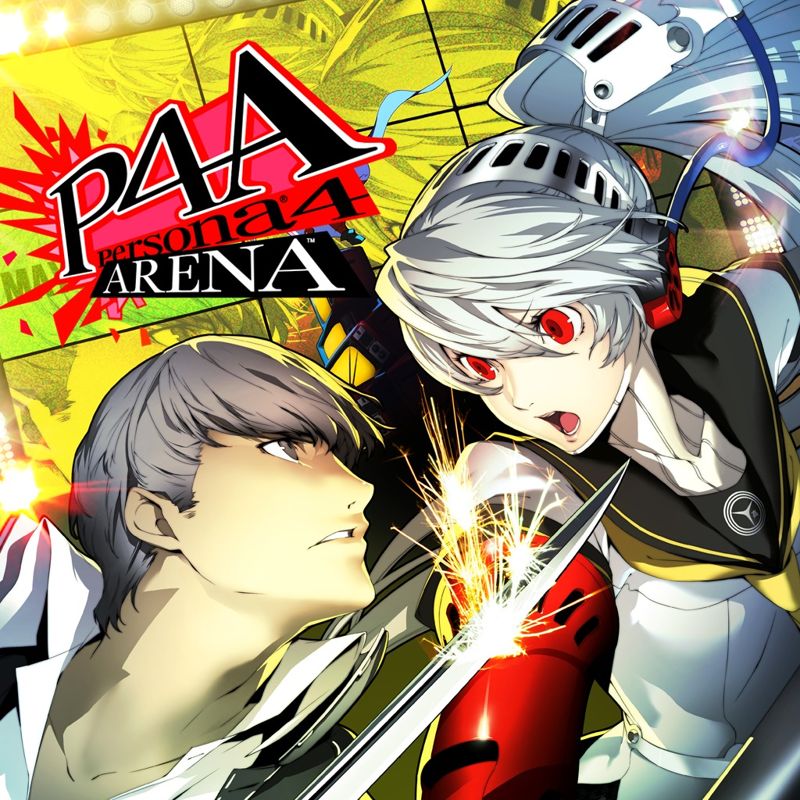
Persona 4: Arena makes a strong first impression because it lets you do cool-looking things almost immediately. You have light and heavy attacks, then light and heavy Persona attacks that bring a summoned Persona into the fight. Start mixing those buttons and you can build real combos rather than merely trading single hits. It has the snappy, direct feel you want from a 2D fighter, but the Persona layer gives the cast a little extra flavor beyond ordinary punches and kicks.
The smart concession is the auto-combo. Repeatedly tap one button and your character performs a basic string that can finish with a special attack, so a newcomer is not left flailing while a more experienced opponent runs their game. That does not mean the combat stays shallow. One-more cancels can interrupt a combo and pop an opponent up so you can begin another, while all-out attacks turn a knockback into a charge. Once these ideas click, you start seeing why button-mashing is only the starting point.
There is plenty here to meet you at your skill level. The tutorial is lengthy and explicitly walks through the options, Practice mode gives you room to test ideas, and Challenge mode asks for advanced combos when you are ready to prove you understand them. Score Attack shifts the priority from simply winning to piling up points, while Versus covers the straightforward competitive side. The learning curve can still bite when you move from auto-combos to deliberate strings and cancels, but the game does a commendably thorough job of giving you somewhere to learn.
Graphics
The action uses a side-view 2D fighting-game layout, keeping both fighters and their summoned Personas in clear view as attacks are strung together. Dialogue interruptions use visual-novel-style scenes with character text, creating a sharp change of pace between bouts rather than leaving the story as a menu of detached summaries.
Story
This is a genuine continuation of Persona 4, not a crossover-shaped excuse for unrelated fights. Yu Narukami returns to Inaba during Golden Week, only to find the Midnight Channel back on the air and promoting a tournament that pits friends against one another. Missing friends and the return to the TV world give the Investigation Team a credible reason to reform and start digging.
The catch is that Story Mode is built like a visual novel as much as a fighting campaign. Fights are broken up by scenes full of dialogue and text, so you need to be in the mood to read rather than expecting a rapid ladder of matches. If you know and like this group, that structure gives the reunion more weight. If you mainly want to get to the next round, it can feel like the game is asking you to wait.
Multiple character perspectives are the key reason to stick with it. You pick from several characters and see the conflict through their eyes before the final battle opens up, turning the story into a broader look at the tournament instead of a single-route campaign. The inclusion of Persona 3 characters adds another thread to the cast without changing the fact that this is fundamentally a Persona 4 follow-up. For more background on the game itself, see the Persona 4: Arena history and release overview.
Overall Experience
Persona 4: Arena earns its 8.3 reputation by refusing to choose between accessible and demanding. The auto-combo gives you an on-ramp, but Persona attacks, combo construction, cancels, and Challenges leave meaningful room to grow. You can enjoy the first evening without a move list memorized, then spend far longer figuring out how to turn an opening into better damage.
The biggest dividing line is your tolerance for its story delivery. Fans of Persona 4 get a substantial continuation with Yu and the Investigation Team, a mystery around the Midnight Channel, and routes from different perspectives. Anyone who just wants uninterrupted fighting may find the frequent dialogue scenes a drag, even if the battles themselves are excellent.
Give it a chance if you want a fighter that welcomes you in with simple inputs but rewards actual study, especially if Persona 4 left you wanting more time with its cast. The payoff is strongest when you let both halves work together: learn the combat systems, then let the long-form story give the clashes a reason to matter.


Reviews
There are no reviews yet.