 Retro Replay Retro Gaming History, Reviews & Emulation


Retro Replay Review
Gameplay
The first few turns of Axilox feel almost harmless: take a tile, add or subtract its number, then watch the other player answer. The hook arrives when you realize that your choice does not merely affect your total. It dictates the column your opponent must use, and their move dictates the row you must use next. Every turn is both a score decision and a piece of routing for the next exchange.
That forced row-and-column chain gives the game a pleasantly mean edge. Fair-numbered tiles raise your score, while dark ones cut it, so a large positive pickup can be less attractive than a smaller one if it funnels your rival toward a better reply. You are not trying to clear tiles efficiently; you are trying to leave a line of play that hurts the other side more than it hurts you. When that starts to click, the board stops looking like a field of numbers and starts looking like a sequence of threats.
There is little room to hide from a bad read. Because a player can lose when no legal move remains, position matters alongside the running score. That can be frustrating when a turn seems to force you into a dark tile or toward a dead end, but it is also where Axilox earns its strategy label. Against another person, the single-match two-player mode should be the main attraction. The solo game adds a computer opponent and ten levels spread across five pictures, giving you a longer run at learning how to steer the board.
Graphics
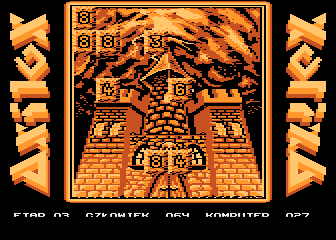
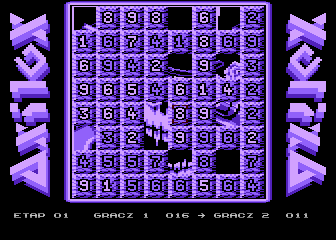
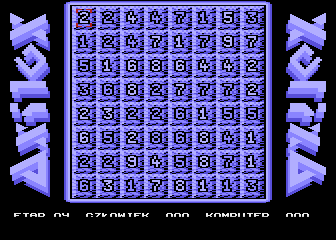
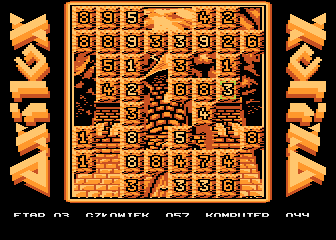
Axilox plays out on a picture covered by 81 numbered tiles, with fair and dark tiles separating gains from penalties at a glance. The board image changes across the five pictures used in the one-player mode, while the numbered grid remains the focus of every decision.
Story
There is no character tale to carry you through Axilox. Its drama comes from the score: a fair tile that puts you ahead, a dark tile that drags you back, and the growing suspicion that the line you have just handed over is about to be used against you.
That stripped-down approach fits the game. A full board begins as possibility, then narrows into increasingly specific rows and columns as tiles disappear. By the closing moves, the match has its own momentum even without a written plot.
The ten-level solo structure supplies the closest thing to a campaign arc. You are simply trying to keep beating the computer as the boards change, which makes Axilox feel more like a succession of compact puzzles than a journey with a destination.
Overall Experience
Axilox is a small, sharp strategy game built around one strong idea. The rules are easy to state, but the consequences of each selection can take a while to read. If you enjoy games where a move that looks good now can quietly hand control to your opponent, there is real bite here.
Its narrow focus is also its limitation. The two-player option is one match rather than a larger set of modes, and the central row-column rule never changes. You need to enjoy replaying the same core contest for the pleasure of becoming more calculating at it; variety comes from the changing tile layout and the decisions it creates.
Give it a chance if you want a turn-based board game that rewards concentration more than speed. It works best in short, attentive sessions, especially with a rival sitting beside you. Axilox will not flatter careless play, but its best rounds make a handful of numbered tiles feel surprisingly personal.


Reviews
There are no reviews yet.