 Retro Replay Retro Gaming History, Reviews & Emulation
Retro Replay Review
Gameplay
The first few drops in Drop It! can feel deceptively simple: turn the block, guide it into the pit, and try not to leave a nasty gap. Then a piece arrives that looks harmless from one angle and completely wrong from another, and you realize this is less about reflexively rotating shapes than mentally testing their depth. That is the hook. You are constantly trying to picture where a block will settle before committing to a rotation.
The real-time descent keeps that puzzle-solving from becoming too leisurely. At a manageable speed, you have room to inspect a shape and correct a bad angle. Raise the falling speed, though, and the game becomes a much sharper test of spatial awareness and nerve. A hurried rotation can turn an almost-perfect placement into the kind of hole that poisons every move afterward. The three difficulty levels and two board sizes give you sensible ways to find the pressure level that suits you.
Its strongest moments come when the 3D idea starts to click. You begin to see which faces should land first, which cavities are worth preserving, and when a strange-looking piece can solve a problem rather than make one. That learning curve is satisfying because the improvement feels earned, not accidental. If ordinary falling-block games have become automatic for you, this demands a more active kind of concentration.
Frustration comes from the same place as the fun: depth makes mistakes expensive. A poor fit is harder to dismiss when it occupies part of a pit rather than simply breaking a tidy row. Drop It! is also a focused variation rather than a sprawling puzzle package; its replay mode, speed adjustments, board sizes, and difficulty settings are there to refine the same central challenge. That is enough if you enjoy mastering a single demanding idea, but less compelling if you need constant new modes to stay interested.
Graphics
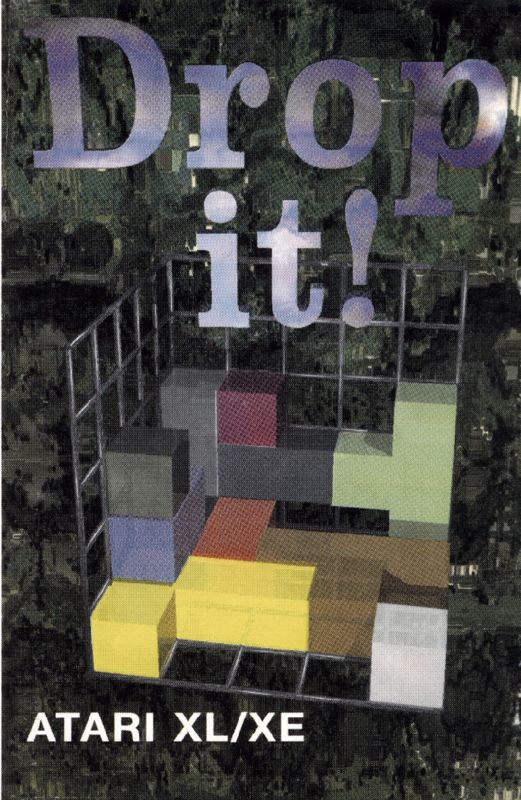
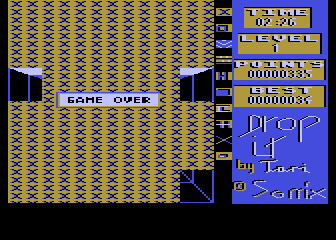
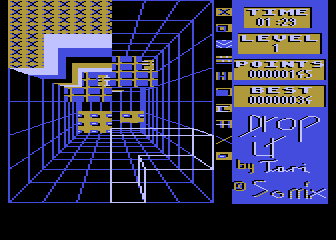
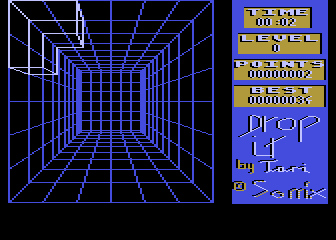
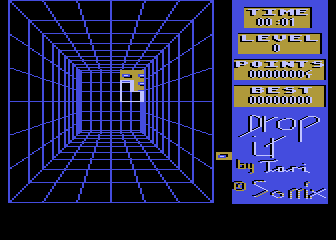
Drop It! puts its blocks and pit at the center of the view, so you can judge how a rotating piece might fit before it falls. The different patterns shown on top of each block level help distinguish the stages, while the 3D shapes themselves carry most of the visual interest.
Story
There is no character journey or plot to pull you through Drop It!. The only drama is the one you create when a difficult block appears and the pit below already looks compromised.
That bare structure suits a falling-block puzzle game. You are not waiting for a new scene or a story reward; you are chasing the immediate relief of making a difficult placement work.
Because nothing distracts from that loop, the game lives or dies on your appetite for spatial puzzles. If you need a narrative reason to continue, it will feel dry. If you are happy making your own small victories, the tension of each descent is reason enough.
Overall Experience
Drop It! is a clever, compact 3D twist on a formula you already understand. The familiar falling-block format gets you in the door, but the need to rotate shapes in depth changes your habits quickly. It asks more of your imagination than a standard line-clearing game, and that extra demand is its best quality.
Give it a chance if you like puzzle games that reward careful visual thinking under time pressure. Start on a forgiving speed and board size, let yourself learn how pieces occupy the pit, then increase the pace once placements stop feeling like guesses. The replay mode fits that gradual improvement nicely.
It will not win over everyone who loves traditional Tetris-style play. Some will find the third dimension makes the clean, immediate satisfaction of flat pieces messier and more punishing. But for the right player, that messiness is precisely why Drop It! remains interesting: every successful fit feels like you solved a small physical problem at the last possible moment.


Reviews
There are no reviews yet.