 Retro Replay Retro Gaming History, Reviews & Emulation
Retro Replay Review
Gameplay
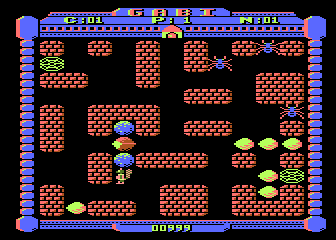
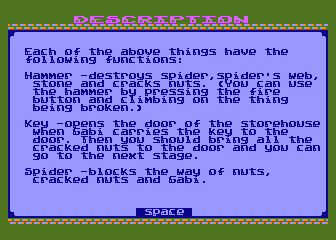
The first few boards of Gabi have a pleasant toy-box clarity. You are a small animal working through nuts lodged between stones, trying to crack every one and deposit the results in a storehouse. That simple loop gives each move a purpose, and the real tension arrives when a cracked nut reveals something new. A hammer or key can open up a plan; a spider or web can turn a comfortable route into a problem you should have anticipated.
Its surprise items give Gabi the sharper edge of the pair. Since they can change into helpful or harmful things, and can be destroyed by a nut or cracked nut, you are not merely clearing the board as quickly as possible. You have to judge whether an uncertain object is worth leaving alone, triggering, or eliminating. That is a strong foundation for a puzzle game: your progress and your risk are tied to the same objects.
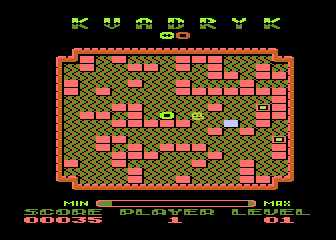
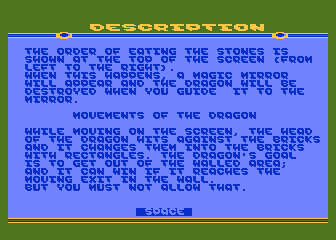
Kuadryk is more deliberate and more demanding. Moving magic bricks to lead the Dragon across magic stones in the correct order has the feel of laying out a route before committing to it. The mirror only appears after the sequence is completed, so a level’s finish is earned through clean planning rather than brute persistence. If you enjoy spatial puzzles where a wrong setup can spoil the route, Kuadryk may become the half you return to; if you want quicker feedback and more incidental surprises, start with Gabi.
Graphics
The two games use top-down, fixed puzzle-board views, keeping the important pieces in front of you: Gabi, nuts, stones, and the creatures or objects they reveal in one game; the Dragon, bricks, stones, and mirror in the other. That direct board-focused view suits puzzles where you need to trace routes and notice obstacles before acting.

Story
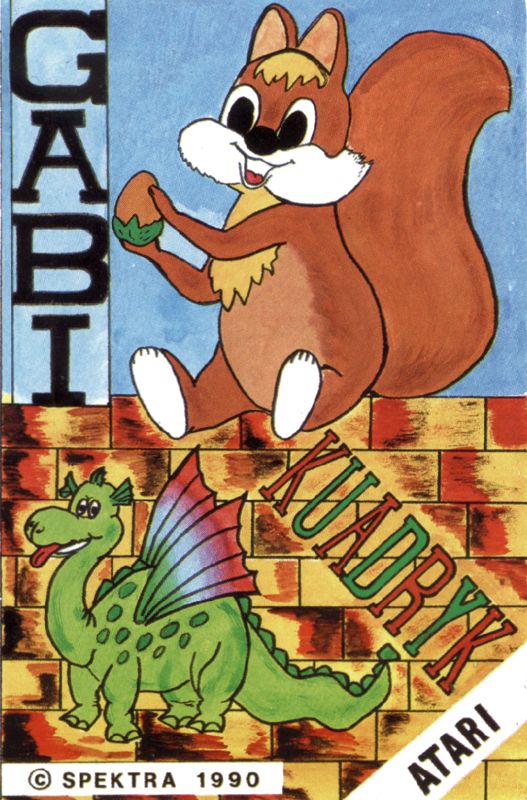
Gabi gives its puzzle work a light fairy-tale wrapper. Barbon is a country of tiny animal workers, nuts, storehouses, keys, hammers, and lurking spiders. It is not a story you play for drama, but it makes the act of clearing a board feel more charming than an entirely abstract tile puzzle.
Kuadryk is even leaner: in Kvadryk, the Dragon must be destroyed by guiding it through magic stones and finally to a magic mirror. The premise is functional, but it gives the ordered-stone requirement a useful sense of occasion. You are not simply matching a sequence; you are arranging the Dragon’s defeat.
Neither half needs more narrative weight than that. These are puzzle setups, not adventures with character arcs, and the small amount of context wisely stays out of the way once the board asks for your attention.
Overall Experience
Gabi / Kuadryk earns its interest through contrast. Gabi mixes collection and hazard management, while Kuadryk focuses on routing an enemy through a prescribed chain. Putting both on one disk gives you two different kinds of thinking: one more reactive, one more exacting.
Frustration will come when you commit to a route before accounting for the board’s consequences. In Gabi, the uncertain contents of a surprise item can upset a tidy plan; in Kuadryk, the required order of the magic stones means an almost-correct route is still incorrect. That is old-school puzzle pressure, and it will feel satisfying only if you enjoy stopping, reconsidering, and trying a cleaner solution.
This is an easy recommendation for Atari 8-bit puzzle devotees and anyone with patience for compact, rules-driven boards. The payoff is not spectacle or a sprawling campaign. It is the quieter reward of seeing how nuts, hazards, bricks, stones, and a few strict goals combine into a problem that finally gives way after you have properly thought it through.


Reviews
There are no reviews yet.