 Retro Replay Retro Replay gaming reviews, news, emulation, geek stuff and more!
Retro Replay Review
Gameplay
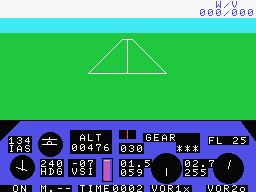
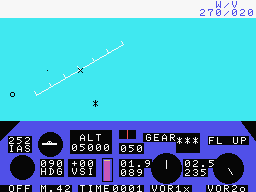
The first few minutes make one thing plain: 737 Flight Simulator expects you to fly the aircraft rather than admire the idea of flying it. You have an external view for the horizon and runway, but most of your attention quickly drops to the cockpit instruments. Airspeed, vertical speed, altitude, attitude, heading, engine power, fuel, flaps, and landing gear all matter, and that dense panel is the game’s real battlefield.
Take-off is a good introduction to its rhythm. You build speed, manage the aircraft’s climb, and try not to let the instruments drift into trouble. Navigation and landing approaches ask for more patience. The VOR indicators and ILS give you tools to work with, but you still need to interpret them while controlling a large jet. That can feel severe at first, especially if you want instant feedback, yet it becomes rewarding once you stop treating the gauges as decoration.
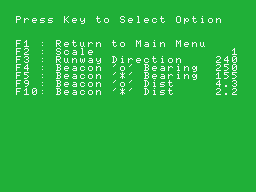
Custom runway layouts and weather conditions add a welcome reason to repeat familiar exercises. Crosswinds are particularly valuable because they make landing less of a memorized routine; you need to correct your approach rather than glide in on autopilot-like confidence. Engine failures raise the stakes further. This is not a breezy pick-up-and-play flight game, and frustration can set in when a landing falls apart late, but that same strictness gives a successful approach real weight.
Graphics
The view is split cleanly between a simple forward exterior scene on top and the instrument panel below. You see the horizon and runway where they matter most, while the lower half is dominated by dials and indicators. It is spare, but the layout suits a simulator: the runway helps you judge the final moments of an approach, and the gauges stay in constant reach.
Story
There is no plotted campaign pulling you from one dramatic event to the next. Your story is the flight itself: getting a heavy twin-engine airliner off the runway, holding it together in changing conditions, and bringing it back down without turning the approach into a recovery.
That lack of scripted drama fits the game’s focus. A calm navigation run can feel like a small personal achievement because you kept track of the aircraft and its instruments. Add weather or a failure, and the same route becomes a tale of whether you noticed the warning signs early enough.
If you need characters, missions with written stakes, or a destination beyond the runway, this will feel dry. If you enjoy creating your own tension from procedures and bad conditions, every landing can supply its own ending.
Overall Experience
737 Flight Simulator is a compact but serious-minded flight simulation. It earns its best moments through concentration: scanning the panel, making corrections before they become disasters, and finally seeing the runway line up after an approach that initially looked lost.
The trade-off is accessibility. The simple external view does not carry you through the experience, and the instrument-heavy control of an airliner can be intimidating. You will get more from it if you are willing to spend time understanding what the airspeed, altitude, attitude, navigation, and landing indicators are telling you.
For a gamer curious about early aviation sims, it remains an engaging test of cockpit discipline rather than a casual flying fantasy. The payoff is worth it for patient players who want crosswinds, failures, and landings to demand attention; everyone else may find the narrow focus and unforgiving learning curve hard to love.


Reviews
There are no reviews yet.