 Retro Replay Retro Gaming History, Reviews & Emulation
Retro Replay Review
Gameplay
Firetrack starts with the kind of immediate pressure that makes old scrolling shooters hard to put down. You are Earth’s delegate, flying into one of eight pirate-held space colonies with a simple first objective: survive the upward push and destroy the reactor waiting at the end. There is no room to drift into autopilot. An enemy ship or missile touching you means instant death, so the early minutes demand concentration rather than reckless screen-clearing.
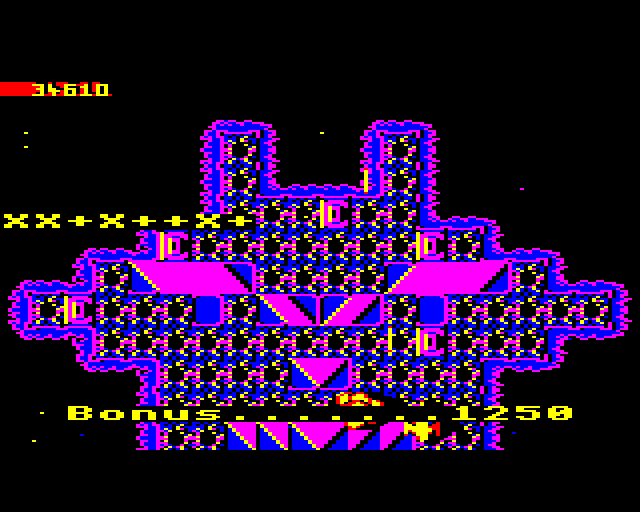
The clever part arrives after the reactor goes down. Instead of merely moving on, you cross the same level again while the colony sits in darkness, trying to wreck as many buildings as possible. That reversal gives each stage a welcome second act. On the way in, you are focused on reaching the reactor; on the way back, you are weighing score against survival, hunting structures and deciding how far to press your luck.
Marked buildings sharpen that risk-reward loop. Some award extra points, while others can hand you an extra life—an especially valuable prize when a single collision ends a run. The game rewards route knowledge and composure more than blind aggression. If you only want to finish levels, there is a direct mission to follow. If you want to improve, the return journey invites you to learn which targets merit a dangerous detour.
The harsh collision rule will frustrate you when a run collapses suddenly, particularly while you are still learning a colony’s hazards. But it also keeps Firetrack honest: every life feels earned, and every successful reactor strike creates real relief. Its score-chasing structure makes it a better fit for repeated, focused sessions than for someone hoping for a forgiving sci-fi tour.
Graphics
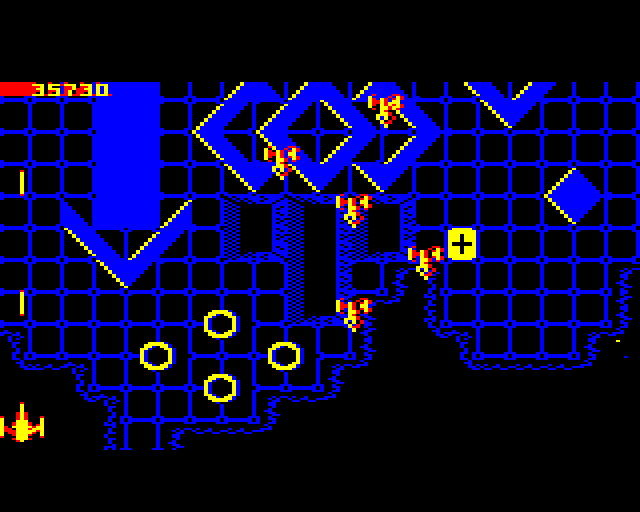
Firetrack uses a 2D vertical-scrolling view that keeps your ship, enemy ships, missiles, buildings, and the route ahead in one practical battle space. The most memorable visual change is functional as well as dramatic: after you destroy a reactor, the colony falls into darkness for the destructive return pass, clearly marking the shift from reaching the objective to chasing targets.
Story
The setup is spare but effective arcade fuel. Pirates have seized part of space and established eight colonies, and you are sent as Earth’s delegate to wipe them out. It gives the shooting a clear purpose without slowing the action with a lot of exposition.
What works is how the premise feeds directly into the level structure. Destroying the reactor plunges a colony into darkness, then you return to tear down its remaining buildings. That makes the mission feel more like a raid with an aftermath than a series of disconnected shooting galleries.
Do not come expecting a character-driven space opera. Firetrack tells its story through the job in front of you: penetrate pirate territory, cripple its power source, and inflict as much damage as you can while escaping the resistance. For this kind of compact shooter, that is enough motivation.
Overall Experience
Firetrack earns its 7.2 through a strong central idea rather than sheer complexity. The two-pass colony design gives its scrolling shooter action a distinct rhythm: tense advance, reactor payoff, then a greedier and more dangerous cleanup run. It is an old-school loop, but it has more shape than simply surviving from one end of a stage to the other.
You should give it a chance if strict, score-minded shooters sound appealing and you enjoy learning a route through repetition. The instant deaths can be unforgiving, yet the marked buildings and extra-life opportunities give you worthwhile decisions under pressure. A careful run can become a bolder one once you know where the risks lie.
It is less likely to win over anyone who needs generous recovery systems or a deep narrative between fights. For everyone else, Firetrack is a compact sci-fi shooter with a smart second-pass twist and enough danger to make every bonus target feel like a personal dare. For additional release and history details, see Firetrack’s game history.


Reviews
There are no reviews yet.