 Retro Replay Retro Gaming History, Reviews & Emulation
Retro Replay Review
Gameplay
Hunkidory’s first few minutes should make its intentions clear. You enter a single-screen platforming room, collect every valve you can reach, then head for the door. There is no excess baggage in that setup, and that directness is a genuine strength: each level can be approached as a self-contained problem rather than a long trek padded with empty space.
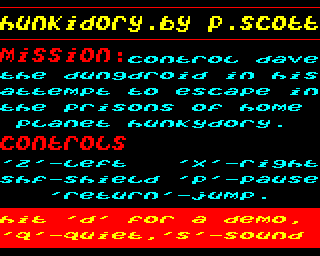
Dave has the familiar platforming basics of left, right, and jump, but the shield gives the game its tension. Get close to an alien and you can eliminate it, yet doing so rapidly drains Dave’s energy. That creates a useful dilemma. Charging in may make the immediate route safer, but wasteful shield use can leave you in worse shape than careful movement would have.
The obstacles are not merely decorative. Twenty-one alien types and deadly spikes mean the route to the valves is not just about making jumps; it is about choosing where danger is acceptable. Expect frustration when an aggressive decision costs energy or a rushed move finds a spike, but that is also where the game’s compact format helps. A failed room is a lesson you can put to work quickly.
Graphics
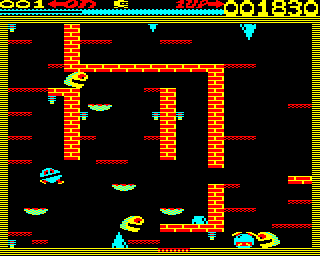
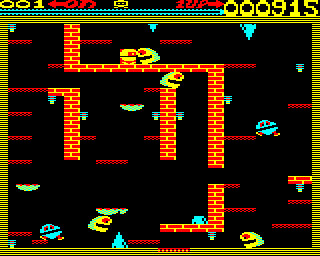
Its fixed-screen structure gives Hunkidory a clear visual priority: every room needs to communicate a complete platforming challenge at once. Valves, doors, aliens, and spikes all matter immediately, because you are assessing the whole space while planning a route. That suits the game’s puzzle-like platforming rhythm better than a constantly scrolling journey would.
The sci-fi prison setting has a practical role rather than serving as an excuse for a grand adventure. Dave is escaping the dungeons of Hunkydory, and the individual screens are the places where that premise becomes playable. The presentation is therefore inseparable from the challenge: you are repeatedly sizing up a confined hostile space and looking for the safest line through it.
Do not come to Hunkidory expecting visual spectacle to carry it. Its identity rests on the readable arrangement of a one-screen level and on the immediate presence of threats between Dave and the exit. For this kind of 1986 BBC Micro platformer, that economy is appropriate, though gamers who need elaborate scenery or a sense of travel between locations may find the format austere.
Story
The story is a clean escape premise. Dave the Dungroid is locked in the prisons of his own planet and wants out. That is all the motivation Hunkidory really needs, since its attention is firmly on the next room, the next set of valves, and the next door.
Calling the planet Hunkydory and its prisoner Dave the Dungroid gives the setup a lightly goofy science-fiction flavor. It keeps the game from feeling like an anonymous sequence of obstacles, even if the premise is not developed into a sprawling narrative. The tone fits a game that is happy to throw hazards at you quickly and move on.
If you want character arcs, revelations, or a story that changes the meaning of the action, this is not the destination. The narrative’s job is simply to frame the dungeon escape and give the final door in each level a purpose. That modest goal is met, but it will not be the reason you stay.
Overall Experience
Hunkidory earns its keep through concentration. Twenty one-screen levels, a valve-collection objective, spikes, aliens, and a shield that carries a real cost make for a focused platformer where small decisions matter. The strongest moments should come when a room that initially looked chaotic turns into a route you can execute with confidence.
Its limits are also plain. The simple controls and repeated level goal leave little room for players who need constant novelty, while the energy constraint can make mistakes feel especially punishing. Still, the shield is more interesting because it is not free; it forces restraint in a genre where attacking everything in sight is often the easy answer.
Give Hunkidory a chance if you enjoy terse, demanding platform challenges that reward learning a confined space. Skip it if you want a generous adventure, elaborate storytelling, or a platformer built around a large move set. For the right mood, its escape from Hunkydory’s prisons has the satisfying, stubborn pull of a game that asks you to master a room rather than merely survive it once.


Reviews
There are no reviews yet.