 Retro Replay Retro Gaming History, Reviews & Emulation

Retro Replay Review
Gameplay
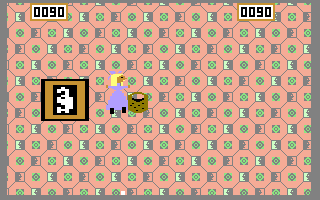
The first game has the clearest sense of exploration. You guide Alice left and right through a strange room, gathering potions, cake slices, keys, and a basket, then using the keys to enter further rooms. It is simple scavenging, but the basket gives the hunt a concrete purpose and makes each successful trip feel useful rather than like random item collection.
That opening is also where Alice In Videoland announces its old-fashioned severity. The floating alarm clock is an instant-loss hazard, so one careless touch wipes out the attempt. If you enjoy learning a small play space through repeated runs, that pressure can make the stage tense. If you want room to recover from a mistake, it may feel harsh almost immediately.
The garden stage changes pace nicely: Alice hops from mushroom to mushroom and catches rocking-horse flies, converting them into red balls. This is not merely a detour, because those balls are needed in the final croquet game. That bit of continuity is the game’s smartest idea; you are encouraged to treat a score-chasing-looking stage as preparation, not just a disposable intermission.
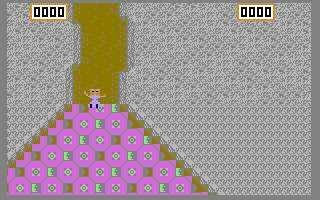
The chessboard and croquet rounds supply the bigger tests. Crossing the board with help from the White Knight while Tweedledee, Tweedledum, and the Jaberwock push Alice back sounds appropriately chaotic, while the finale turns your saved red balls into a limited resource as you shoot for hoops before the Queen of Hearts squashes them. The four games do not build into a deep action system, but they offer enough variation to keep the short trip moving.
Graphics
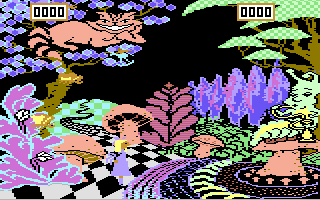
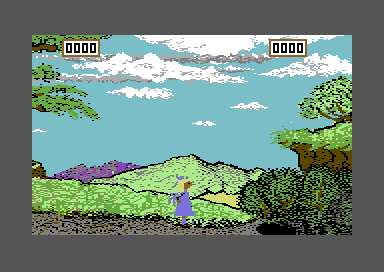
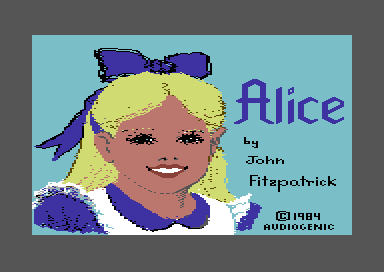
The game uses a colorful side view, and its individual locations sound pleasingly distinct: the enclosed strange room, a large garden of mushrooms, a giant chessboard, and the croquet field. Alice, the floating alarm clock, Wonderland enemies, and the Queen of Hearts give each screen clear cartoon targets and hazards to watch.
Story
The story is intentionally light, but it gets you into the action efficiently. Alice follows the white rabbit through the countryside, enters the burrow, falls, and arrives in Videoland with one straightforward aim: complete four games and get home.
Rather than retelling Wonderland as a long adventure, the game uses its characters and locations as a chain of arcade situations. The White Knight can assist Alice, the familiar pair of Tweedledee and Tweedledum become obstacles, and the Queen’s habit of squashing red balls gives the croquet stage an immediate threat.
That stripped-down approach suits the format. Do not expect a detailed narrative payoff after each challenge; the story mainly supplies a reason for the changing scenarios. What works is the way the garden’s collected balls carry into the final confrontation, giving the journey a small but satisfying through-line.
Overall Experience
Alice In Videoland is a compact, varied arcade game with a better sense of progression than its four-game structure initially suggests. The changing objectives prevent it from settling into one repetitive loop, and the handoff from fly-catching to croquet gives the final stage stakes that many short challenge collections lack.
Its difficulty is the dividing line. Instant failure from the alarm clock and enemies that can force Alice backward make success depend on persistence, timing, and a willingness to restart. There is little cushioning here, so frustration can arrive before the later stages have had a chance to show why the game is structured this way.
Give it a chance if you enjoy brisk Commodore 64 action games that demand repeat attempts and reward remembering what each stage is really for. The Wonderland theme is used more effectively than a mere costume change, and the final use of those red balls makes the whole trip feel more connected than four unrelated minigames.


Reviews
There are no reviews yet.