 Retro Replay Retro Gaming History, Reviews & Emulation
Retro Replay Review
Gameplay
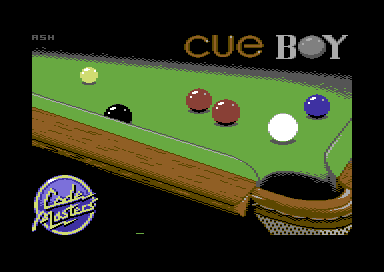
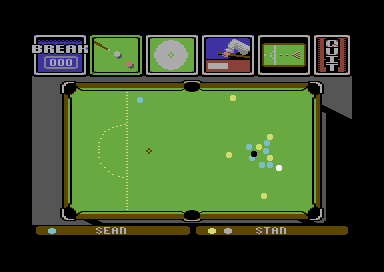
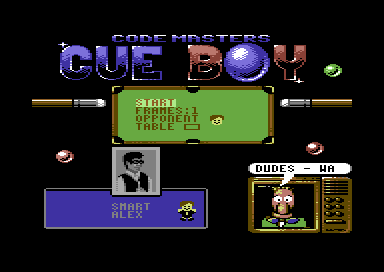
Cue Boy opens with a refreshingly direct invitation: decide whether you are playing alone or with someone beside you, pick a match length, choose the table colour, and start shooting. There is little distance between the setup screen and the first meaningful decision. From above, you line up the cue, set the force, add spin, and live with the result. That is exactly the right foundation for an 8-ball game.
What keeps it from being a mere sequence of straight pots is the ability to alter spin and shot strength. A clean pot is satisfying, but planning where the cue ball will finish is where a rack starts to feel like pool rather than target practice. You can reset the game when a fresh start is more appealing than playing out a lost position, though the more rewarding approach is to let the mistakes stand and see whether you can work your way back into the frame.
The choice of one, three, five, seven, or nine frames is more valuable than it first appears. A single frame works for a quick challenge, while longer sets give the game room to build a proper back-and-forth rhythm. Two-player games are the natural sweet spot: every missed pot puts the other person at the table, turning simple controls into tense little exchanges. Solo play has an opponent selection before the match, so you can at least choose who occupies the other side of the table.
Frustration will come from the same place it does in real pool: a shot that looked safe proving not to be safe at all. Cue Boy asks you to judge aim, pace, and spin without padding the experience with distractions. If you enjoy that stern, repeatable loop, its simplicity feels disciplined rather than thin.
Graphics
The table dominates the screen in a clear top-down view, which is the right choice for following lines and judging pockets. You can select its colour before the match, giving the otherwise straightforward playfield a small personal touch.
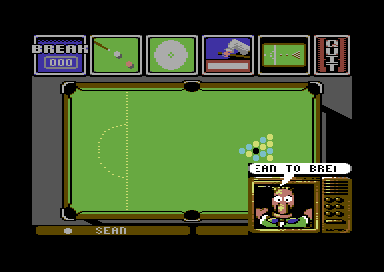
Cue Boy also has a bit of cartoon punctuation around the action. A large-nosed man occasionally appears with an update, while a small figure pops up over the pocket the computer is aiming for. They are minor touches, but they stop the table from feeling entirely sterile.
Story
Cue Boy’s story is the scoreline you create across a match. In a one-frame game, that story can be a brief burst of confidence followed by one costly miss. Over five or nine frames, it becomes more satisfying: you have time to shake off a poor rack and make the later frames matter.
There is a small sense of personality in the interjections from the big-nosed commentator-like figure. It does not turn the game into a character piece, but it gives the matches a little more life than a silent table would.
The computer’s pocket indicator creates its own tiny bit of drama. Seeing where it intends to send a ball lets you follow its turn with a clearer sense of threat, especially when it is lining up a shot that could change the frame. For a pool game, that is enough narrative tension: the table state, the next shot, and whether you can answer it.
Overall Experience
Cue Boy is a lean 8-ball game built around the parts of pool that stay compelling: angle, pace, cue-ball control, and the pressure of leaving an opening. It does not waste much time getting there, which makes it easy to return to for a single frame.
Give it a chance if you want a straightforward Commodore 64 pool match where a longer frame count can turn casual play into a small rivalry. The two-player option is the strongest reason to load it up, because the basic shot system has more bite when another person is waiting to punish a loose turn.
Its limits are also clear. The experience lives or dies on whether you enjoy repeatedly studying the same table and trying to improve your next shot. If that sounds calming, competitive, or both, Cue Boy earns its place as a compact pool game. If you need more than the table itself to hold your attention, it will run out of road quickly.


Reviews
There are no reviews yet.