 Retro Replay Retro Gaming History, Reviews & Emulation
Retro Replay Review
Gameplay
The first hour has a pleasantly direct pull. Choose a team, look around the office, make your calls, then advance to the next game and live with the consequences. Jimmy’s Super League understands that a football manager game needs decisions to lead somewhere, and the weekly structure means you are rarely far from the next result.
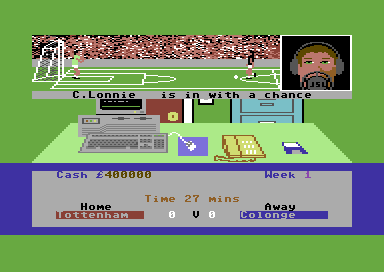
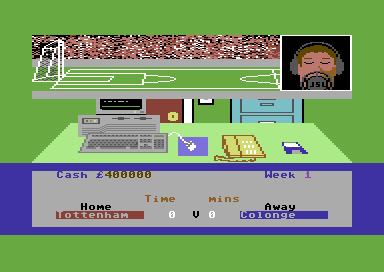
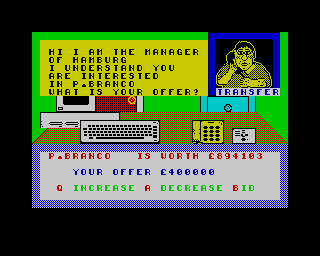
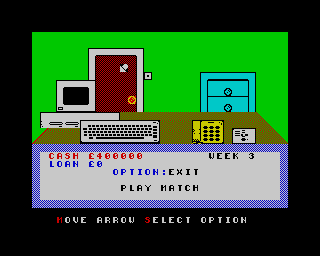
Most of your time is spent in the office handling the fundamentals: picking the team, buying and selling players, scouting, arranging a loan, and checking the league position. Money and the current week stay in view, which gives the season a useful sense of pressure. Spending on a player is not merely a menu action when you can see the cash total beside the calendar ticking onward.
What starts to click is the compactness. You are not buried under a vast web of screens; the game keeps the job focused on assembling a side and making it through a league campaign. That makes it approachable for someone who wants the manager fantasy without a huge learning curve, though it also leaves less room to shape a match once it begins.
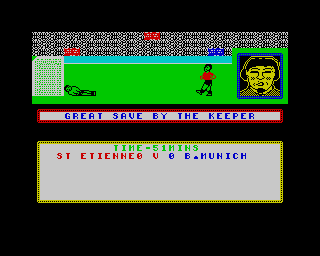
Match day is the dividing line. A side view of half the pitch sits above a written account of play, while goalmouth chances cut to a player shooting against a goalkeeper. You can follow the score and time at the bottom of the screen, but you are essentially watching your earlier choices be tested. The tension of a chance is there, yet anyone craving active on-pitch intervention may find the wait between decisions frustrating.
Graphics
The office is seen from a first-person viewpoint, giving the management screens a simple place-based frame rather than presenting everything as a bare list. During games, the camera shifts to a side-on view of one half of the pitch, with team names, score, and clock kept along the bottom.
The clearest visual flourish comes on goalmouth actions: a player faces the goalkeeper and the shot ends in either a save or a goal. It is a small, focused way to make the commentary’s biggest moments feel more immediate.
Story
There is no authored football drama to chase here. Jimmy’s Super League builds its story out of your season: the team you choose, the players you bring in or move on, the money you risk, and the league position you carry from week to week.
That stripped-back approach can work because football management naturally produces its own questions. Is the squad selection good enough? Can you justify a loan? Did scouting point you toward the player who changes the next few results? The game gives these routine decisions their stakes through the ongoing league campaign.
Still, the narrative payoff depends heavily on how much you enjoy reading meaning into results and table movement. There are no indicated character beats or dramatic scenes beyond the football itself, so its season-long tale is personal rather than scripted.
Overall Experience
Jimmy’s Super League is a lean football management game with a clear loop and a sensible sense of occasion around match results. Its office setup, visible cash, and steady weekly schedule make the role easy to inhabit. You make decisions, press on to the next fixture, and hope the team on the pitch vindicates you.
The trade-off is a lack of agency during the games. Once the action begins, the written commentary and goalmouth cutaways put you in the spectator’s seat. That can be tense when a shot arrives, but it is not a substitute for deeper tactical involvement.
Give it a chance if you like compact retro manager games and can enjoy a season as a run of recruitment, finances, selection, and results. Skip it if the fun of football games, for you, comes from controlling the match itself. Its modest scope is both the reason it is easy to pick up and the reason its long-term pull may run out sooner than you hope.



Reviews
There are no reviews yet.