 Retro Replay Retro Replay gaming reviews, news, emulation, geek stuff and more!
Retro Replay Review
Gameplay
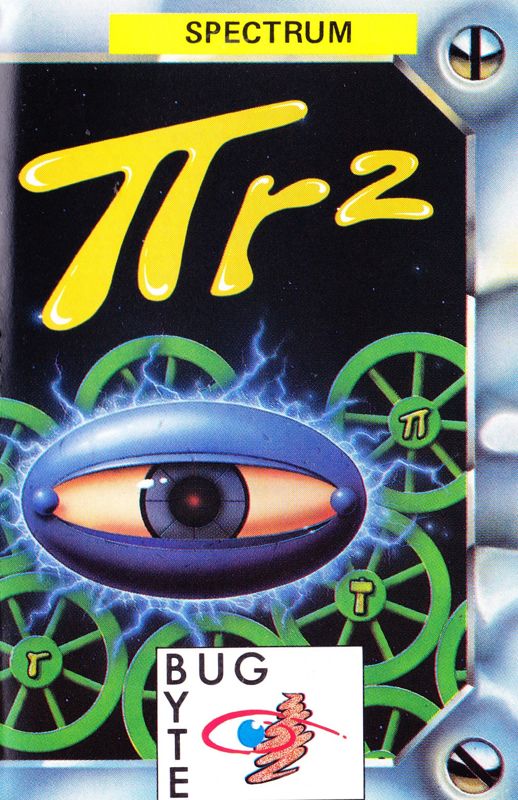
πr² starts with a wonderfully immediate problem. Your sphere rides around cogs, and every meeting point is a chance to press space and transfer to another wheel. That sounds almost too plain on paper, yet it creates the kind of timing challenge where a tiny hesitation can send a good run sideways. You are not merely choosing where to go; you are waiting for the exact moment when the next cog becomes safe and useful.
The W key adds the smart wrinkle. Hold it to travel against a cog’s movement, sacrificing speed for control; release it and you move faster with the rotation. Once that trade-off clicks, the game becomes less about blindly reacting and more about managing momentum. You can race along a safe section, then deliberately slow down to line up a transfer. It is a crisp rule set, and it asks you to get better through judgment rather than through complicated inputs.
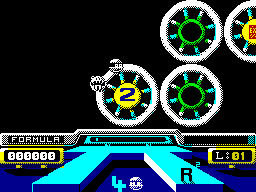
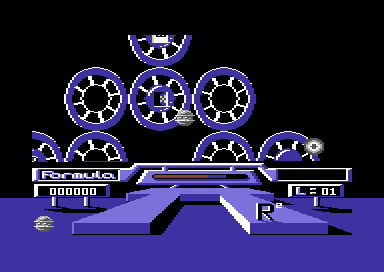
Enemies on certain cogs make the route planning meaner. You have to account for their position while also catching the handoff between wheels, so a transfer that looks correct can still be fatal if your timing is careless. Collecting the formula in the required order prevents the game from becoming a simple dash for nearby pickups. The compact view of the playfield adds pressure too: you are dealing with a portion of a larger arrangement while keeping an eye on lives, score, level, and your collected formula pieces.
Graphics
The action is shown from the side, with the sphere circling cogs and moving between their touching edges. The interface keeps the essentials on screen: score, lives, level, and the parts of the formula already collected. It is a functional arcade layout that suits a game where your eyes need to stay on the next transfer point.
Story
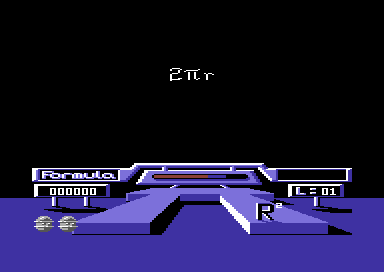
πr² does not lean on character drama. Its hook is the mathematical objective itself: assemble a formula piece by piece, in the right sequence, while surviving the machinery around it.
That stripped-down framing works because it gives every collectible a clear purpose. A piece is not just another point marker; it is progress toward the stated goal, provided you take it in the proper order.
If you need a plot to pull you from level to level, this will feel deliberately bare. The tension comes from the route in front of you and the satisfaction of turning a risky chain of jumps into a successful collection run.
Overall Experience
πr² is the sort of puzzle game that can feel awkward for ten minutes and then suddenly become compelling once you understand why slowing down is as important as accelerating. Its best moments come from reading a cog’s rotation, noticing an enemy’s position, and committing to a transfer with just enough confidence.
The frustration is equally clear: the game demands precision, and its small visible slice of the game area means you must stay alert rather than casually improvising. This is not a relaxed logic puzzle. It is a direct-control challenge that expects you to learn through failure and refine your timing.
Give it a chance if you like compact arcade puzzles with a strong repeat-and-improve loop. The formula theme is light, but the movement rules have enough depth to make a clean run feel earned. It is a focused design, perhaps narrow, yet sharp where it counts.



Reviews
There are no reviews yet.