 Retro Replay Retro Gaming History, Reviews & Emulation
Retro Replay Review
Gameplay
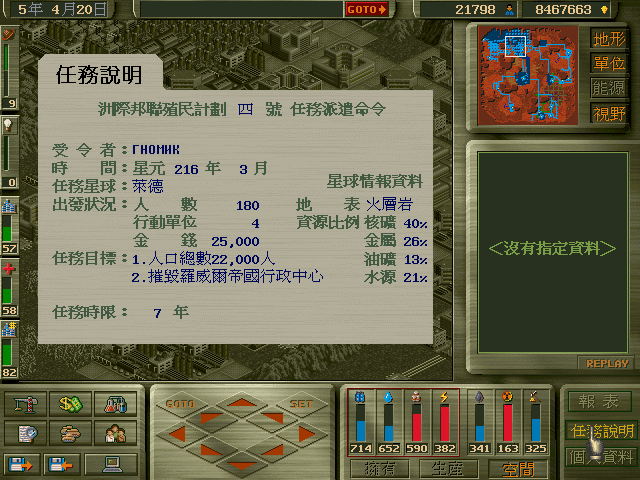
The first hour is likely to feel stern. Colonial Project asks you to establish a functioning settlement while preparing for direct conflict, and it does not let you treat either half as an afterthought. Missions combine a population target within a time limit with the compulsory destruction of the enemy headquarters, so simply building a prosperous colony is never enough. You need growth, money, supply, research, and a force capable of ending the fight.
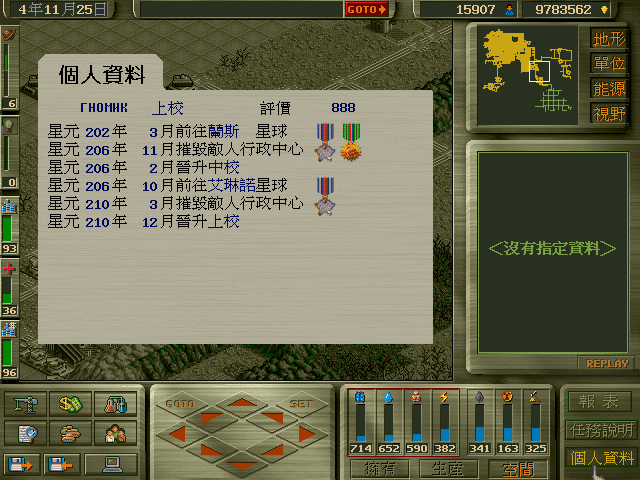
The strongest part is how closely the economy is tied to your survival. Uranium, oil, iron, and fresh water all matter, while plants, power stations, tank factories, warehouses, schools, hospitals, and business centers give the colony a broad industrial footprint. Surplus stock is not wasted: a commercial spaceship arrives every two months to buy it. That makes expansion feel like a calculated bet rather than a checklist. Build too loosely, however, and strongly negative economic indicators can halt development and end the game.
Research is where the long view starts to click. Technologies span mining and manufacturing, construction and science, and military vehicles and weapons, with five levels of improvement in each. Computer hardware is the route to improving them all, making it a foundational early concern rather than a luxury. Higher technology makes factories and mechanisms faster and more efficient, so the player who plans ahead can turn a shaky outpost into a much more capable war economy.
Combat remains grounded in the colony work instead of replacing it. You manage squads of combat vehicles and can issue orders to individual tank crews, while the Lowell Empire serves as the heavily militarized obstacle between you and the resources you need. The four missions may sound brief, but the mix of hostile objectives, time pressure, and economic failure states gives each one real weight. Come for a compact strategy campaign where bad planning hurts; avoid it if you want a forgiving builder with battles safely kept at the edges.
Graphics
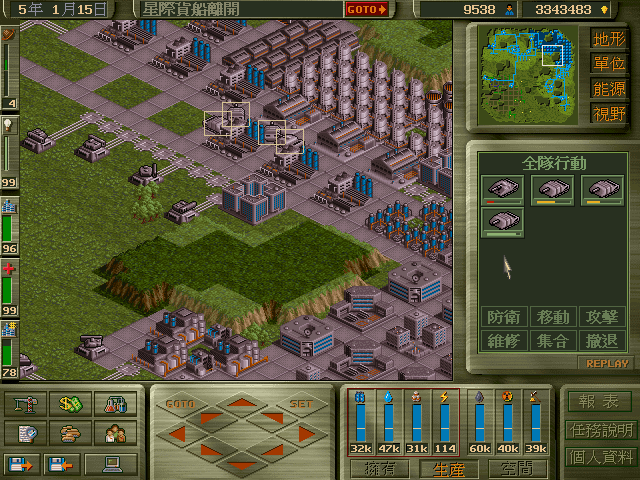
The game uses an isometric view, with colonies spread across desert, forest, rocky, and lava-covered planetary surfaces. Tanks and other combat vehicles are the central moving pieces during battles, while the changing terrain gives the four missions a clearer visual distinction than a single repeated map would.
Story
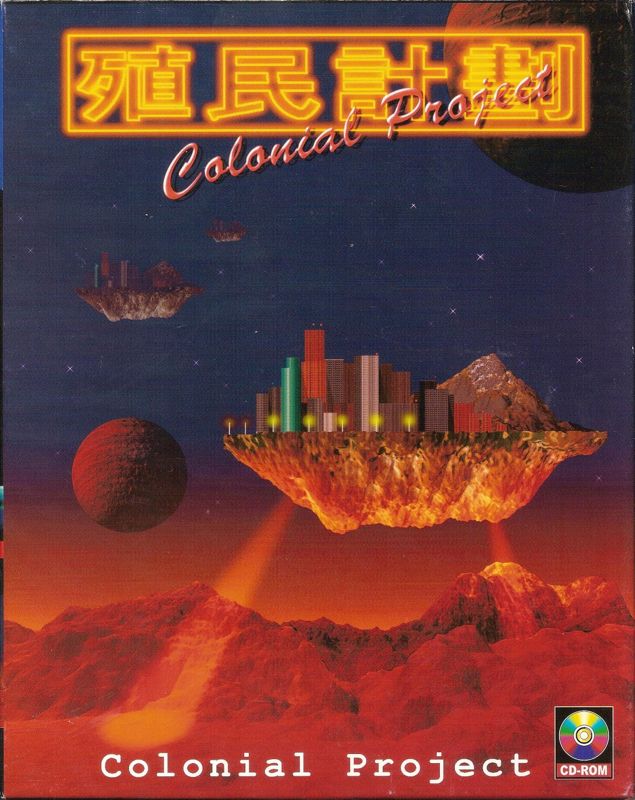
Colonial Project keeps its story functional and focused on colonial rivalry. You are expanding settlements on different planets while the Lowell Empire contests scarce natural resources, turning every industrial decision into part of a wider territorial struggle.
There is a useful bluntness to that setup. The conflict does not distract from the strategy with elaborate detours: establish the colony, meet its population demands, and break the opposing headquarters. For a game built around production and military logistics, that direct framing fits.
The campaign’s four-world structure also gives the conflict a sense of progression. Desert, forest, rock, and lava environments mark distinct fronts in the struggle for possession, even as the core goal stays consistent. Do not expect character-driven drama; this is a story told through the pressure of keeping a colony alive long enough to win.
Overall Experience
Colonial Project is most satisfying when you stop thinking of buildings, research, trade, and tanks as separate systems. They are all parts of one survival machine. A warehouse can matter because surplus can be sold; that income can support development; development improves production; and stronger production helps field the force needed to remove the enemy headquarters. That chain is the game’s real payoff.
It is also unapologetically punishing. The colonist deadline and mandatory military objective mean you cannot relax into an economic sandbox, and the threat of a negative economy ending the mission makes weak openings costly. Some strategy fans will find that harshness invigorating, while others will feel squeezed by a design that demands competence on several fronts at once.
Give it a chance if you enjoy old-school real-time strategy that makes resource management carry genuine consequences. The four-mission scope keeps it from becoming an endless campaign, but the layered technology tree and colony economy give it enough to chew on. It earns its recommendation as a tough, concentrated hybrid of industrial planning and armored warfare, especially for gamers who like winning because their whole settlement finally works.


Reviews
There are no reviews yet.