 Retro Replay Retro Gaming History, Reviews & Emulation
Retro Replay Review
Gameplay
Painting Beats earns its tension from a restriction that sounds modest on paper: you can only move on marked beats. In practice, that rule makes every turn of the arrow matter. You are watching the rhythm bar, reading the grid, and trying to avoid spending a valid beat on a low-value patch of floor when a better path might keep your score rolling.
The first few runs should be easy to understand but hard to optimize. Moving paints the square beneath you with the current beat marker’s color, and colors have different point values. That means rhythm is only half the game. The other half is planning a route that reaches worthwhile tiles without breaking your combo or losing time to hesitation. Good button timing adds another layer to the scoring, so a run can go from merely competent to satisfying when your movement and timing finally line up.
The three paint bombs are where the puzzle side becomes especially important. Each bomb colors every tile in a 5-by-5 area around your position, and with only three available, casually tossing one away is a poor habit. Saving them for dense, profitable sections of the grid is the smart play. That limited supply also gives the game a useful push-and-pull: take a safe score now, or hold out for the bomb placement that could rescue a fading run.
There are six music tracks with three stages each, so this is built around repeat attempts and score improvement rather than a long campaign. If you enjoy replaying a compact challenge to find a sharper route and protect a combo, the structure has real pull. If you want a rhythm game driven by a huge song list or a puzzle game with sprawling stage variety, its 18-stage offering may feel slight.
Graphics
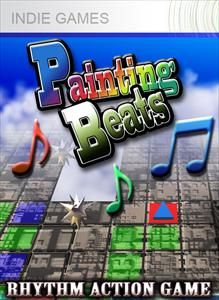
The game is viewed from above, with an arrow moving across grids that vary in layout and features. Colored beat markers and the squares you paint are central to what you see, giving each run a clear, practical board-state: where you are, what color is active, and which parts of the grid still offer scoring opportunities.
Story
Painting Beats is a score-focused rhythm puzzle game, not a narrative adventure. There is no story hook competing with the board, the timer, or the music; the purpose is to improve your run.
That lack of narrative fits the format. You can jump directly into a stage, learn its layout, and come back with a better plan without needing to remember plot details between attempts.
The motivation comes from your own performance: painting more squares, hitting better timing, and turning a near-miss combo into a high-score run. For a game this compact, that is the right priority.
Overall Experience
Painting Beats has a genuinely clever core because it asks you to think in two tempos at once. Your hands need to respect the beat, while your eyes need to solve the grid ahead of it. When that mental split starts to click, the game stops feeling like a timing exercise with paint and becomes a brisk tactical score attack.
Frustration is likely to come from the same place as its satisfaction: one inefficient move, a broken combo, or a poorly timed bomb can sour a run quickly. But that also makes the feedback clean. You can usually look at a disappointing score and understand that a different route, tighter timing, or more patient bomb use would have changed it.
Give it a chance if you like rhythm games that demand planning rather than pure reflexes, or puzzle games that reward repeated attempts without requiring a huge time commitment. The six-track, 18-stage package is modest, but the interaction between beat timing, tile colors, combos, and bombs gives it enough texture to make a strong run feel earned.


Reviews
There are no reviews yet.