 Retro Replay Retro Gaming History, Reviews & Emulation
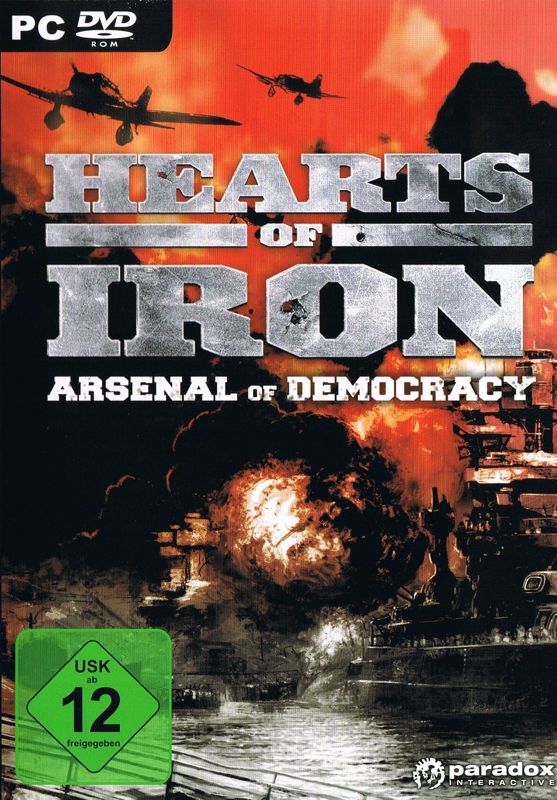
Retro Replay Review
Gameplay
Arsenal of Democracy is built around national administration rather than a narrow military command game. You guide a country through production, research, diplomacy, infrastructure, espionage, and war, with each area contributing to the broader ability to survive and influence a turbulent period.
The 1936 to 1964 timeframe gives the campaign a notably broad strategic scope. Choosing from any nation present during that period encourages very different priorities: a major power can pursue wide-ranging plans, while a smaller state must make sharper decisions about what it can realistically develop and defend.
Its revised combat mechanics, expanded technology choices, new espionage system, and more detailed economy make this an especially systems-heavy strategy game. Players who enjoy managing interconnected national priorities will find a great deal to consider, while those seeking a quick, combat-first war game may find its administrative focus demanding.
Graphics
The presentation serves a top-down grand-strategy design, emphasizing the readable management of a nation and its strategic position over spectacle. This is a game whose visual role is to support decision-making across a long historical timeframe.
Because so much of the experience is rooted in production, research, diplomacy, and infrastructure, the interface-facing presentation is central to how the game communicates its complexity. The appeal lies in overseeing a functioning state and weighing competing priorities, not in cinematic battlefield display.
Players comfortable with information-dense historical strategy presentation will be the best fit. Arsenal of Democracy asks you to engage with the practical machinery behind national power, and its visual approach is aligned with that broad, managerial purpose.
Story
There is no single fixed protagonist or linear campaign story. Instead, Arsenal of Democracy creates its narrative through your chosen nation’s path from the interwar period through World War II and into the years that follow.
Historical and random scripted events reinforce the period setting while ensuring that a campaign is not simply a static retelling. These events give the simulation historical texture and can make national leadership feel responsive to changing circumstances.
The strongest stories are therefore strategic ones: a country’s industrial growth, diplomatic choices, technological direction, and wartime commitments become the arc. Players looking for authored characters and set-piece plotting should look elsewhere, but history-minded strategists can build compelling alternate paths from the game’s broad framework.
Overall Experience
Arsenal of Democracy is a substantial historical strategy game for players who want to govern a nation rather than merely direct its armed forces. Its central strength is the range of connected responsibilities it places before you, from economic development to espionage and diplomacy.
The game’s modifications to the Hearts of Iron II foundation give it a clear identity as a more finely tuned, expanded management experience. That depth is its main attraction, but it also means the game is best approached by players willing to spend time understanding how its systems affect one another.
If you enjoy large-scale historical simulations, alternate-history outcomes, and the satisfaction of turning national planning into long-term strength, Arsenal of Democracy offers a focused strategic challenge. Its long timeline and nation-wide perspective provide room for deliberate, consequential play.


Reviews
There are no reviews yet.