 Retro Replay Retro Gaming History, Reviews & Emulation


Retro Replay Review
Gameplay
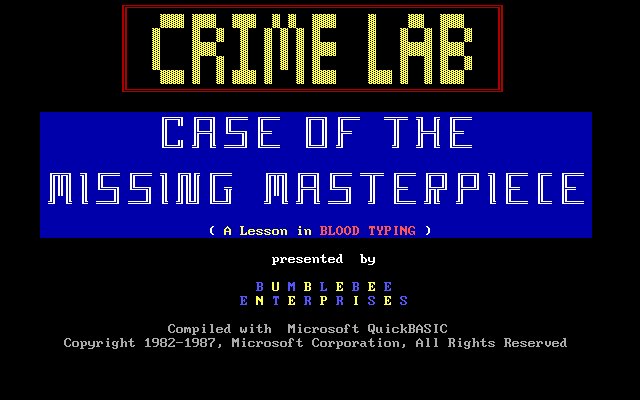
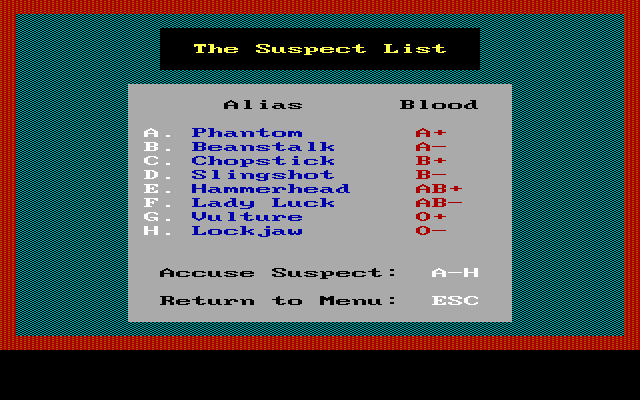
The first hour is really the whole proposition: you are a crime lab technician, a painting has vanished from the Acme Art Gallery, and a blood sample may point to the culprit. Crime Lab commits to that premise instead of padding it with unrelated puzzles. You spend your time learning the blood-typing procedure, preparing two reference samples alongside the crime-scene sample, then comparing the results against suspects with known blood types.
That makes it more lesson than game in the usual sense, but there is a satisfying little turn once the instructional material starts clicking. The science is not merely background flavor; it is the information you need to make the accusation. If you enjoy working through a compact deduction after being taught the relevant facts, the final suspect selection has more weight than its tiny scale suggests.
Frustration will set in if you arrive wanting a broad detective game. The keyboard-only interaction and the emphasis on detailed explanations make the pace deliberate, while the case itself is very short. Its replay value comes from the culprit changing, which is enough to test whether you actually understood the blood types rather than simply remembered one answer.
Graphics
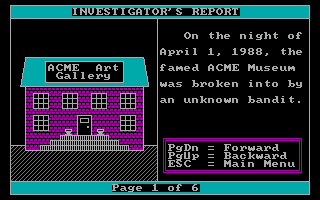
Crime Lab is built around detailed instructional screens and the results of your blood-sample work rather than action scenes. The visual focus stays on communicating the procedure clearly enough for you to compare the reference material with the crime-scene sample.
Story
The setup is pleasingly direct. On April 1, 1988, somebody burgles the Acme Art Gallery and takes a valuable painting. You are not cast as a hard-boiled investigator chasing leads across town; you are the technician whose lab work can narrow the field.
That limited angle suits the subject. The missing masterpiece gives the blood-typing lesson a concrete reason to exist, and the suspect list gives the final analysis an understandable consequence. It is a thin mystery, but it does not pretend otherwise.
The changing culprit is the best wrinkle in the story structure. A repeat run is not just the same museum theft with the same solution; it asks you to apply the procedure to a different answer. For such a small game, that is a smart way to keep the case from becoming disposable.
Overall Experience
Crime Lab: Case of the Missing Masterpiece is an earnest, sharply limited educational game. Its strongest quality is its discipline: it teaches blood typing, lets you use that knowledge in a miniature mystery, and stops. There is something charming about a game so willing to be a focused classroom exercise.
Whether the payoff is worth it depends on why you are loading it up. If you want a substantial DOS detective story, the brevity and narrow scope will leave you cold. If you are curious about vintage educational design, though, its hands-on forensic hook is more memorable than a dry quiz.
The lack of sound and the old keyboard-driven format make it feel austere, but the changing solution gives it a little life beyond a one-and-done lesson. Fans of crime-lab mysteries may also want to see the later Crime Lab: Body of Evidence. This one is a modest recommendation: brief, dated, and useful when you want exactly what it offers.



Reviews
There are no reviews yet.