 Retro Replay Retro Gaming History, Reviews & Emulation
Retro Replay Review
Gameplay
Dune III immediately feels less like its Westwood inspiration and more like a small tactical puzzle. You enter each mission with a limited force, and the usual goal—eliminate every enemy—puts pressure on every advance. There is no spare economy to lean on and no backup army arriving to erase a bad decision. If you overextend, you live with it.
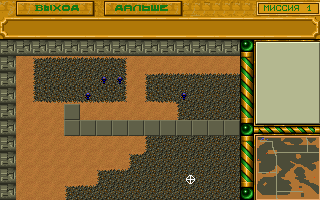
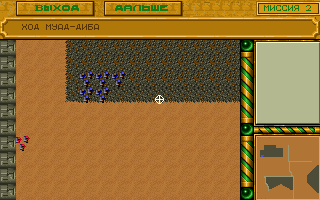
The movement-point system is where the game earns its keep. A unit can spend points moving, attacking, or doing both, but moving first reduces the force of its attack. That creates a satisfying tension on nearly every turn: do you push ahead and settle for a weaker shot, or hold position and hit hard? Once that rhythm clicks, the terrain stops being background. Roads are fast lanes, rocks alter your route planning, and sand can make an ambitious flank painfully slow.
Random enemy placement keeps repeat attempts from becoming pure memorization, even though the map terrain stays fixed. That uncertainty suits a game built around cautious movement and limited troops. The downside is that a mission can become frustrating when an early exchange goes badly, especially because progress can only be saved when you exit. Dune III asks for patience and a willingness to restart with better positioning rather than offering much forgiveness.
Graphics
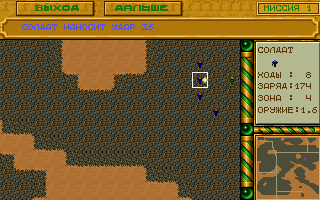
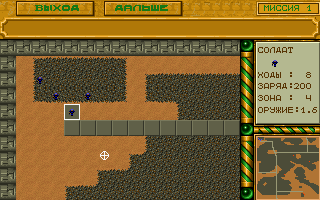
The game reuses graphics from Westwood Studios’ Dune II, giving its top-down battles a familiar DOS-era Dune look. You see the conflict from an overhead tactical view, with units moving across sand, rock, and road tiles rather than through the real-time battlefield view associated with its visual source.
Story
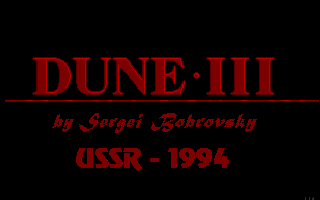
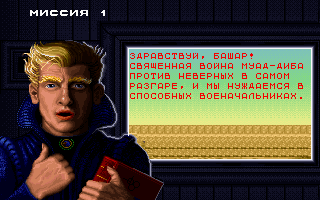
You serve as a Bashar under Emperor Leto Atreides, defending Rakis and its universe-critical spice production. The campaign draws loosely from Frank Herbert’s books, mixing material associated with earlier and later Dune Chronicles installments rather than retelling one novel cleanly.
That broad setup gives the missions a clear purpose. The Ixians, Tleilaxu, and people from the Scattering are all trying to seize Rakis, while you are sent into defensive and offensive operations to keep them from doing so. It is a direct war-for-the-planet premise, and it fits the mission-by-mission structure well.
Come for the setting if you enjoy seeing Dune recast as turn-based warfare, not for a carefully authored narrative journey. The story mainly frames the fighting, but the stakes are easy to understand: lose Rakis, and you lose control of spice.
Overall Experience
Dune III is an interesting fan-made detour for anyone who knows Dune II and wishes its battlefield decisions unfolded one turn at a time. Its best moments come from setting up a full-strength attack, exploiting a road, and realizing that one apparently small movement choice has changed the whole engagement.
Its limitations are also part of the deal. There is no multiplayer, the campaign’s fixed-unit missions can punish mistakes hard, and exit-only saving is a particularly old-school demand. That will either sharpen the stakes for you or make the game feel needlessly restrictive.
If you can enjoy compact, demanding DOS tactics and have affection for the Dune universe, Dune III is worth trying as a curiosity with a genuinely solid central rule set. If you want the real-time momentum of its visual ancestor, revisit the related Dune game instead; this one is for stopping, thinking, and committing to each turn.


Reviews
There are no reviews yet.